
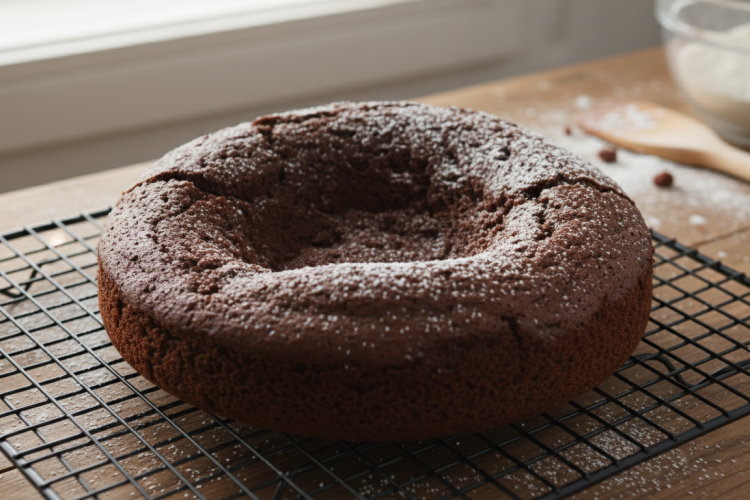
A cake sinks in the middle because the structure set by the batter’s protein and starch network collapses before it has fully baked — most often caused by opening the oven too early, too much leavening, underbaking, overmixing, or using too much liquid. The good news is that every one of these causes is preventable, and in many cases a sunken cake is still completely salvageable. This guide walks through all the major reasons and exactly how to fix each one.
Why Cakes Sink: The Science in Plain Terms
When cake batter goes into the oven, several things happen in a precise sequence. First, the fat and sugar create a tender crumb structure. Then, the leavening agents (baking powder, baking soda, or both) release carbon dioxide gas, causing the batter to expand and rise. Meanwhile, eggs and flour proteins begin to set from the outside in, gradually firming the structure. Finally, the starches in the flour gelatinize and lock everything in place.
A cake sinks when that final “lock” step is interrupted or fails. If the center is still liquid or semi-liquid when the gas bubbles pop or when you disturb the oven environment, there’s nothing holding the risen batter up and it collapses. Understanding this sequence makes it much easier to identify exactly which step went wrong in your specific situation.

The 7 Most Common Reasons Your Cake Sank
1. You Opened the Oven Door Too Early
This is the single most common cause of a sunken cake. When you open the oven door during the first two-thirds of baking, the rush of cool air causes the oven temperature to drop sharply. The batter — which has expanded beautifully with rising gas bubbles but hasn’t yet set firm — immediately contracts. If the protein and starch network hasn’t solidified yet, the batter falls and stays fallen.
The fix: Resist opening the oven door until you are at least 75% of the way through the specified bake time. For a 35-minute cake, that means waiting until at least the 25-minute mark before peeking. Use your oven light to check progress through the window. If your oven doesn’t have a light, trust your nose — cakes that are close to done smell fragrant and toasty. When you do open the door, do it quickly and gently, minimizing the temperature disruption.
2. Too Much Leavening Agent
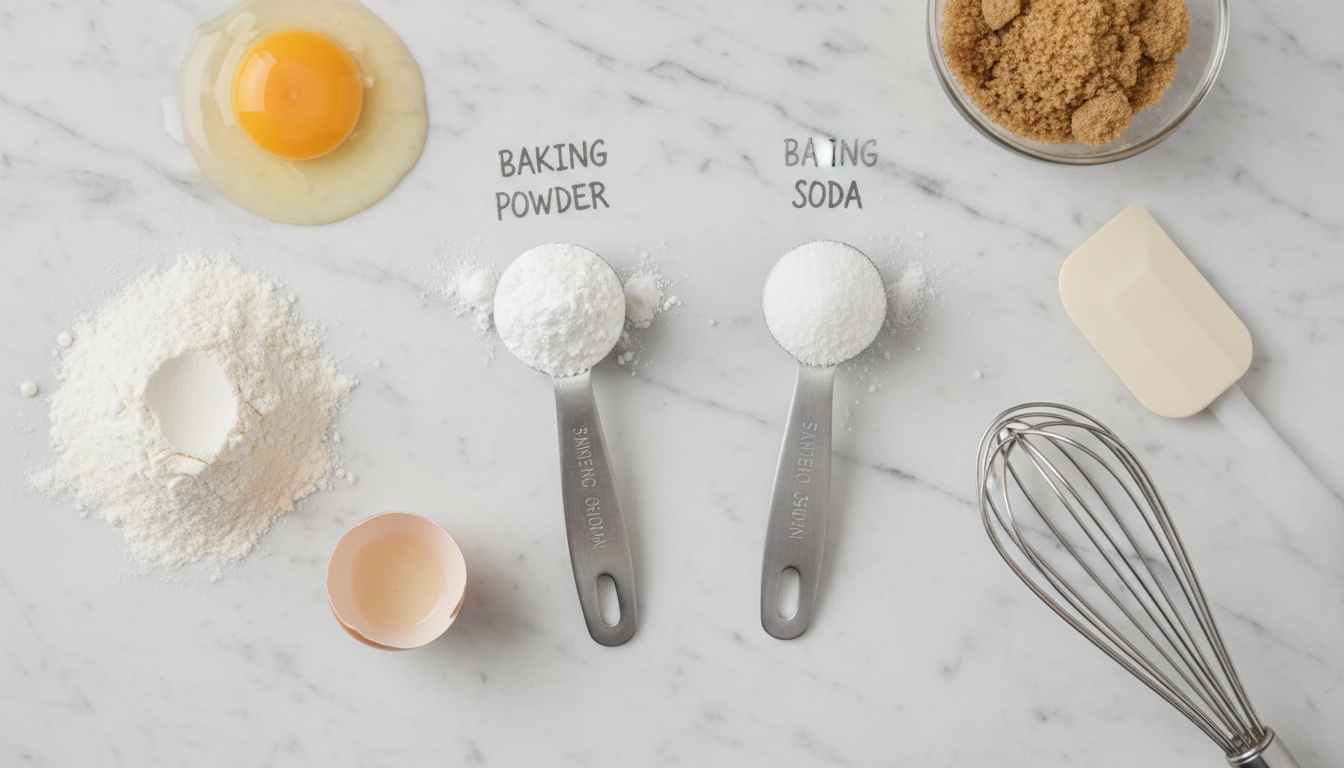
More baking powder doesn’t mean more rise — it means more collapse. This counterintuitive principle trips up many home bakers. When you use too much baking powder or baking soda, the batter rises dramatically fast and high, creating very large, fragile gas bubbles. These oversized bubbles don’t have the structural support to hold their shape and burst before the batter sets, causing the middle of the cake to sink.
The fix: Measure leavening agents precisely, always using level spoon measurements. The standard ratio is about 1 teaspoon of baking powder per 1 cup of flour, or about ¼ teaspoon of baking soda per 1 cup of flour. If you’ve been eyeballing it or using heaped spoons, that’s almost certainly the culprit. Level off the top of your measuring spoon with a straight edge.
3. Underbaking
Taking a cake out of the oven before the center is fully set is a guaranteed path to a sunken middle. The center of a cake is always the last part to bake through because it’s the furthest from the heat source on all sides. Even if the top looks golden and a toothpick inserted near the edge comes out clean, the very center may still be undercooked.
The fix: Always test doneness in the very center of the cake, not the side. Insert a toothpick or wooden skewer straight down into the middle — it should come out clean or with only a few moist crumbs attached (not wet batter). Additionally, the cake should spring back when you lightly press the center with your fingertip, and the edges should have just started to pull away from the sides of the pan. When in doubt, give it another 3–5 minutes and test again.
4. Oven Temperature Is Off
Most home ovens run hotter or cooler than their dial indicates — sometimes by as much as 25–50°F (14–28°C). An oven that runs too hot will cause the cake’s exterior to set and brown quickly while the interior stays raw. When it eventually tries to continue rising, the stiff exterior can’t expand, creating pressure that collapses the center. An oven that runs too cool bakes too slowly, allowing gas to escape before the structure sets.
The fix: Invest in a standalone oven thermometer (they cost under $15) and place it inside your oven to verify your actual baking temperature. This is one of the most impactful baking tools you can own. According to Serious Eats’ oven calibration guide, even brand-new ovens can be significantly miscalibrated. Once you know your oven’s offset, you can compensate by adjusting your dial accordingly.
5. Overmixing the Batter
Once you add flour to a wet batter and start mixing, you activate gluten — the protein network formed when wheat flour proteins combine with water. A moderate amount of gluten gives cake structure. But too much mixing develops the gluten excessively, creating a tough, dense batter that traps too much air, rises sharply in the oven, then falls as the over-developed structure can’t sustain the expansion.
The fix: As soon as you add the flour, switch from vigorous beating to gentle folding or mixing at low speed. Stop mixing the moment you no longer see dry flour streaks. A few small lumps in the batter are completely fine and much better than the alternative. This applies especially to butter cakes and pound cakes — chiffon and genoise cakes use a different technique but are also sensitive to overmixing.
6. Too Much Liquid or Fat
Excess liquid in a cake batter creates a batter that’s too heavy to hold its risen shape. Too much fat — whether butter, oil, or sour cream — has a similar effect: it coats the flour proteins and prevents them from setting into a firm enough structure to hold the cake up. Both issues result in a beautiful rise in the oven that collapses into a sunken middle as the cake cools.
The fix: Measure liquids by weight using a kitchen scale when precision matters, and measure fats the same way. If a recipe calls for buttermilk and you’re substituting regular milk, reduce the quantity slightly since buttermilk is thicker. Room-temperature butter (not melted) creams more efficiently and creates better structure than butter that’s too soft or slightly melted.

7. Wrong Pan Size
Using a pan that’s too small relative to the recipe’s intended volume forces the batter to rise higher than it’s designed to, creating a fragile, over-extended structure that collapses in the center. Conversely, a pan that’s too large spreads the batter too thin, causing it to overbake on the edges while the center struggles to set.
The fix: Use the pan size specified in the recipe. If you need to substitute, a slightly larger pan is generally safer than a smaller one — you’ll get a flatter cake but it won’t sink. Never fill a pan more than two-thirds full with batter. If you have excess, bake the remainder in a muffin tin.
Why Does My Cake Sink After It Comes Out of the Oven?
Sometimes a cake looks perfect in the oven but sinks as it cools. This is often caused by underbaking — the cake appeared done but the center wasn’t fully set. It can also happen if you move the cake too abruptly immediately after removing it from the oven, or if you cool it in a cold or drafty environment. The rapid temperature change can shock the still-fragile structure.
Let cakes cool in the pan on a wire rack for 10–15 minutes before attempting to unmold. This rest period gives the structure time to firm up enough to handle being inverted. Then transfer to the rack and allow it to cool completely at room temperature before frosting or cutting.
Can You Fix a Sunken Cake?
Yes, in most cases. Here are your best options depending on how severe the sink is:
- Minor sink: Fill the depression with frosting and smooth it level. No one will know once it’s frosted. This works especially well for layer cakes where the sunken layer is sandwiched in the middle.
- Moderate sink: Slice off the domed top (or in this case, trim the sunken layer) with a long serrated knife to create a flat surface, then frost normally. Cake levelers are useful tools for this.
- Severe sink: Embrace it. A dramatically sunken cake can be transformed into a “rustic bowl cake” by filling the well with whipped cream, berries, or pastry cream. Present it as intentional and it looks elegant.
- Still underbaked in the center: If the center is still liquid or gummy, place it back in the oven at a slightly lower temperature (reduce by 25°F/14°C) and bake for an additional 10–15 minutes, checking every 5 minutes.
How to Prevent a Sinking Cake: Pre-Bake Checklist
Prevention is far easier than rescue. Run through this checklist before every cake bake:
- ✅ Ingredients at room temperature — cold butter, eggs, or milk don’t emulsify properly and create an unstable batter structure
- ✅ Measured precisely — use a kitchen scale for flour, leavening agents, and liquids when the recipe supports it
- ✅ Oven preheated fully — give your oven at least 20 minutes to fully preheat (most ovens signal ready before they’ve truly stabilized)
- ✅ Oven temperature verified — use a standalone thermometer, especially for an oven you haven’t calibrated recently
- ✅ Pan correctly sized and prepared — greased, lined with parchment, and the right size for the recipe
- ✅ Batter not overmixed — stop as soon as flour is just incorporated
- ✅ Oven door left closed — until at least 75% of the specified bake time has elapsed
Cake Sinking vs. Cake Cracking: What’s the Difference?
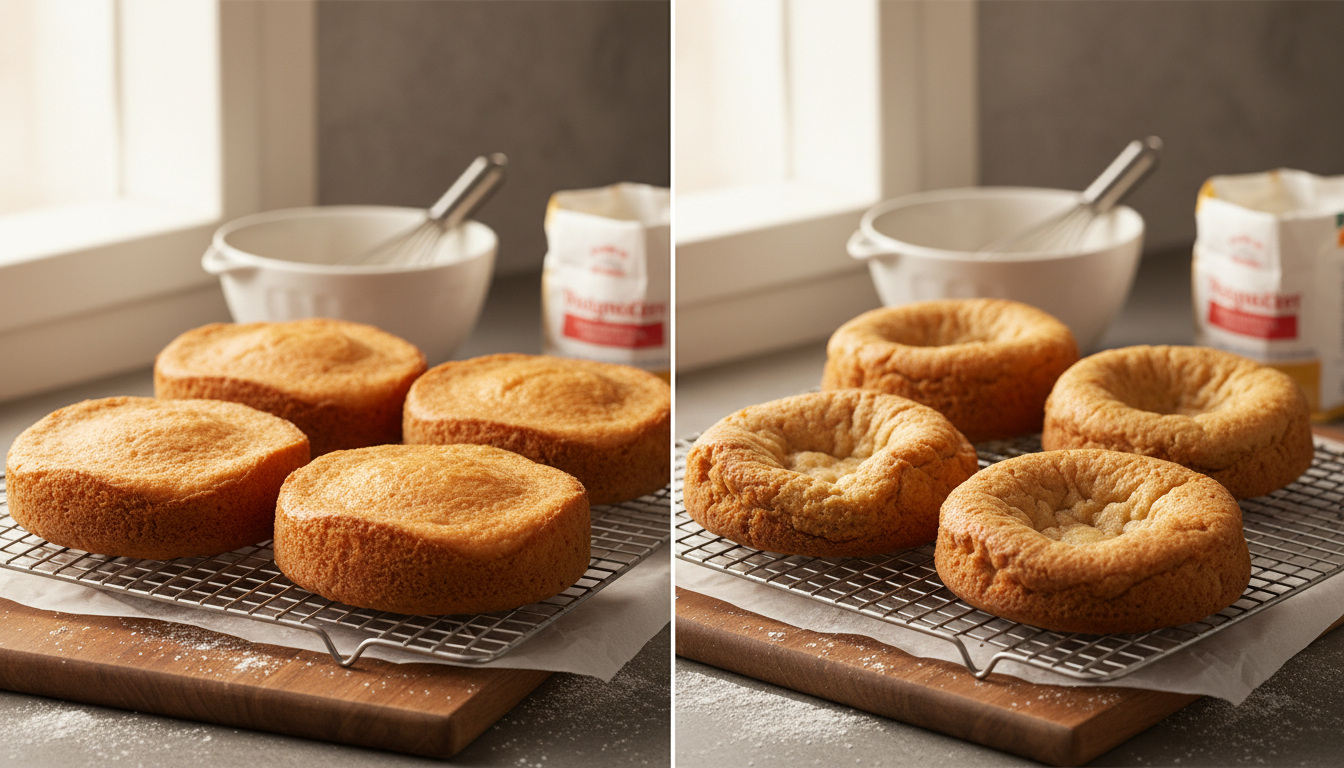
Cracking on top is actually the opposite problem from sinking. A crack on the surface of a cake usually means the oven is too hot, causing the exterior to set and form a crust before the interior has finished expanding. As the interior continues to rise, it pushes through the already-set crust, creating a crack or dome fracture. While not ideal aesthetically, a cracked cake is structurally sound — it just needs frosting to cover the evidence.
Sinking, as we’ve covered, means the interior failed to set before the gas bubbles escaped. It’s a different failure mode with different causes. If you’re troubleshooting, the visual appearance of the collapse can help you narrow down the root cause. A concave center that appeared during baking (visible through the oven window) usually points to too much leavening or oven door disruption. A collapse that happens after removal from the oven usually points to underbaking.
For more baking troubleshooting, check out our guide on why cakes turn out crumbly and why cakes turn out dense — three of the most common cake failures, all with fixable causes. If you’re looking to put your newly calibrated baking skills to work, try our Red Velvet Cake From Scratch, Funfetti Cake From Scratch, or the ultra-forgiving Carrot Cake From Scratch — the dense, moist texture of carrot cake makes it one of the most forgiving layer cakes for beginner bakers.
Frequently Asked Questions
Why does my cake sink in the middle every time?
If your cake reliably sinks every time you bake, the most likely culprits are a consistently miscalibrated oven, a habit of overmeasuring leavening agents, or a tendency to open the oven door early. Start by checking your oven temperature with a standalone thermometer and measuring your baking powder and soda with leveled spoons. These two changes alone fix the majority of chronic sinking problems.
Can I put a sunken cake back in the oven?
Yes, if the center is still underbaked (wet or gummy when tested with a toothpick), you can return it to the oven. Reduce the temperature by 25°F/14°C from the original baking temperature and bake in 5-minute increments, testing the center each time. If the cake has already cooled and the sink is just structural (the crumb is cooked through), putting it back in the oven won’t help — at that point, your best option is filling or frosting to camouflage the depression.
Why does my cake sink when I add fruit or mix-ins?
Heavy mix-ins like fresh fruit, chocolate chips, or nuts sink to the bottom and disrupt the batter’s rise in the center of the pan. The weight of the mix-ins pulls the batter down before it sets. To prevent this, toss mix-ins in a tablespoon of flour before folding them in — the coating helps them stay suspended in the batter rather than sinking. Also fold them in at the very end, using a gentle hand, and don’t overfill the pan.
Does altitude affect cake sinking?
Yes, significantly. At high altitudes (above 3,500 feet/1,065 meters), lower air pressure means gas bubbles expand faster and larger in the oven. This causes cakes to rise dramatically then collapse, producing exactly the sunken middle problem. High-altitude baking requires specific adjustments: reduce leavening by 15–25%, increase flour slightly, add an extra egg yolk, and increase the oven temperature by 15–25°F. The Colorado State University Extension’s high-altitude baking guide provides detailed adjustment tables for different elevations.
Why did my cake sink on one side only?
A cake that sinks on one side only usually indicates an uneven oven — one side of the oven runs hotter than the other, causing one side to over-rise and set while the other stays undercooked and collapses. Rotate your cake pan 180 degrees halfway through baking (after the structure has set, typically past the halfway mark) to promote even baking. An oven that’s not level can also cause uneven baking — use a spirit level to check and adjust the feet of your oven if needed.