
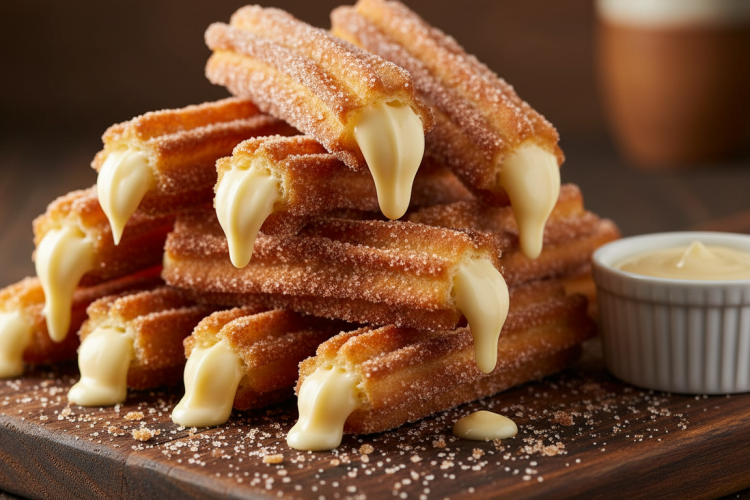
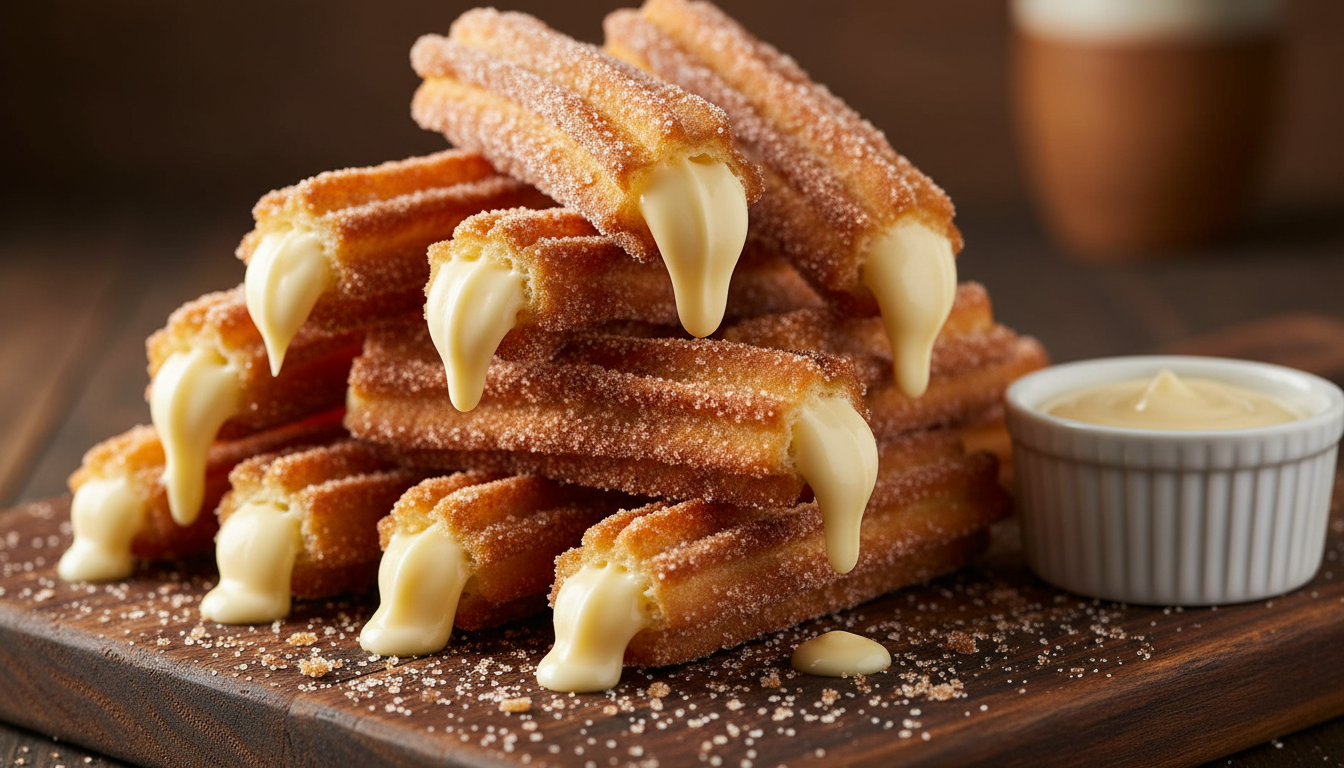
Creme-filled churros are crispy, golden churros piped full of silky pastry cream (or any creamy filling) right after frying — and they are easier to make at home than you think. The trick is using a long Bismarck piping tip to inject the filling through one end after the churros have cooled slightly. This recipe walks you through the classic choux-style dough, three filling options (vanilla pastry cream, chocolate ganache, and dulce de leche), and everything you need to get a perfect creme-filled churro every time.
Why Creme-Filled Churros Are Worth Making
A standard churro is already a crowd-pleaser. A creme-filled churro is something else entirely — the moment you bite in and hit that cool, creamy center inside the warm, cinnamon-sugar crust, it feels like two desserts in one. This is the churro you get at high-end churrerías in Spain and Mexico, and it’s the inspiration behind the name of this site.
The good news: the process is not complicated. The churro dough is a simple choux pastry cooked on the stovetop before frying. The pastry cream filling is a classic French crème pâtissière that comes together in about 10 minutes on the stove. If you’ve already made our churro filling guide or our classic homemade churros, you have all the foundational skills needed. This recipe just combines them.
Ingredients
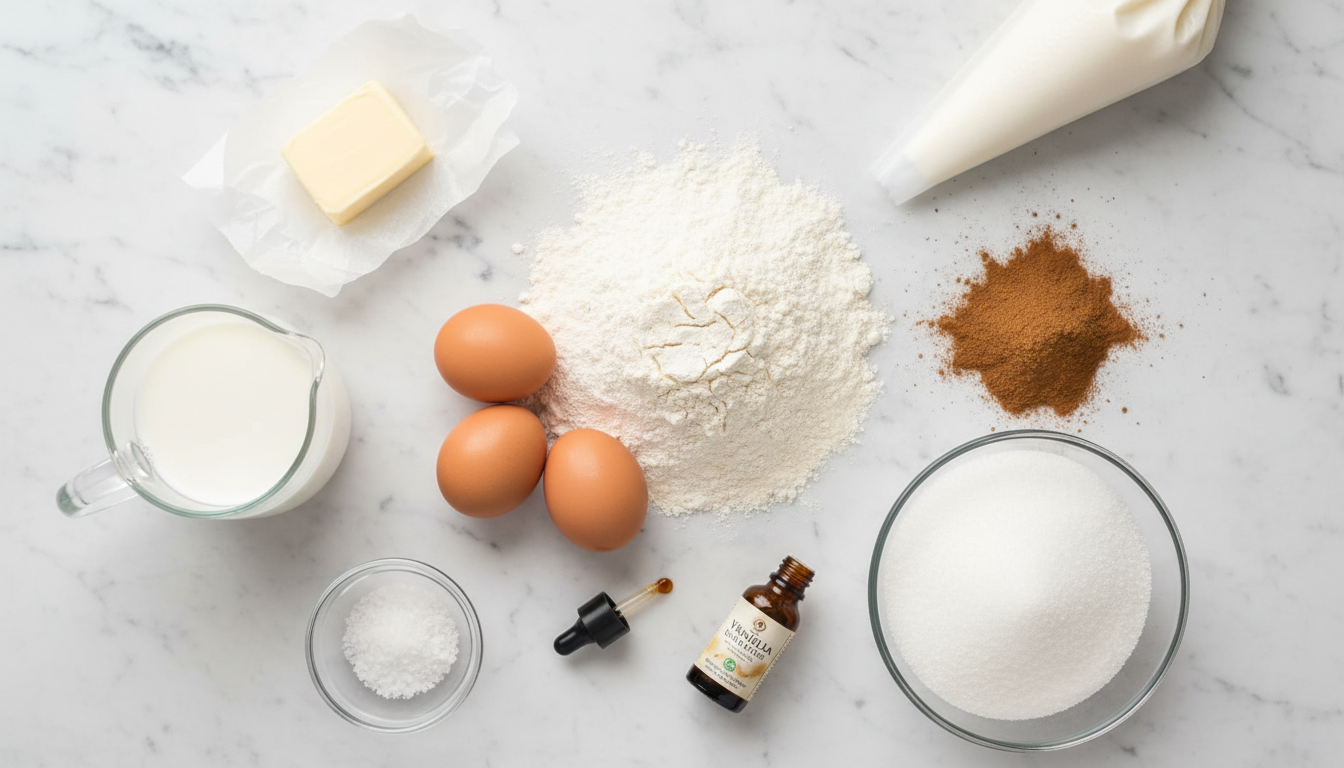
For the Churro Dough
- 1 cup (240ml) water
- ½ cup (113g) unsalted butter
- 1 tablespoon granulated sugar
- ½ teaspoon salt
- 1 cup (125g) all-purpose flour
- 3 large eggs
- 1 teaspoon vanilla extract
- Vegetable oil for frying (about 3 cups)
For the Cinnamon Sugar Coating
- ½ cup (100g) granulated sugar
- 1½ teaspoons ground cinnamon
For the Vanilla Pastry Cream Filling
- 2 cups (480ml) whole milk
- 4 egg yolks
- ½ cup (100g) granulated sugar
- 3 tablespoons cornstarch
- 2 tablespoons unsalted butter
- 2 teaspoons vanilla extract (or 1 vanilla bean)
- Pinch of salt
Equipment you’ll need: Star-tip piping bag (size 1M or 6B), a long Bismarck filling tip (or a chopstick to create the channel), deep heavy-bottomed pot or Dutch oven, candy thermometer, wire rack.
Step 1: Make the Vanilla Pastry Cream (Do This First)
The pastry cream needs at least 2 hours to chill before you can pipe it, so make it first thing — even the night before if you want to get ahead.
- Warm the milk. In a medium saucepan over medium heat, bring the milk just to a simmer (small bubbles around the edge — do not boil). Remove from heat.
- Whisk the yolks. In a large bowl, whisk together the egg yolks, sugar, and cornstarch until the mixture is pale yellow and smooth, about 2 minutes. This step is important — undissolved cornstarch will leave lumps in your pastry cream.
- Temper the eggs. Very slowly pour about ¼ of the hot milk into the egg mixture while whisking constantly. This raises the temperature of the eggs gradually so they don’t scramble. Then pour the tempered egg mixture back into the saucepan with the remaining milk.
- Cook to thicken. Return the saucepan to medium heat and cook, whisking constantly, until the mixture thickens and begins to boil. Let it boil for exactly 1 minute while continuing to whisk — this cooks out the starchy taste of the cornstarch.
- Add butter and vanilla. Remove from heat. Whisk in the butter and vanilla extract until smooth and glossy.
- Chill. Pour the pastry cream into a bowl, press plastic wrap directly against the surface (to prevent a skin), and refrigerate for at least 2 hours or until fully cold and set.
Once chilled, transfer the pastry cream to a piping bag fitted with a long Bismarck tip. Keep refrigerated until ready to fill.
Step 2: Make the Churro Dough
This is a classic choux dough — the same base used for éclairs and cream puffs. It fries up with a crispy shell and a slightly hollow center that holds the filling beautifully.
- Cook the base. In a medium saucepan, combine water, butter, sugar, and salt over medium-high heat. Bring to a rolling boil, stirring to melt the butter completely.
- Add the flour all at once. Remove from heat and immediately add all the flour at once. Stir vigorously with a wooden spoon or silicone spatula until a smooth ball of dough forms and pulls away from the sides of the pan, about 1–2 minutes.
- Dry out the dough. Return the pan to medium heat and cook the dough for another 1–2 minutes, stirring constantly, until a thin film forms on the bottom of the pan. This step removes excess moisture and is key to getting a crispy churro.
- Cool slightly. Transfer the dough to a stand mixer bowl (or large mixing bowl) and let it cool for 5 minutes until no longer steaming. It should be warm but not hot.
- Add eggs one at a time. Beat in the eggs one at a time, mixing well after each addition. The dough will look broken and slippery at first — keep mixing and it will come together into a smooth, glossy, pipeable dough. Add the vanilla extract with the last egg. The dough is ready when it falls from a spoon in a thick, slow ribbon.
Transfer the dough to a piping bag fitted with a large open star tip (1M or 6B). You want ridges on your churros — they create more surface area for the cinnamon sugar to cling to and give that characteristic churro texture.
Step 3: Fry the Churros
Oil temperature is everything. Too cool and your churros absorb oil and turn greasy. Too hot and the outside burns before the inside sets.
- Heat the oil. Pour vegetable oil into a deep heavy-bottomed pot to a depth of at least 3 inches. Heat to 360–375°F (182–190°C). Use a candy thermometer — guessing the temperature is the #1 mistake beginners make.
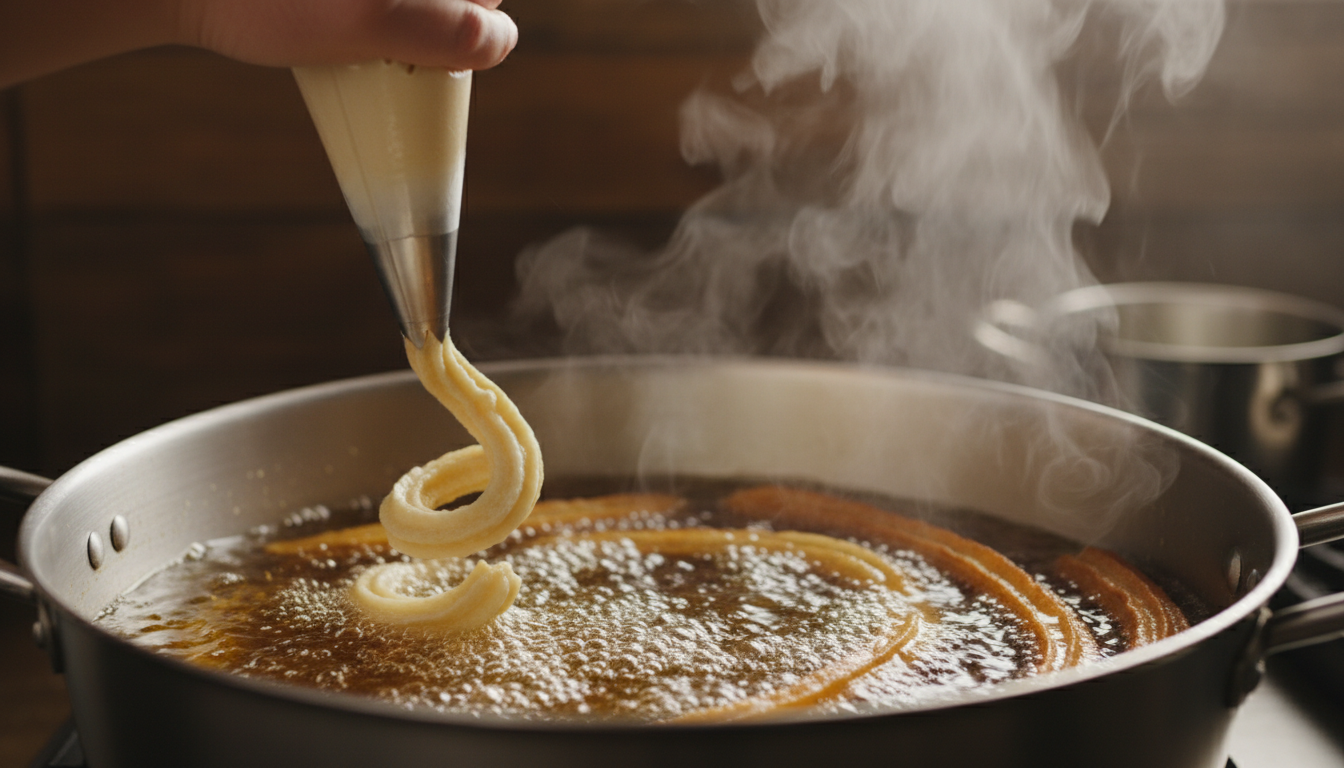
- Pipe into the oil. Hold the piping bag about 2 inches above the oil. Pipe 5–6 inch lengths of dough directly into the oil, using scissors or a sharp knife to snip off each piece. Fry 3–4 at a time — don’t crowd the pot or the temperature will drop.
- Fry until deep golden. Fry for 4–5 minutes total, turning once at the halfway point, until deeply golden brown on all sides. A light golden churro will be soft and doughy inside; you want deep golden for structure.
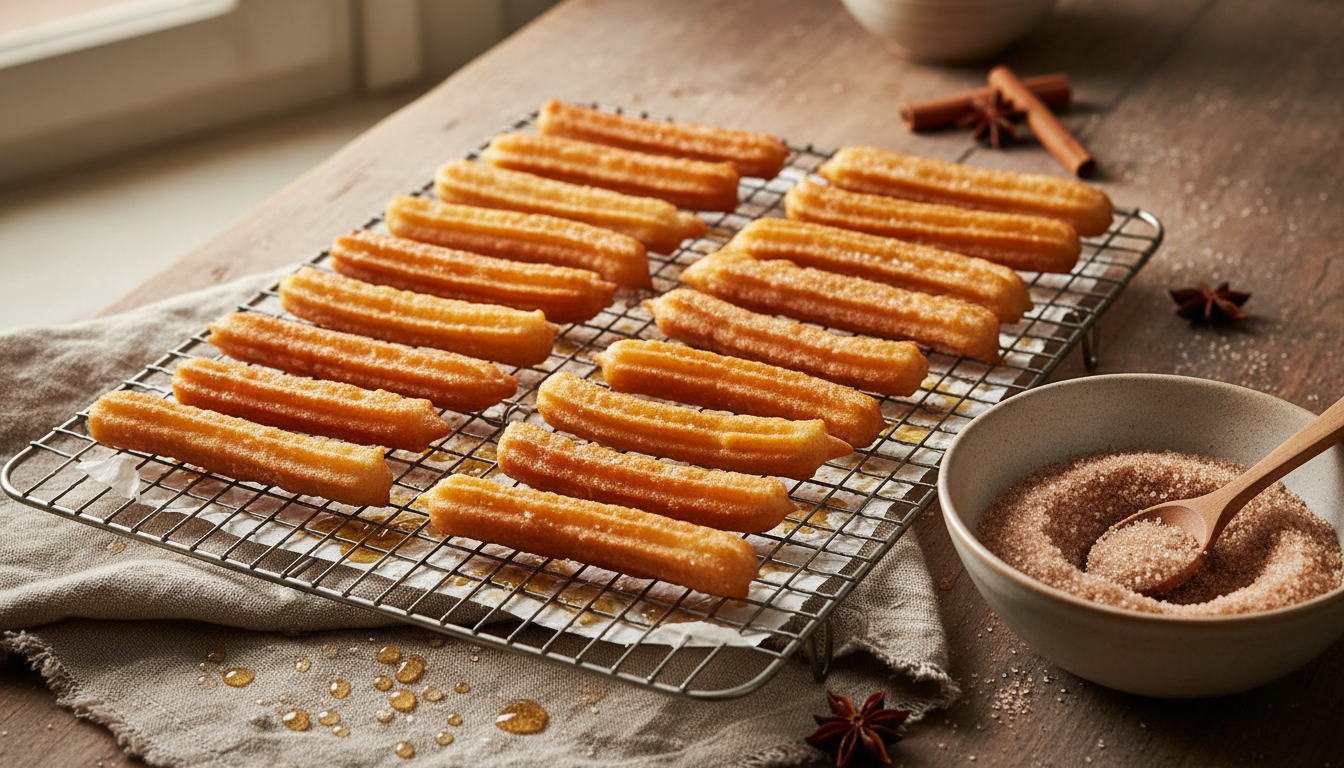
- Drain and coat. Transfer churros to a wire rack to drain briefly, then toss in the cinnamon-sugar mixture while still warm. The sugar adheres best when the churros are hot.
- Cool to room temperature before filling. Filling warm churros causes the pastry cream to melt and weep out.
Step 4: Fill the Churros
This is the step that transforms an ordinary churro into something extraordinary.
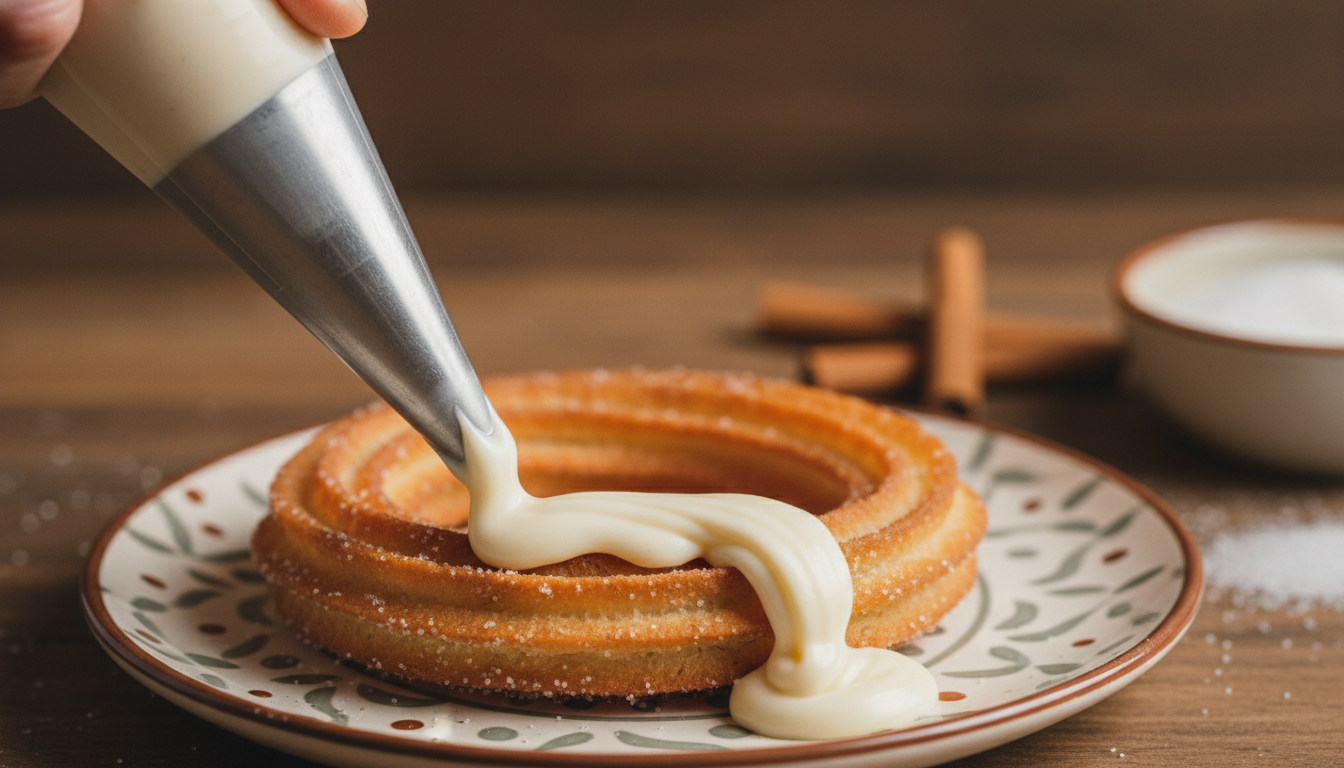
- Create the channel. Insert the Bismarck filling tip (or a chopstick) about ¾ of the way into one end of the churro. Wiggle gently to create a hollow channel without breaking through the sides or the other end.
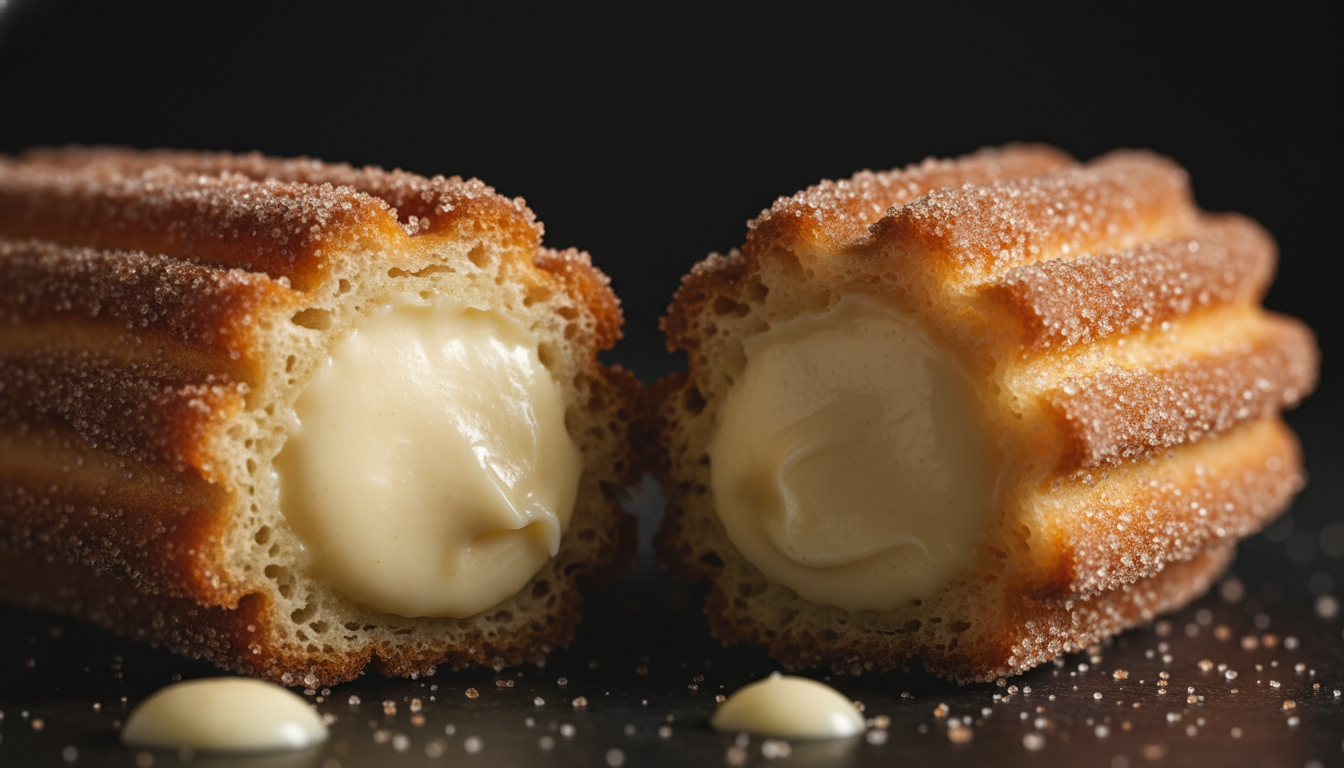
- Fill slowly. Insert the Bismarck tip into the channel and squeeze the piping bag gently as you slowly pull the tip back toward you. The goal is to distribute the filling evenly throughout the churro — not just pack it into the end. You’ll feel the churro getting heavier as it fills. Stop when you see a small amount of filling appear at the opening.
- Serve immediately. Creme-filled churros are best enjoyed within 30–60 minutes of filling. The pastry cream will start to soften the crust over time.
3 Filling Variations
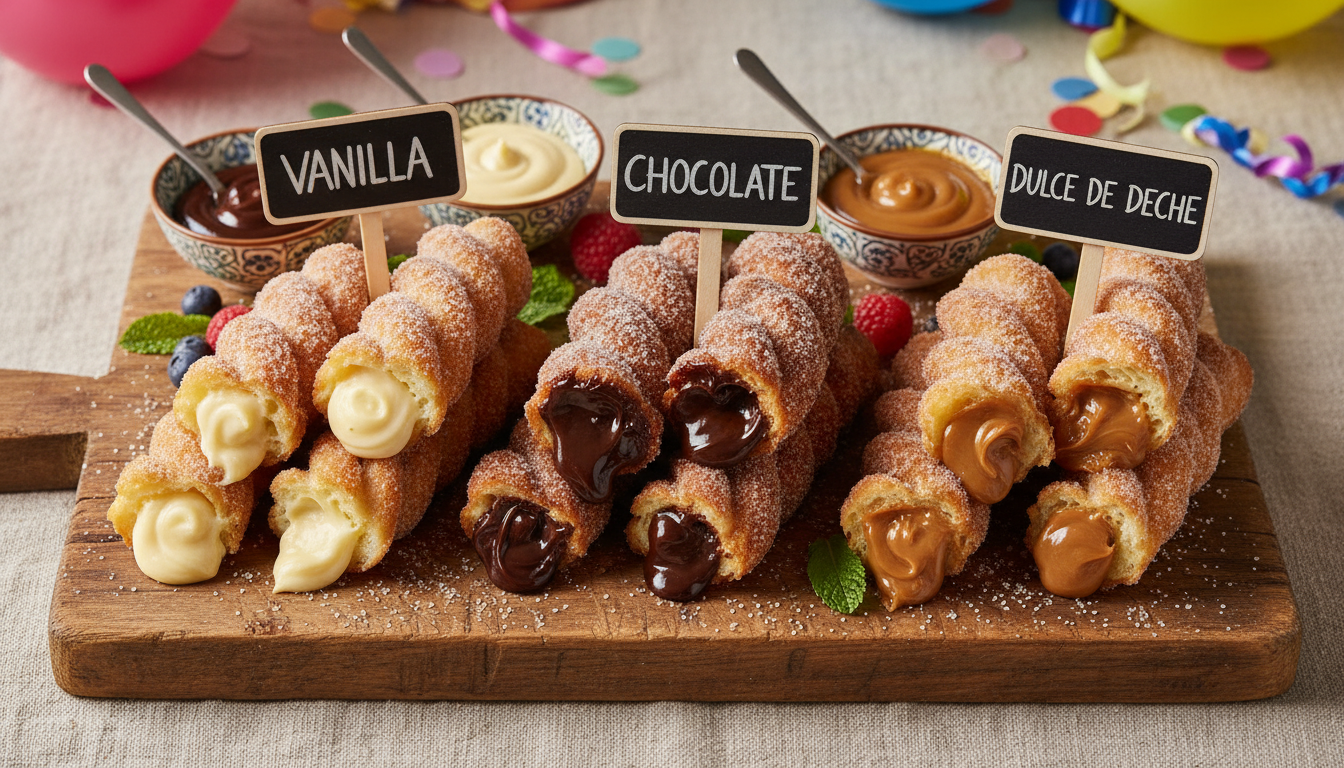
Once you have the technique down, the filling possibilities are endless. Here are the three most popular options we recommend:
Vanilla Pastry Cream (Classic)
The recipe above. Rich, silky, and classic. The vanilla flavor plays perfectly against the cinnamon sugar coating. This is the filling you’ll find at authentic Spanish churrerías. For an elevated version, scrape a vanilla bean pod into the milk instead of using extract — the flecks of real vanilla are beautiful and the flavor depth is unmatched.
Chocolate Ganache
Heat ½ cup heavy cream until steaming, pour over 4 oz chopped dark chocolate (60–70% cacao), and let sit for 2 minutes before whisking smooth. Add 1 tablespoon corn syrup for extra gloss. Chill until pipeable (about 1 hour — it should be thick but still soft). The bittersweet chocolate against the cinnamon-sugar churro is a stunning flavor combination. We covered this in our complete churro filling guide along with more filling ideas.
Dulce de Leche
This is the filling you’ll find in Argentine-style churros (often called “churros rellenos”). Use store-bought dulce de leche straight from the can — it’s already the perfect consistency for piping. If you want to make your own, slow-cook a sealed can of sweetened condensed milk in boiling water for 2–3 hours (always keep the can submerged). The caramel-cream flavor is deeply indulgent and works beautifully with the cinnamon sugar coating. See how we used this filling in our caramel churros recipe for more inspiration.
Tips for Perfect Creme-Filled Churros Every Time
- Make the pastry cream ahead. It keeps refrigerated for up to 3 days. Making it in advance reduces day-of stress significantly and ensures the filling is cold and pipeable when you need it.
- Don’t skip drying the dough. The step where you cook the dough in the pot a second time removes excess steam. Skip it and your churros will be soft and greasy instead of crispy.
- Use a thermometer. 360–375°F is the sweet spot. Below 350°F and the churros absorb oil. Above 380°F and they brown too fast without cooking through. An instant-read candy thermometer is a worthwhile investment if you plan to fry regularly.
- Fry in small batches. Adding too many churros at once drops the oil temperature dramatically, leading to greasy, pale churros. Keep batches to 3–4 churros maximum.
- Cool before filling. Warm churros + cold pastry cream = the cream melts and the churro gets soggy. Wait until the churros are completely at room temperature, which takes about 20–30 minutes.
- Use the right tip. A Bismarck tip (also called a filling tip or éclair tip) is the proper tool. If you don’t have one, a long skewer or chopstick to hollow out the channel, followed by a regular piping tip pushed in from the end, works as a substitute.
Storing and Make-Ahead Notes
Creme-filled churros are a same-day food — the crust softens within an hour or two of filling, and the pastry cream can become unsafe at room temperature after 2 hours. Here’s how to handle each component:
- Pastry cream: Makes up to 3 days ahead. Store covered in refrigerator with plastic wrap pressed against the surface.
- Unfilled churros: Best eaten immediately, but unfilled fried churros can be stored at room temperature (uncovered) for up to 4 hours and re-crisped in a 375°F oven for 5 minutes before filling.
- Filled churros: Do not store. Eat within 1 hour of filling for best texture. Do not refrigerate filled churros (the condensation softens the crust irreversibly).
- For parties: Fry and coat the churros up to 4 hours ahead. Prepare and refrigerate the filling. Fill to order right before serving — guests love watching the filling process.
If you want to try another impressive churro variation that’s great for entertaining, our churro ice cream bowls are also a show-stopper that can be partially prepped ahead.
The Science Behind the Perfect Churro Shell
Understanding why churros work helps you troubleshoot when things go wrong. The magic of choux pastry dough is that the water in the dough converts to steam during frying, creating a slightly hollow interior and a crisp exterior shell. According to Serious Eats’ breakdown of choux pastry science, the key variables are moisture content and starch gelatinization — both of which you control by properly drying the dough on the stovetop and adding eggs one at a time to achieve the right consistency.
The egg proteins in the dough set during frying, creating structure that holds the hollow center. Too few eggs and the shell collapses inward; too many and the dough is too soft and won’t hold its piped shape. The ideal dough falls from a spoon in a slow, thick ribbon — the classic pastry chef’s test.
For more background on the different styles of churros across Latin America and Spain, including how Argentine, Mexican, and Spanish creme-filled churros differ, check out our Brazilian churros recipe — a close cousin that uses a different filling approach.
Frequently Asked Questions
Can I bake creme-filled churros instead of frying?
You can bake churros, but the texture is significantly different — baked churros are softer and more like a choux pastry stick than a crispy churro. For creme-filled churros specifically, the crispy shell is important because it provides structural contrast to the creamy filling. If you want a no-fry option, our air fryer churros come much closer to the fried texture than oven baking does. You can then fill air-fried churros using the same technique in this recipe.
What’s the best oil for frying churros?
Neutral oils with high smoke points are ideal: vegetable oil, canola oil, or sunflower oil. Avoid olive oil (strong flavor, lower smoke point) and butter (burns). The key is using enough oil — at least 3 inches deep — so the churros float and fry evenly on all sides without touching the bottom of the pot.
Why is my pastry cream lumpy?
Lumpy pastry cream is usually caused by one of three things: undissolved cornstarch in the egg mixture (whisk it longer before adding milk), not tempering the eggs slowly enough (causing scrambling), or not whisking constantly once it returns to the heat (allowing the eggs to cook unevenly on the bottom). If you get lumps, strain the cream through a fine-mesh sieve while it’s still warm — this fixes most lump issues. Then proceed with chilling as normal.
Can I use store-bought pastry cream or pudding?
Yes, with caveats. Store-bought vanilla pudding (the cooked type, not instant) works in a pinch but has a thinner texture that may leak out of the churros. Instant pudding is too loose for piping. The homemade pastry cream in this recipe is far superior in flavor and texture and takes only 15 active minutes — it’s worth the extra effort. If you must use a shortcut, look for high-quality pastry cream available at specialty bakeries or European-style grocery stores.
How many churros does this recipe make?
This recipe makes approximately 12–16 churros at 5–6 inches each, depending on how thick you pipe them. The pastry cream recipe yields enough to fill all of them generously. For a party, the recipe doubles easily — the dough can be made in two separate batches (the proportions work best when not scaling beyond 2x in a single pot), and the pastry cream scales linearly.