
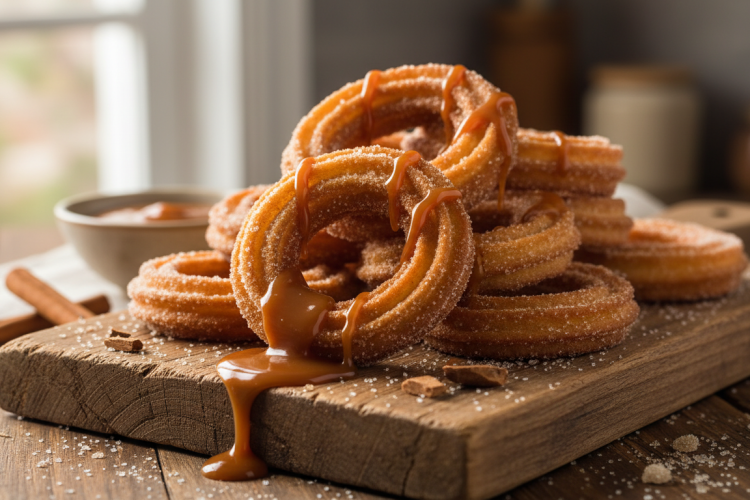
Caramel churros are crispy, cinnamon-sugar-dusted fried dough sticks drizzled with rich homemade caramel sauce — they come together in under 45 minutes and deliver bakery-quality results at home with just a handful of pantry staples.
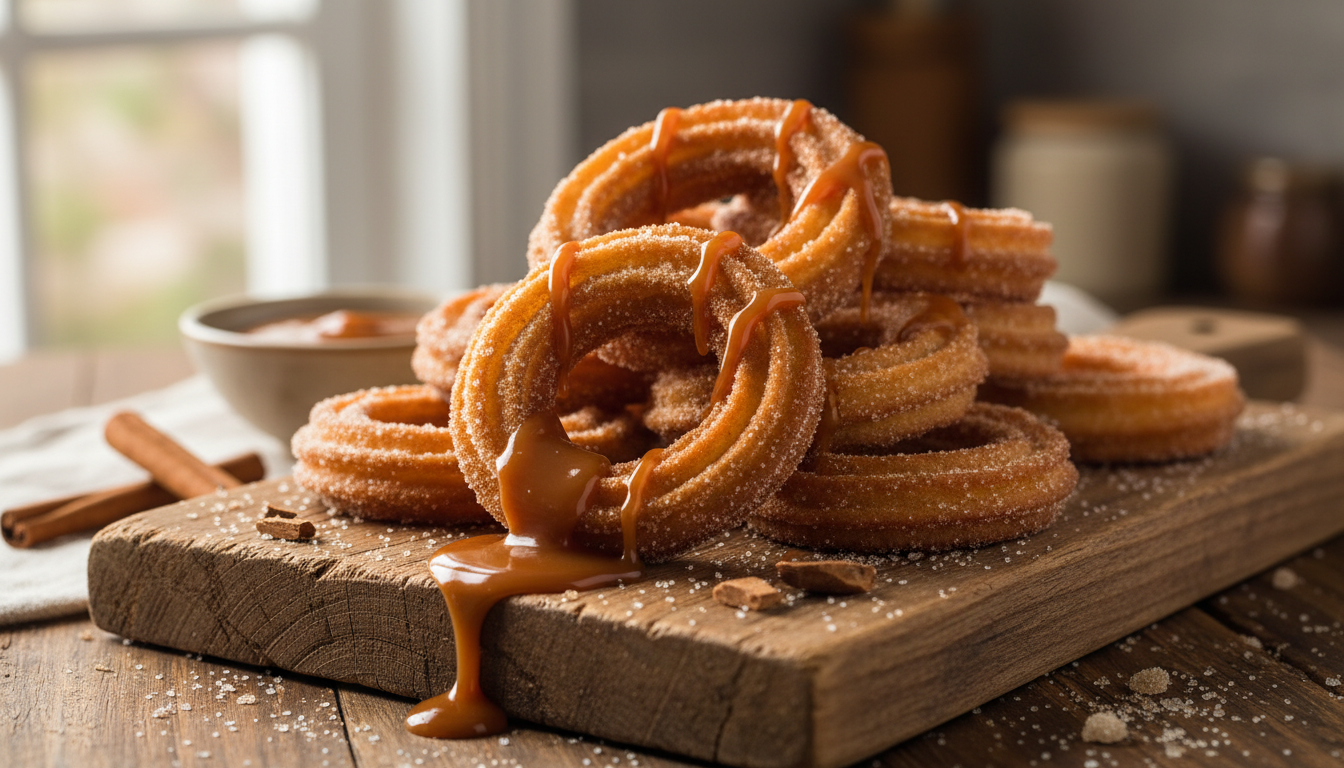
Why Caramel Churros Are Worth Making From Scratch
There are churros, and then there are caramel churros. The classic cinnamon-sugar combination is already irresistible, but when you add a silky, buttery caramel drizzle — or use caramel as your dipping sauce — you enter an entirely different level of dessert indulgence. The contrast of the crispy fried shell, the soft chewy interior, and the sticky-sweet caramel coating is the kind of thing that makes people ask for the recipe before they’ve even finished their first bite.
The good news: making caramel churros at home is surprisingly straightforward. The churro dough itself uses pantry staples you almost certainly already have — water, butter, flour, eggs, and salt. The caramel sauce takes about 10 minutes on the stovetop. The frying is a matter of managing your oil temperature. Follow this recipe and you’ll have a plate of perfect caramel churros on your table in well under an hour.
Ingredients You’ll Need
These quantities make approximately 16–20 churros (serves 4–6 people). Scale up easily for a crowd.
For the Churro Dough
- 1 cup water
- 2 tablespoons unsalted butter
- 1 tablespoon granulated sugar
- ¼ teaspoon fine salt
- 1 cup all-purpose flour
- 2 large eggs
- 1 teaspoon vanilla extract
- Vegetable or canola oil for frying (enough to fill pan 2–3 inches deep)
For the Cinnamon Sugar Coating
- ½ cup granulated sugar
- 1 teaspoon ground cinnamon
For the Homemade Caramel Sauce
- 1 cup granulated sugar
- 6 tablespoons unsalted butter, cut into cubes
- ½ cup heavy cream, at room temperature
- 1 teaspoon vanilla extract
- ½ teaspoon fine sea salt (for salted caramel variation)
Equipment: Medium saucepan, piping bag or zip-lock bag, large star tip (1M or 1E), thermometer (optional but helpful), tongs or spider strainer, shallow bowl for cinnamon sugar, wire cooling rack.
How to Make Caramel Churros: Step-by-Step Instructions
Step 1: Make the Caramel Sauce First
Start with the caramel sauce so it has time to cool slightly to a dipping consistency while you make the churros.
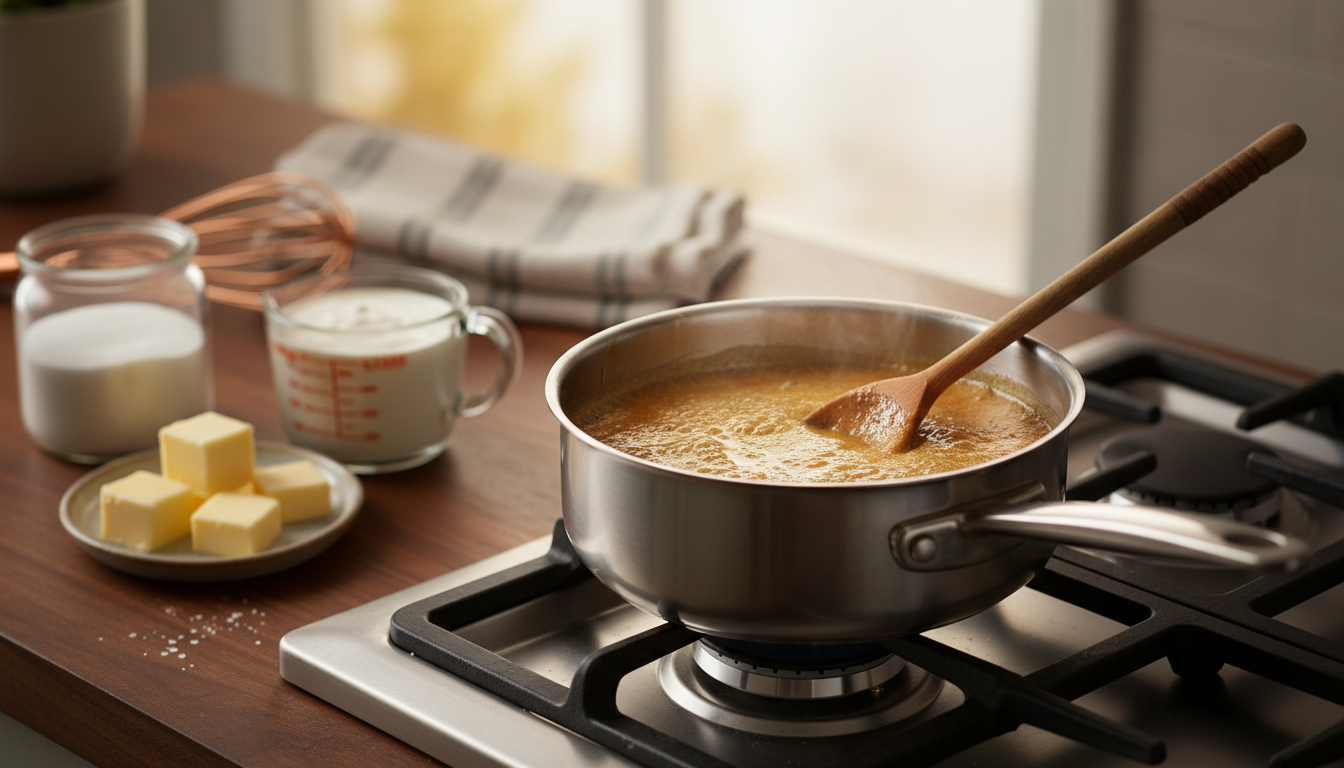
Pour the granulated sugar into a medium heavy-bottomed saucepan over medium heat. Stir continuously with a rubber spatula or wooden spoon as the sugar melts. It will clump first — keep stirring and be patient. After 5–8 minutes, the sugar will fully liquefy and turn a deep amber color. Watch it closely: the difference between perfect caramel and burnt caramel is about 30 seconds.
Once the sugar reaches a rich amber (think: color of a copper penny), immediately add the butter cubes. The mixture will bubble vigorously — this is normal. Stir until the butter is fully incorporated, about 2 minutes. Remove from heat and slowly pour in the heavy cream while stirring constantly. Add vanilla extract and salt. Stir until smooth. Transfer to a small bowl and set aside.
Pro tip: If your caramel seizes up with lumps, return it to low heat and stir until smooth again. A few seconds usually fixes it. According to Serious Eats, the dry-sugar method (no added water) produces the most consistent results for home cooks because you have complete control over the browning.
Step 2: Make the Churro Dough
Combine water, butter, sugar, and salt in a medium saucepan over medium-high heat. Bring to a rolling boil, stirring occasionally. Once boiling, reduce heat to medium and add all the flour at once. Stir vigorously with a wooden spoon until the dough comes together into a smooth ball that pulls away from the sides of the pan — about 2 minutes. The dough should be stiff and non-sticky.
Remove from heat and let the dough cool for 5 minutes (this prevents the eggs from scrambling when you add them). Add the vanilla extract, then add eggs one at a time, beating vigorously after each addition until fully incorporated. The dough will look slippery and separated at first — keep beating. After both eggs are added, you should have a smooth, thick, pipeable dough that holds its shape.
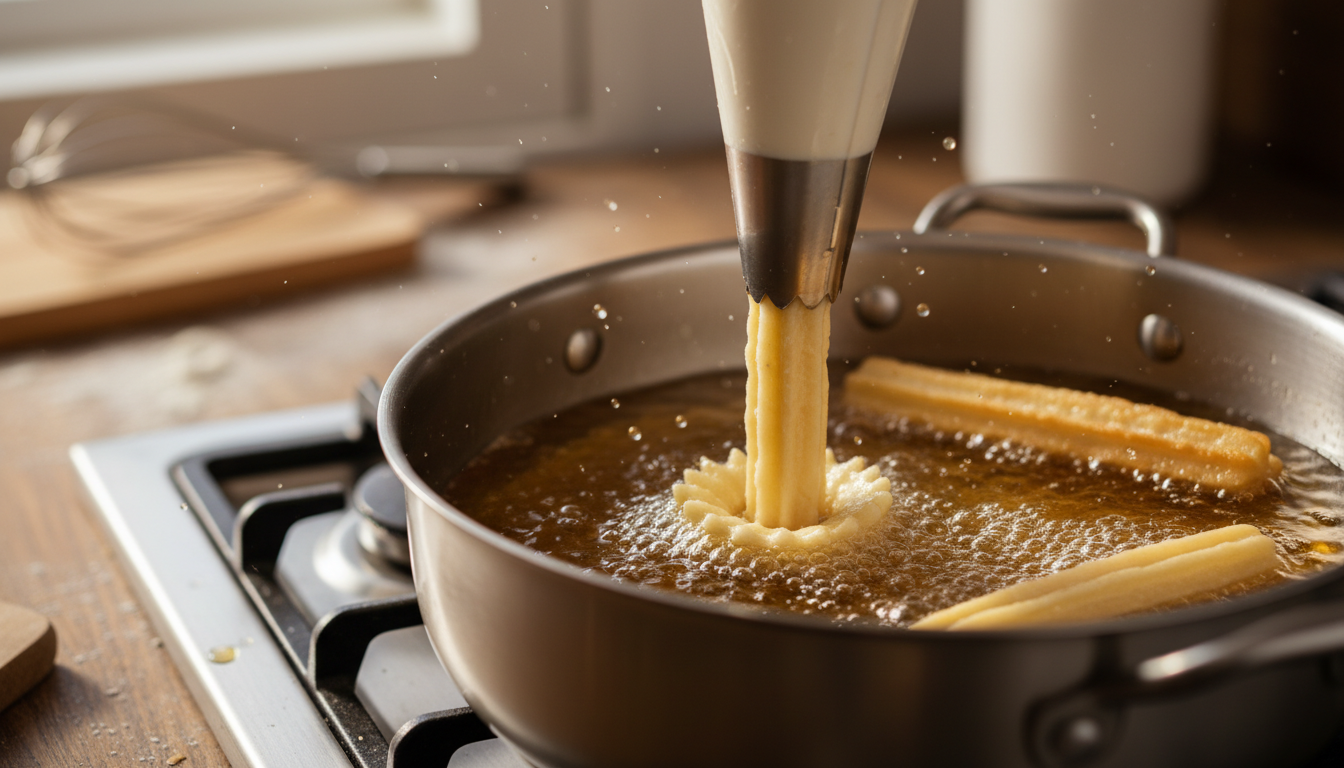
Transfer the dough to a piping bag fitted with a large open star tip. If you don’t have a piping bag, a large zip-lock bag with a corner snipped off works well. For perfectly consistent churros, the 1M or 1E Wilton tip gives the best results — the deep ridges crisp up beautifully in the oil. (Tip: our Matcha Churros uses the same base dough if you want to compare notes.)
Step 3: Set Up for Frying
Pour oil into a heavy-bottomed skillet or Dutch oven to a depth of about 2–3 inches. Heat over medium-high until the oil reaches 360–375°F (182–190°C). If you don’t have a thermometer, test with a small piece of dough — it should sink, then rise and sizzle within 2 seconds.
While the oil heats, mix your cinnamon sugar in a shallow bowl (½ cup sugar + 1 teaspoon cinnamon). Set it right next to the stove. Also place a wire rack or paper-towel-lined plate nearby for draining.
Oil temperature is critical. Too low (below 350°F) and churros absorb grease and turn soggy. Too high (above 385°F) and the outside burns before the interior cooks through. Medium heat and a watchful eye keep things on track. If you’re making a large batch, consider our guide on Churro Tres Leches Cake which includes batch-frying strategies for bigger quantities.
Step 4: Pipe and Fry the Churros
Pipe 4–5 inch lengths of dough directly into the hot oil, cutting with scissors or a knife. Fry in batches of 3–4 churros (don’t crowd the pan — this drops oil temperature). Fry for 3–4 minutes per side, turning once, until deeply golden brown. Total fry time: about 6–8 minutes per batch.
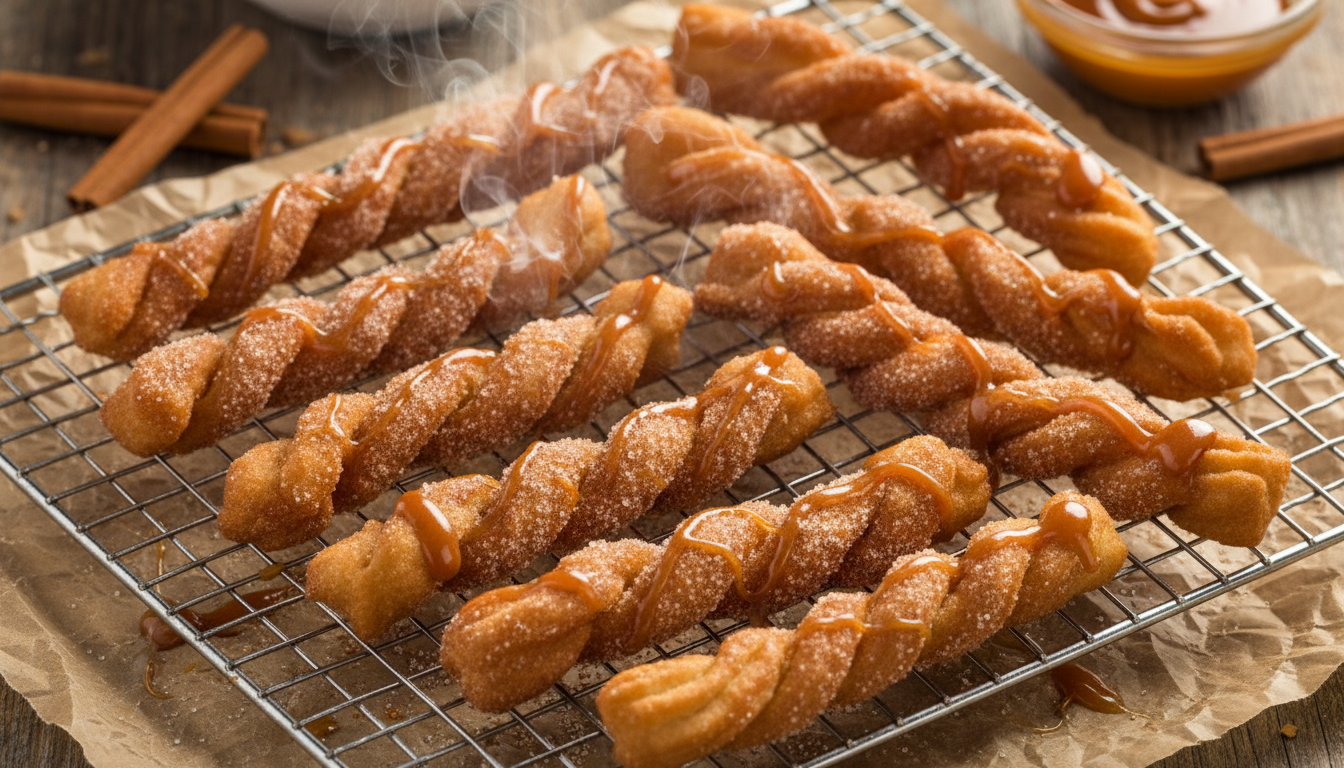
Remove with tongs or a spider strainer and immediately roll in the cinnamon sugar while still hot. The sugar adheres best within the first 30 seconds out of the oil. Place coated churros on the wire rack. They will stay crispy for 20–30 minutes at room temperature.
Step 5: Serve with Caramel Sauce
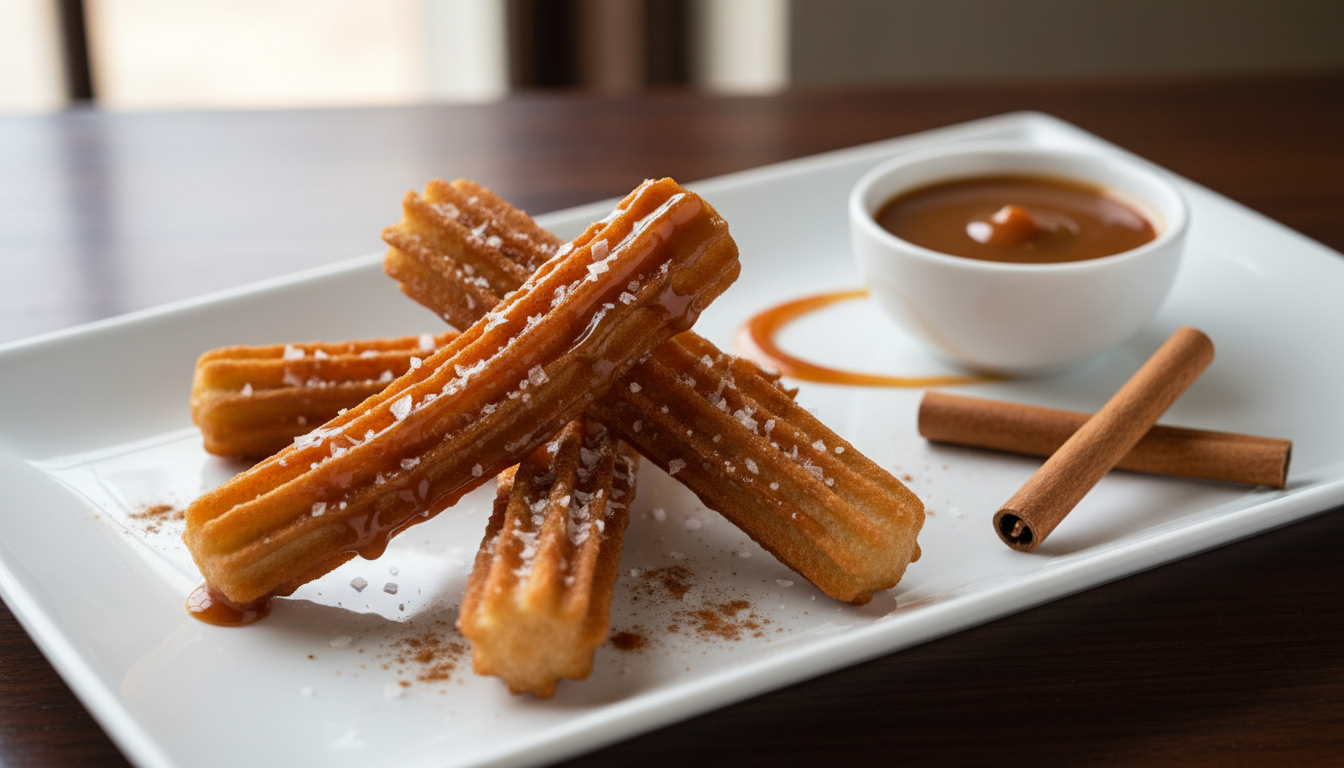
Arrange the warm churros on a serving platter or wooden board. Drizzle the caramel sauce generously over the top — or pour it into a small dipping bowl alongside. Garnish with a pinch of flaky sea salt for a salted caramel effect, a dusting of extra cinnamon, or a sprinkle of powdered sugar.
Serve immediately for maximum crunch. Caramel churros are best eaten warm, within 20–30 minutes of frying. The caramel sauce will keep in a jar in the fridge for up to 2 weeks — just reheat gently to loosen before using.
Caramel Churros Variations
Once you’ve mastered the base recipe, there are endless ways to riff on caramel churros:
- Salted Caramel Churros: Add ½ teaspoon flaky sea salt to the caramel sauce and finish with a pinch over the finished churros. The sweet-salty contrast is phenomenal. (We also have a dedicated Salted Caramel Churros recipe if you want the full deep-dive.)
- Caramel-Filled Churros: After frying, use a skewer to poke a hole lengthwise through each churro and pipe caramel sauce inside using a small piping tip. Messy, decadent, worth it.
- Caramel Apple Churros: Add ½ teaspoon apple pie spice to the cinnamon sugar, and stir a tablespoon of apple butter into the caramel sauce. Fall dessert perfection.
- Chocolate Caramel Churros: Replace ¼ cup of the flour in the dough with unsweetened cocoa powder for a chocolate churro, then dip in caramel.
- Air Fryer Caramel Churros: Pipe churros onto parchment, spray with oil, and air fry at 375°F for 12–14 minutes, turning halfway. Slightly less crispy than fried, but remarkably good.
- Caramel Churro Bites: Pipe into 1–2 inch nuggets for party-friendly bite-sized churros. Fry time drops to about 3–4 minutes total.
Tips for Perfect Caramel Churros Every Time
A few key insights that separate good churros from great churros:
- Let the dough rest and cool. Adding eggs to hot dough can scramble them. A 5-minute rest after making the dough makes all the difference.
- Beat the dough thoroughly after each egg. The dough will look broken and slimy at first — that’s normal. Keep beating until it comes back together into a smooth, glossy mass.
- Use a large star tip for the classic look. A plain round tip still produces edible churros, but you miss the signature ridged exterior that crisps up so beautifully. The ridges dramatically increase surface area, which equals more crunch.
- Fry at the right temperature. 360–375°F is the sweet spot. Below 350°F = greasy. Above 385°F = burnt outside, raw inside.
- Coat immediately after frying. The hot oil helps the cinnamon sugar adhere. Wait too long and it won’t stick.
- Don’t skip the salt in the caramel. Even if you don’t want “salted caramel,” a small pinch of salt balances the sweetness and adds depth.
- Room temperature cream for the caramel. Cold cream added to hot caramel can cause violent spattering. Bring it to room temp first, or at least warm it briefly in the microwave.
Make-Ahead and Storage
Churro dough: The cooked dough (before adding eggs) can be made up to 24 hours ahead and stored covered in the fridge. Bring to room temperature and beat in the eggs before piping.
Fried churros: Best fresh. If you must store them, keep at room temperature uncovered for up to 2 hours. Re-crisp in a 375°F oven or air fryer for 3–4 minutes before serving. Avoid the fridge — it makes them chewy and soft.
Caramel sauce: Keeps beautifully in a sealed jar in the refrigerator for up to 2 weeks. Reheat in the microwave in 20-second intervals, stirring between each, until pourable. The sauce can also be frozen for up to 3 months.
Unfried piped dough: You can pipe churros onto parchment-lined trays and freeze them unbaked. Fry directly from frozen — just add 1–2 minutes to the fry time. This makes it easy to have fresh churros on demand for parties and special occasions. For large-scale event churro preparation, see our guide on Bavarian Cream Churros which covers bulk batching in detail.
What to Serve With Caramel Churros
Caramel churros are outstanding on their own, but they pair beautifully with a number of accompaniments:
- Vanilla ice cream: The warm-cold, crispy-creamy contrast is everything. Place churros alongside a scoop and drizzle caramel over both.
- Chocolate sauce: A secondary dipping option alongside caramel. Dark chocolate provides a sophisticated counter to the sweetness.
- Dulce de leche: The Latin American cousin of caramel — slightly thicker and more milky. An excellent alternative or addition to the caramel sauce.
- Whipped cream: Light and airy alongside the rich churros. Especially good with the caramel apple variation.
- Mexican hot chocolate: Traditional churro pairing — thick, slightly spiced, deeply chocolatey. The churros are designed for dunking.
- Fresh berries: Strawberries, raspberries, or blackberries add brightness and acidity that cuts through the richness.
For a full churro-inspired dessert experience, check out our Churro Tres Leches Cake — it captures every element of churro flavor in a showstopping layered cake format.
Watch: How to Make Caramel Churros at Home
Caramel Churros vs. Other Churro Styles
Churros come in a remarkable number of variations across different culinary traditions, and caramel is just one of dozens of possible flavor pairings. Here’s how caramel churros compare to a few other popular styles:
| Churro Style | Dipping Sauce | Flavor Profile | Best For |
|---|---|---|---|
| Caramel Churros | Homemade caramel | Sweet, buttery, rich | Dessert, parties, date night |
| Classic Churros | Chocolate sauce | Cinnamon-forward, slightly savory | Traditional experience |
| Matcha Churros | White chocolate | Earthy, slightly bitter | Unique / Instagram-worthy |
| Ube Churros | Ube cream | Floral, vanilla-like | Filipino fusion dessert |
| Bavarian Cream Churros | Filled (cream inside) | Rich, custardy | Indulgent treat |
Each style starts with the same base churro dough — the differences are all in what you add. For a deep dive into the full range of churro variations and fillings, our Ube Churros recipe covers the Filipino-inspired approach, while the matcha version in our Matcha Churros recipe is perfect for green tea lovers.
Common Caramel Churro Mistakes and How to Fix Them
Even experienced home bakers run into issues the first time they make caramel churros. Here are the most common problems and exactly how to fix them:
- Churros are greasy: Oil was too cool. Heat to 360°F minimum before adding churros. Also ensure you’re not overcrowding the pan.
- Churros are burnt outside but raw inside: Oil was too hot, or churros were too thick. Keep temperature at 375°F max and keep churros to 4–5 inch lengths of consistent diameter.
- Dough won’t pipe smoothly: Dough may be too thick (reduce flour slightly next time) or the star tip is clogged. Work the dough in the bag to soften it before piping.
- Caramel sauce is grainy: Sugar crystallized during cooking. This usually happens if you stir too early before the sugar fully melts, or if sugar crystals from the side of the pan fall in. Use a clean pastry brush dipped in water to wash down the sides of the pan.
- Caramel sauce is too thick: Add an extra tablespoon of cream and warm gently while stirring. Repeat until desired consistency is reached.
- Cinnamon sugar won’t stick: Churros cooled too much before rolling. Roll within 30 seconds of leaving the oil. Alternatively, lightly brush churros with melted butter before rolling.
Frequently Asked Questions
Can I make caramel churros without a piping bag?
Yes. Use a large zip-lock bag with a ½-inch corner snipped off. You won’t get the deep star-tip ridges, but the churros will taste identical. Alternatively, you can roll the dough by hand into logs — the texture won’t be quite as airy, but it works well and requires zero equipment.
Can I bake caramel churros instead of frying?
Yes, with caveats. Pipe churros onto a parchment-lined baking sheet, brush generously with melted butter, and bake at 425°F for 20–25 minutes until golden. They’ll be less crispy than fried and won’t have the same interior texture, but they’re a respectable lower-fat option. The caramel sauce is the same either way.
Why is my caramel sauce separating?
Caramel can “break” (fat separates from sugar) if the temperature differences between ingredients are too large, or if it’s stirred too vigorously at the wrong time. If your sauce looks oily and separated, return it to low heat and stir constantly. Usually it re-emulsifies within a minute. Adding a teaspoon of warm water and stirring can also help bring it back together.
How do I keep caramel churros crispy for a party?
Fry the churros, coat in cinnamon sugar, and place on a wire rack (not a plate — a rack allows air circulation on all sides). Keep in a warm oven (200°F) for up to 30 minutes before serving. Avoid covering them — steam is the enemy of crispiness. Keep the caramel sauce warm in a small slow cooker or fondue pot for easy dipping at a party setup.
Are caramel churros gluten-free?
Standard caramel churros use all-purpose flour and are not gluten-free. However, you can substitute a 1:1 gluten-free flour blend (such as Bob’s Red Mill or King Arthur Measure for Measure) with good results. The texture may be slightly denser, but the flavor is comparable. The caramel sauce is naturally gluten-free. For more on gluten-free candy and dessert options, see our guide to Are Laffy Taffy Gluten Free?