
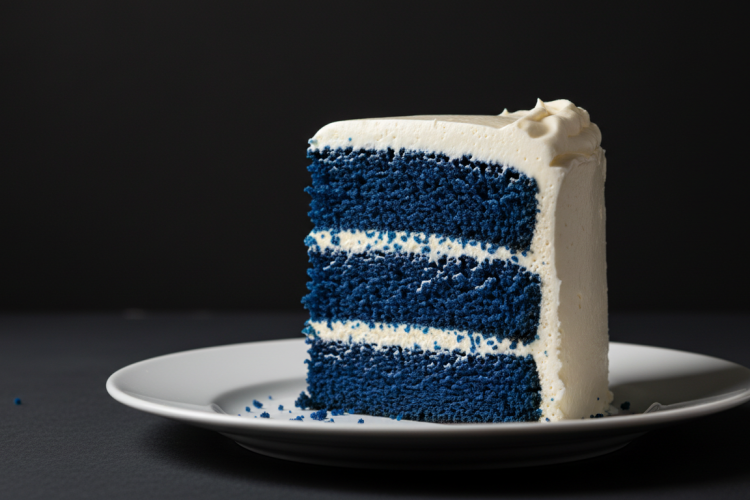
Blue velvet cake is a moist, tender layer cake with a striking royal blue crumb, made by replacing the red food coloring in classic red velvet with blue. It has the same signature mild cocoa flavor and slightly tangy buttermilk base as red velvet, finished with a smooth cream cheese frosting.
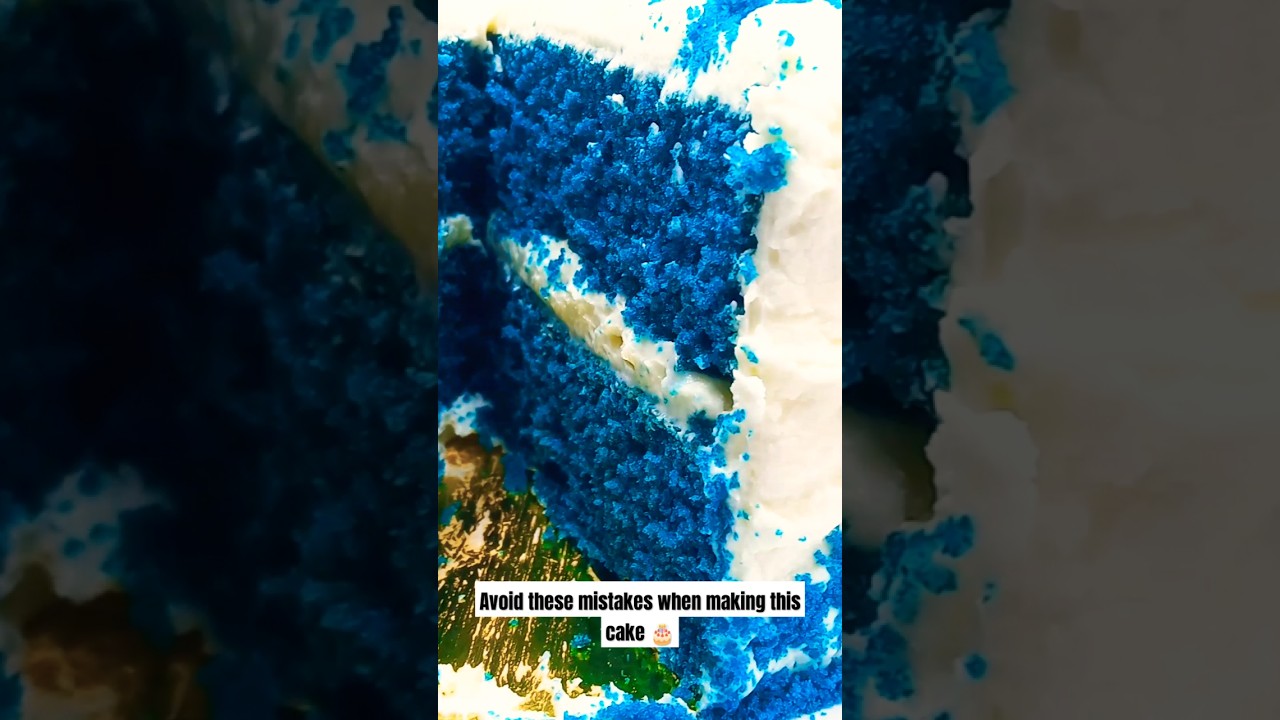
What Is Blue Velvet Cake?
Blue velvet cake is essentially a red velvet cake with the food coloring swapped from red to blue. The base recipe is identical — a buttermilk and cocoa sponge leavened with baking soda and activated by a vinegar reaction — but the blue color creates an entirely different visual impact. Slice it open at a party and the contrast of bright blue layers against white cream cheese frosting is genuinely show-stopping.
The flavor is mild cocoa with a subtle tangy note from the buttermilk — light and not as rich as a full chocolate cake. It’s the texture that defines velvet cakes: extremely moist, fine-crumbed, and tender.
Ingredients
This recipe makes two 9-inch round layers (serves 12-16).
For the Cake
- 2½ cups all-purpose flour
- 2 tablespoons unsweetened cocoa powder
- 1 teaspoon baking soda
- ½ teaspoon salt
- 1 cup (2 sticks) unsalted butter, softened
- 1¾ cups granulated sugar
- 2 large eggs, room temperature
- 1 cup buttermilk, room temperature
- 1 teaspoon pure vanilla extract
- 1 teaspoon white vinegar
- 2–3 tablespoons royal blue gel food coloring (see tips below)
- 1 tablespoon navy blue gel food coloring (optional, for deeper shade)
For the Cream Cheese Frosting
- 16 oz (2 blocks) cream cheese, softened
- 1 cup (2 sticks) unsalted butter, softened
- 4 cups powdered sugar, sifted
- 2 teaspoons pure vanilla extract
- Pinch of salt
How to Make Blue Velvet Cake From Scratch
Step 1 — Prep
Preheat oven to 350°F (175°C). Grease and flour two 9-inch round cake pans, then line the bottoms with parchment paper circles. This ensures clean release. Set aside.
Step 2 — Mix Dry Ingredients
In a medium bowl, whisk together flour, cocoa powder, baking soda, and salt. Set aside.
Step 3 — Cream Butter and Sugar
In a large bowl, beat softened butter on medium-high speed for 2 minutes until light and fluffy. Add sugar and beat for another 3 minutes until pale and very fluffy. Scrape down the bowl. Add eggs one at a time, beating well after each addition. Add vanilla extract.
Step 4 — Add Color
Add your blue gel food coloring to the wet mixture and mix on low until incorporated. Start with 2 tablespoons of royal blue — you can always add more. The batter will look intensely blue at this stage, which is what you want (it lightens slightly during baking).
Step 5 — Alternate Wet and Dry
With the mixer on low, add the flour mixture in three additions, alternating with buttermilk in two additions. Start and end with flour: flour → buttermilk → flour → buttermilk → flour. Mix just until combined after each addition — do not overmix.
Step 6 — Add Vinegar and Bake
Fold in the white vinegar — this activates the baking soda for extra lift and contributes to the tender, velvety crumb. Divide batter evenly between the two prepared pans. Bake 28–33 minutes, until a toothpick inserted in the center comes out with just a few moist crumbs. Do not overbake — the crumb should be moist, not dry.
Cool in pans 15 minutes, then turn out onto a wire rack and cool completely before frosting.
Cream Cheese Frosting
Beat cream cheese and butter together on medium-high speed for 3 minutes until completely smooth with no lumps. Reduce speed to low and gradually add powdered sugar, 1 cup at a time. Add vanilla and a pinch of salt. Once all sugar is incorporated, increase speed to medium-high and beat 2 minutes more until light and fluffy. The frosting should be thick and spreadable but not stiff.
Important: Both the cream cheese and butter must be fully softened to room temperature. Cold cream cheese creates lumps that don’t beat out.
Assembling and Decorating
Place one layer on a cake board or serving plate. Spread a generous layer of cream cheese frosting on top (about ¾ cup). Place the second layer on top and press gently to adhere. Apply a thin crumb coat of frosting over the entire cake and refrigerate 20 minutes to set. Then apply the final layer of frosting — smooth with an offset spatula or bench scraper for a clean finish.
Decoration ideas:
- Pipe rosettes with a star tip on top using leftover frosting tinted blue
- Add white pearl sprinkles or edible silver flakes for a cosmic or ocean look
- Press blue velvet cake crumbs (from any offcuts) along the bottom edge
- Top with fresh blueberries for a natural color echo
For more stunning cake ideas, check out our Red Velvet Cake secrets guide and our Glow in the Dark Cake recipe — both make just as much of an impression at parties.
Tips for a Vivid Blue Color
- Use gel food coloring, not liquid. Liquid food coloring dilutes the batter and gives a pale, washed-out result. Gel concentrates are far more potent — AmeriColor “Royal Blue” and Wilton’s “Royal Blue” are reliable choices.
- Add color before the flour. This ensures even distribution throughout the batter. Adding it after flour incorporation can result in streaks.
- Avoid alkaline reactions. The more baking soda or baking powder you use, the more the blue color can shift toward green (blue + alkaline = green). This recipe is calibrated to minimize that effect.
- Don’t overmix. Overmixed batter develops more gluten, which toughens the crumb and can dull the color intensity.
- Check color after baking. The baked cake should be a deep royal blue. If it baked green, you used too much leavening or overmixed — use less baking soda next time.
Flavor and Color Variations
| Variation | How to Modify |
|---|---|
| Ocean Blue Velvet | Add 1 tsp blue spirulina powder for a natural teal-blue hue |
| Galaxy Cake | Add swirls of purple + black gel to the batter before baking for a marbled galaxy look |
| Blue Velvet Cupcakes | Same batter, bake at 350°F for 18–20 minutes in lined muffin tins |
| Lemon Blue Velvet | Add 2 tbsp lemon zest to the batter and swap cream cheese frosting for a lemon buttercream |
Flavor Twists and Add‑Ins for Blue Velvet Cake
While the classic blue velvet cake shines on its own, a handful of thoughtful additions can turn it into a signature dessert that reflects your personal palate. One easy way to add depth is to fold in a tablespoon of high‑quality espresso powder; the subtle coffee note amplifies the cocoa‑like undertones without overpowering the vivid hue. If you prefer a fruitier profile, swirl in a cup of fresh raspberry purée just before the batter hits the oven—the tartness balances the sweet cream cheese frosting beautifully. For a nutty crunch, toast ½ cup of sliced almonds and sprinkle them over the batter after it’s poured into the pans; the almonds toast to a golden brown, creating a pleasing contrast against the blue crumb. You can also experiment with alternative milks—using oat or almond milk instead of dairy adds a gentle nuttiness while keeping the cake moist. When you’re ready to try a completely new direction, swap half of the all‑purpose flour for almond flour; the result is a slightly denser crumb that pairs wonderfully with a drizzle of lemon glaze. For more inspiration on creative cake add‑ins, check out our related post that explores seasonal flavor pairings for classic desserts.
Serving Ideas and Pairings for Blue Velvet Cake
Presentation and pairing can elevate a blue velvet cake from a simple treat to a memorable centerpiece. Slice the cake into elegant wedges and serve each piece atop a small dollop of lightly sweetened whipped ricotta; the creamy tang cuts through the richness of the frosting and adds a sophisticated visual contrast. For brunch gatherings, pair a slice with a glass of chilled sparkling rosé—the wine’s bright acidity mirrors the cake’s subtle citrus notes and makes the blue color pop under natural light. If you’re hosting an evening soiree, consider a classic Old Fashioned made with bourbon, a dash of orange bitters, and an orange peel garnish; the caramel‑spiced spirit complements the cake’s buttery base while the orange zest echoes the faint orange undertone that many blue velvet recipes achieve. For a non‑alcoholic option, brew a strong chai latte and serve it alongside the cake; the warm spices of cardamom and clove harmonize with the cocoa‑like flavor in the crumb. Need more ideas on perfect beverage matches? The culinary editors at Epicurious have compiled a list of drinks that pair beautifully with velvet‑style cakes. Finally, don’t forget to garnish the top with edible glitter or fresh blueberries for an extra pop of color that ties the whole plate together. For a quick guide on decorative finishes, see our vanilla buttercream tutorial, which offers tips on piping and shimmer techniques.
Frequently Asked Questions
Why did my blue velvet cake turn green?
Blue food coloring reacts with alkaline ingredients like baking soda. Too much baking soda shifts blue to green during baking. Use no more than 1 teaspoon baking soda, add the vinegar to balance the alkalinity, and use gel coloring (not liquid) for the most stable blue hue.
What does blue velvet cake taste like?
Blue velvet cake tastes like a mild chocolate cake with a slight tanginess from the buttermilk — lighter and more delicate than a full chocolate layer cake. The dominant flavor is the rich cream cheese frosting, with the cocoa playing a subtle background role.
Can I make blue velvet cake without buttermilk?
Yes. Make a buttermilk substitute: add 1 tablespoon of white vinegar or lemon juice to 1 cup of regular whole milk. Stir and let sit for 5 minutes until it curdles slightly. Use in the same quantity as the buttermilk called for.
How do you store blue velvet cake?
Store frosted blue velvet cake covered in the refrigerator for up to 5 days. Bring to room temperature 30–45 minutes before serving — cold cake is dense; room-temperature cake has the proper moist, tender texture.
Can I freeze blue velvet cake?
Yes. Freeze unfrosted cake layers wrapped tightly in plastic wrap and aluminum foil for up to 3 months. Defrost overnight in the refrigerator, bring to room temperature, then frost. Frosted slices can also be frozen individually.