
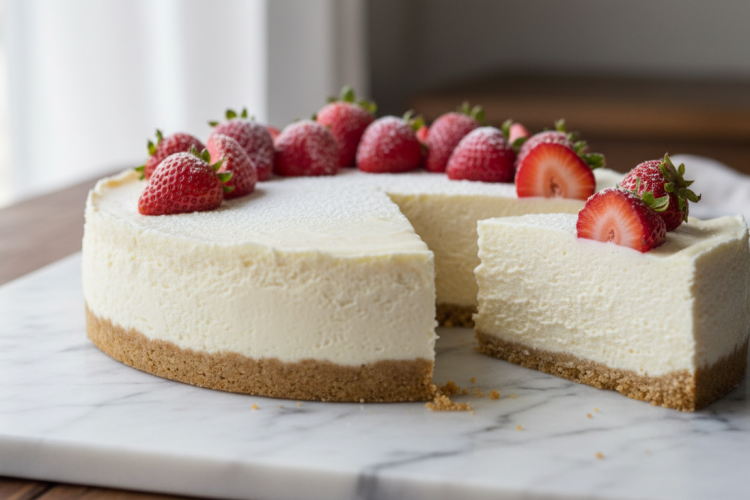
This easy no-bake cheesecake sets up perfectly in the fridge — no water bath, no cracking, no oven required. A buttery graham cracker crust holds a rich, creamy cream cheese filling that slices cleanly after just 6 hours of chilling. It’s the most reliable no-bake cheesecake recipe you’ll make.
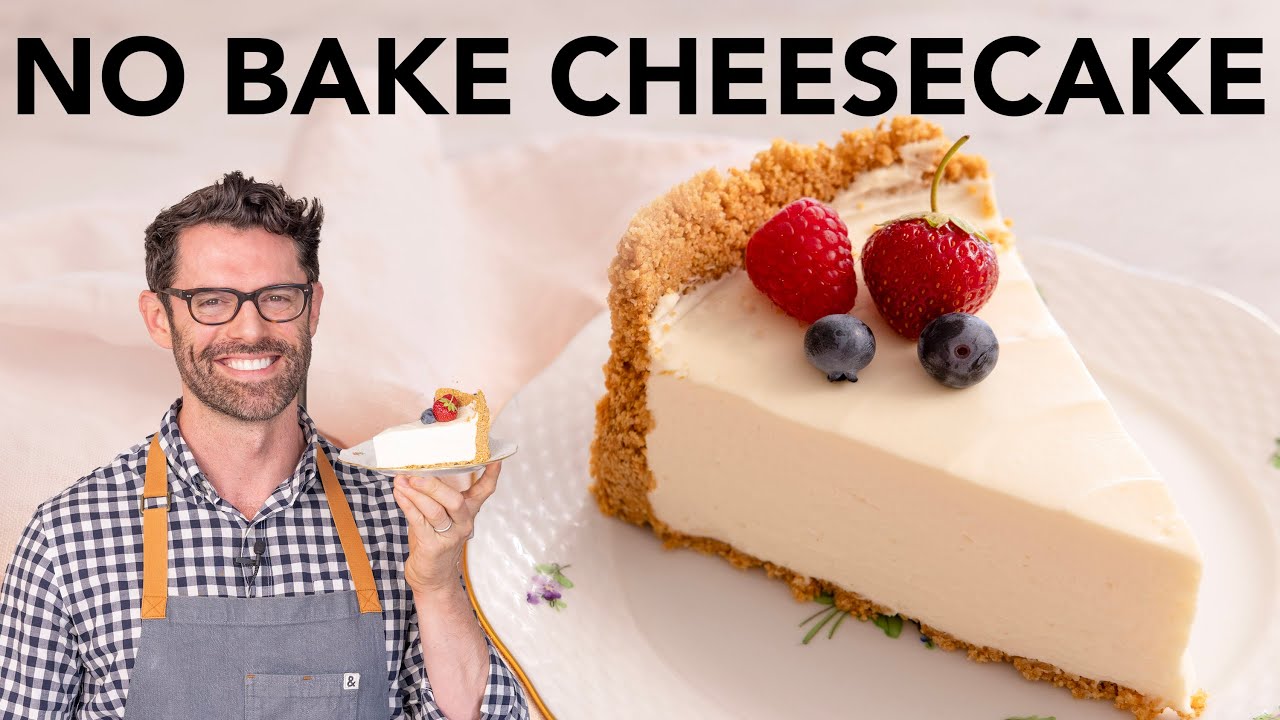
Why No-Bake Cheesecake Actually Works
Traditional baked cheesecakes use eggs to set the filling via heat. No-bake cheesecakes achieve structure differently: whipped cream is folded into sweetened cream cheese, and the whole thing sets through chilling. The result is lighter and mousse-like rather than dense and custardy — and completely delicious in its own right. The keys are using full-fat cream cheese and making sure the whipped cream is beaten to stiff (not soft) peaks before folding.
Ingredients
For the Graham Cracker Crust
- 2 cups (200g) graham cracker crumbs (about 14 full crackers)
- ⅓ cup (67g) granulated sugar
- ½ cup (115g) unsalted butter, melted
- Pinch of salt
For the No-Bake Filling
- 24 oz (680g) full-fat cream cheese, room temperature
- 1 cup (120g) powdered sugar, sifted
- 1 tsp vanilla extract
- 2 tbsp fresh lemon juice
- 1 cup (240ml) heavy whipping cream, cold
Step 1: Make the Crust
Combine graham cracker crumbs, sugar, melted butter, and salt in a bowl. The mixture should look like wet sand and hold together when pressed. Press firmly into the bottom and 1½ inches up the sides of a 9-inch springform pan. Use the flat bottom of a measuring cup to compact it well — this prevents crumbling when you slice.
Refrigerate the crust for at least 30 minutes while you prepare the filling. A cold, firm crust makes assembly much easier.
Step 2: Make the Filling
Beat room-temperature cream cheese on medium-high speed for 2–3 minutes until completely smooth and fluffy. Scrape down the bowl, then add powdered sugar, vanilla, and lemon juice. Beat another 2 minutes until fully combined with no lumps.
In a separate cold bowl, whip heavy cream to stiff peaks — when you lift the whisk, peaks should stand straight up without drooping. This is critical: soft peaks won’t give the cheesecake enough structure to slice cleanly.
Gently fold the whipped cream into the cream cheese mixture in three additions, using a rubber spatula. Fold until just combined and no white streaks remain — don’t stir or deflate the whipped cream.
Step 3: Chill and Set
Spoon the filling over the chilled crust and smooth the top with an offset spatula. Tap the pan gently on the counter to release any air bubbles. Cover with plastic wrap (not touching the surface) and refrigerate for a minimum of 6 hours — overnight is ideal.
To unmold, run a thin knife around the edge before releasing the springform. Slice with a hot, dry knife for the cleanest cuts. Serve plain or topped with fresh fruit, caramel sauce, or cherry pie filling.
Tips and Troubleshooting
- Use room-temp cream cheese: Cold cream cheese will stay lumpy no matter how long you beat it. Set it out at least an hour ahead.
- Don’t skip the lemon juice: It brightens the flavor and helps firm up the filling slightly.
- Cheesecake too soft? It needed more chilling time, or the whipped cream wasn’t at stiff peaks. Freeze for 30 minutes to rescue it.
- Crust crumbling? Add another tablespoon of melted butter and press more firmly.
- Making ahead: This cheesecake keeps beautifully in the fridge for up to 5 days.
Easy Variations
Once you’ve mastered the base recipe, try these popular variations:
- Strawberry No-Bake Cheesecake: Top with fresh strawberry sauce or sliced berries
- Oreo No-Bake Cheesecake: Swap graham crackers for Oreo crumbs and fold crushed Oreos into the filling
- Lemon No-Bake Cheesecake: Add 2 tbsp extra lemon juice and 1 tbsp zest to the filling
- Peanut Butter No-Bake Cheesecake: Swirl ½ cup peanut butter into the filling before chilling
For another classic cheesecake, try our Butterbeer Cheesecake Recipe — a Harry Potter-inspired baked version that’s equally stunning.
Why won’t my no-bake cheesecake set?
The most common reasons are: the whipped cream wasn’t at stiff peaks before folding, the cream cheese was too cold (and lumpy), or it didn’t chill long enough. Give it at least 6 hours — overnight is safest.
Can I freeze no-bake cheesecake?
Yes. Freeze uncovered for 2 hours, then wrap tightly. It keeps up to 1 month frozen. Thaw overnight in the fridge before serving.
Do I need a springform pan for no-bake cheesecake?
A springform pan makes unmolding much easier, but you can use a deep pie dish or square pan and serve it directly from the dish.
Can I use low-fat cream cheese?
Full-fat is strongly recommended. Low-fat cream cheese has more water content and results in a softer, less stable filling that may not set properly.
How far in advance can I make no-bake cheesecake?
Up to 2 days in advance (without toppings). Add fruit toppings the day of serving.
No-Bake Cheesecake Flavor Variations
The base no-bake cheesecake recipe is a blank canvas. These variations all work without adjusting the structure — just swap or add ingredients to the filling:
- Strawberry no-bake cheesecake: Fold ½ cup strawberry jam into the filling before pouring, or top with fresh macerated strawberries.
- Lemon no-bake cheesecake: Add 3 tbsp fresh lemon juice + 1 tbsp lemon zest to the cream cheese mixture. Bright and refreshing.
- Oreo no-bake cheesecake: Use an Oreo crust (crushed Oreos + butter), fold roughly crushed Oreos into the filling, and top with more crushed Oreos.
- Chocolate no-bake cheesecake: Fold 3 tbsp cocoa powder and 2 oz melted dark chocolate into the cream cheese base before folding in whipped cream.
- Peanut butter no-bake cheesecake: Swap half the cream cheese for smooth peanut butter. Top with chocolate ganache and crushed Reese’s cups.
- Salted caramel no-bake cheesecake: Swirl ½ cup caramel sauce into the filling before it sets. Top with flaky sea salt just before serving.
Why Your No-Bake Cheesecake Might Not Set
The two most common reasons no-bake cheesecakes don’t set properly:
- Under-whipped cream: The whipped cream needs to reach stiff peaks before folding in. Soft or medium peaks won’t provide enough structure. Use very cold heavy cream and a chilled bowl for best results.
- Not enough chill time: No-bake cheesecake needs a minimum of 6 hours in the refrigerator; overnight is better. Don’t try to rush it in the freezer — you’ll get icy texture, not the right set.
Full-fat cream cheese is non-negotiable here. Low-fat or whipped cream cheese has too much water content and the cheesecake will be soft and runny regardless of chill time.
Flavor Twists and Seasonal Add‑Ons
Once you’ve mastered the basic no‑bake cheesecake, the sky’s the limit for creative variations. A quick way to elevate the dessert is to fold in a flavored extract—think almond, orange, or even a splash of espresso—right after the cream cheese is smooth. For a summer‑ready version, swirl in a cup of fresh‑pureed mango or blend in a handful of frozen raspberries; the fruit not only adds a burst of color but also a subtle acidity that balances the richness. If you prefer a more indulgent twist, drizzle a thin layer of caramel or dark chocolate ganache over the set cheesecake and sprinkle toasted coconut or crushed pistachios just before serving. For inspiration on fruit‑forward pairings, check out our Mango No‑Bake Cheesecake post, which walks you through a similar technique. When you’re looking for professional guidance on flavor balance, the chefs at Epicurious offer a wealth of tested recipes that can help you fine‑tune the sweetness and texture of your creation.
Storing, Freezing, and Re‑Serving Your No‑Bake Cheesecake
One of the biggest advantages of a no‑bake cheesecake is its flexibility in the kitchen calendar. After the cheesecake has set, cover the pan tightly with plastic wrap, making sure the wrap touches the surface to prevent a dry skin from forming. It will keep fresh in the refrigerator for up to five days, which is perfect for a make‑ahead dessert for a weekend gathering. If you need to extend its life even further, the cheesecake freezes beautifully: wrap it in a double layer of cling film and then a sheet of aluminum foil. When you’re ready to serve, transfer it to the fridge to thaw slowly for 4–6 hours; this gradual thaw preserves the creamy texture. For a polished presentation, run a hot, damp knife around the edge before lifting the cheesecake onto a serving plate. Need a refresher on the best way to slice and plate your cheesecake? Our guide on How to Serve Cheesecake walks you through the process step by step, from choosing the right knife to adding garnish that pops.
Troubleshooting Common No‑Bake Issues (Beyond the Basics)
Even with a foolproof recipe, occasional hiccups can happen. If the filling appears too loose after chilling, it usually means the whipped cream wasn’t stiff enough or the sweetened condensed milk was added too quickly, breaking the emulsion. In that case, give the mixture another quick whip to incorporate air, then return it to the fridge for an additional hour. A cracked surface is another frequent concern; it often results from rapid temperature changes. To avoid this, let the cheesecake come to room temperature for 10–15 minutes before placing it in the freezer or refrigerator, and never expose it to direct drafts. Finally, a grainy texture can be a sign that the cream cheese was over‑mixed once the sugar dissolved, causing the fat to separate. The remedy is simple: gently fold the remaining ingredients together with a rubber spatula, being careful not to over‑work the batter. By keeping these troubleshooting tips in mind, you’ll ensure that every batch sets perfectly, smooth and slice‑ready, no matter the season or the crowd.
Flavor Twists and Mix‑Ins
While the classic vanilla‑cream cheese base is a crowd‑pleaser, the real magic of a no‑bake cheesecake lies in its adaptability. Start by swapping half of the cream cheese for mascarpone or ricotta for a silkier mouthfeel, then fold in a tablespoon of freshly grated lemon or orange zest for a bright citrus note. For berry lovers, gently stir in a cup of pureed strawberries, blueberries, or a mix of frozen raspberries that have been thawed and drained; the natural pectin helps the filling stay firm without extra gelatin. Chocolate fans can melt ¼ cup of dark chocolate and blend it into the filling, or simply sprinkle cocoa powder into the mixture for a subtle mocha flavor. If you prefer a nutty crunch, toast chopped pistachios, almonds, or hazelnuts and sprinkle them over the top just before chilling. These variations keep the core technique identical—no baking, no fuss—while delivering a fresh taste each time you serve it. For more inspiration on creative cheesecake pairings, check out this related post and see the expert recommendations from Serious Eats on balancing sweet and savory in desserts.
Make‑Ahead Planning and Storage
One of the biggest advantages of a no‑bake cheesecake is its make‑ahead potential. After assembling the crust and filling, cover the pan tightly with plastic wrap and refrigerate for at least four hours, though an overnight chill yields the cleanest slice. The dessert will stay fresh in the fridge for up to five days, provided it’s stored in an airtight container to prevent it from absorbing odors from other foods. If you need to extend its shelf life, the cheesecake freezes beautifully: wrap it first in a layer of parchment paper, then in foil, and label with the date. It can be kept frozen for up to two months; simply thaw it in the refrigerator overnight before serving. When you’re ready to plate, let the cake sit at room temperature for 10‑15 minutes to soften the edges, then garnish with fresh fruit, a drizzle of caramel, or a dusting of powdered sugar. For detailed guidelines on dairy‑based dessert storage, see the comprehensive guide from our blog and the food safety standards outlined by Epicurious.