

Indonesian desserts are a rich and diverse category of traditional sweets built around tropical ingredients — coconut milk, palm sugar (gula melaka), pandan leaf, sticky rice, and tropical fruits. The most iconic include klepon (pandan-filled rice balls), dadar gulung (green crepes), es cendol (shaved ice dessert), and serabi (coconut rice pancakes).


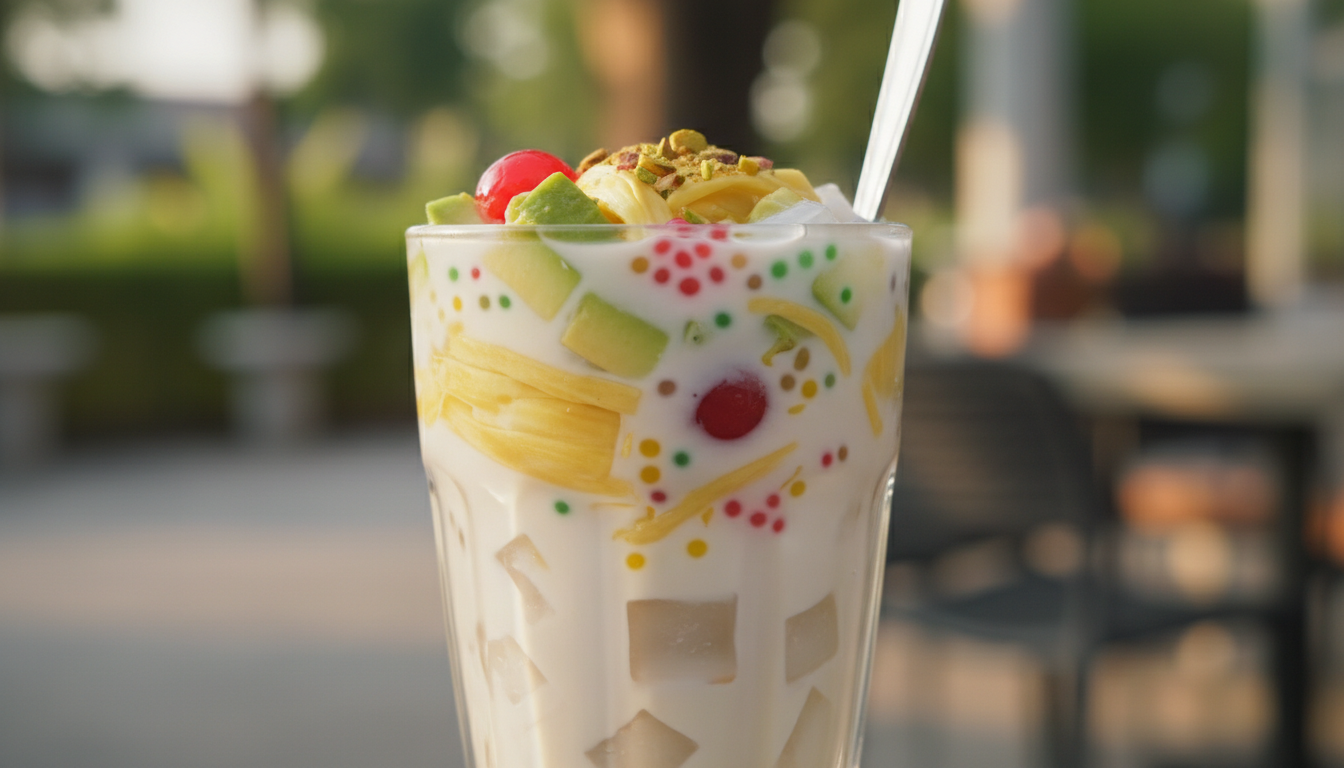
Table of Contents
- What Makes Indonesian Desserts Unique
- Rice and Glutinous Rice Desserts
- Coconut and Palm Sugar Sweets
- Fried Indonesian Sweet Snacks
- Cold Dessert Drinks
- Regional Specialties
- FAQ
What Makes Indonesian Desserts Unique
Indonesian desserts (called kue or jajanan pasar — literally “market snacks”) are defined by a handful of key ingredients that don’t appear together in any other cuisine:
- Pandan leaf — a tropical plant that gives a distinctly grassy-vanilla aroma and vibrant green color to doughs, custards, and syrups
- Gula melaka (palm sugar) — rich, caramel-forward unrefined sugar from coconut palms, used in almost every traditional dessert
- Coconut milk — used in doughs, custards, ice desserts, and sauces — provides body and tropical sweetness
- Glutinous rice (ketan) — sticky rice flour is the base of dozens of Indonesian kue
- Santan (thick coconut cream) — the finishing touch on many cold and warm desserts, poured on top just before serving
Rice and Glutinous Rice Desserts
1. Klepon
One of Indonesia’s most beloved street foods. Klepon are small green balls made from glutinous rice flour tinted with pandan juice, filled with liquid palm sugar, and rolled in fresh grated coconut. When you bite into one, the molten palm sugar erupts — a burst of caramel sweetness inside a chewy, fragrant shell. Klepon are a must-try for anyone exploring Indonesian sweets.
2. Lemper
Sticky rice rolls filled with savory-sweet shredded chicken or beef, wrapped in banana leaves. Lemper straddle the line between snack and dessert in Indonesia — they’re sold at markets and eaten as an afternoon treat. The banana leaf wrapper imparts a subtle earthy aroma to the rice.
3. Ketan Hitam (Black Sticky Rice Pudding)
Black glutinous rice slow-cooked with coconut milk, pandan leaves, and palm sugar until thick and pudding-like. Served warm or at room temperature, always with a pour of fresh thick coconut cream on top. It’s deeply satisfying — earthy, sweet, and rich. A staple at Indonesian breakfast tables and dessert stalls alike.
4. Bubur Sumsum
A silky white rice flour porridge cooked with coconut milk, drizzled with a palm sugar sauce. “Sumsum” means bone marrow — the name reflects the porridge’s rich, smooth consistency. It’s a comfort food dessert served warm, especially during the fasting month of Ramadan.
Coconut and Palm Sugar Sweets
5. Dadar Gulung
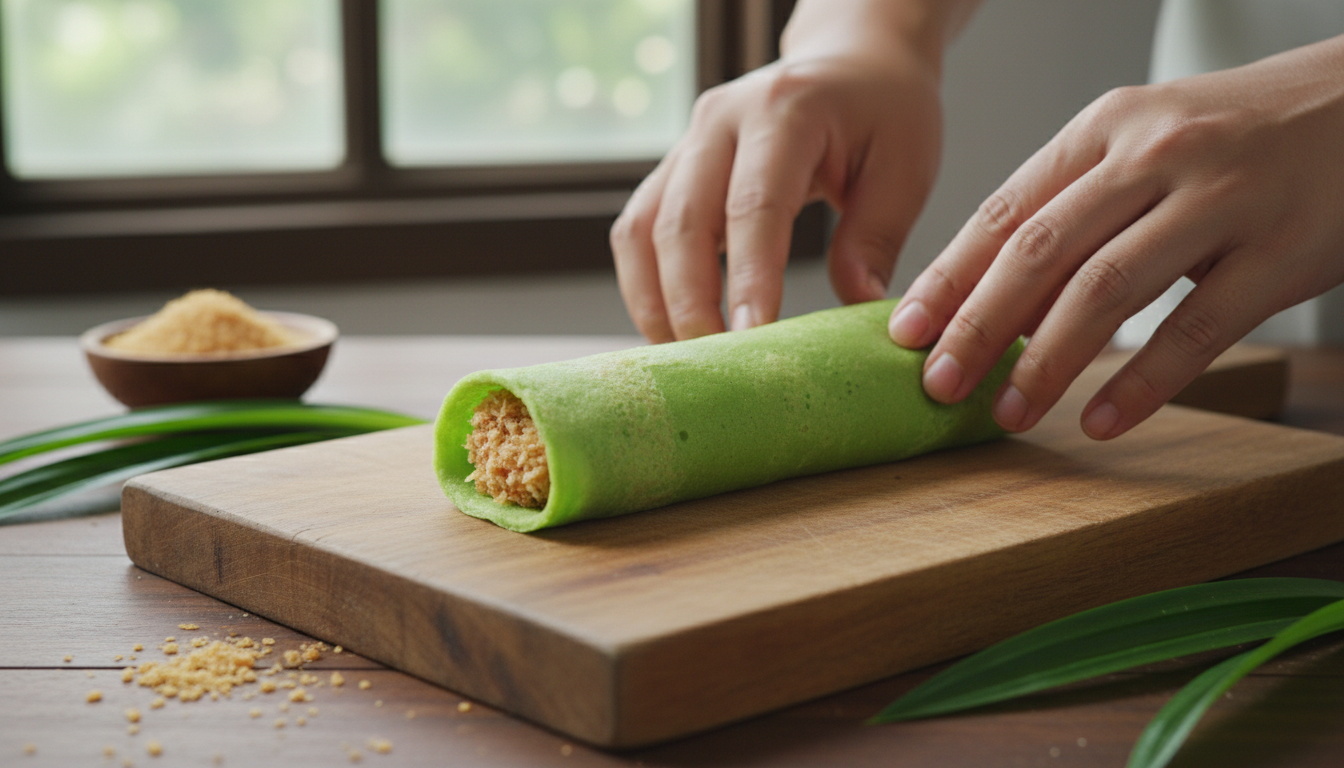
Bright green crepes made from pandan-infused batter, filled with a sweet coconut-palm sugar mixture (called unti) and folded into parcels. Dadar gulung are as visually striking as they are delicious — the vivid green exterior contrasts with the dark caramel filling. They’re one of Indonesia’s most recognizable traditional kue.
6. Getuk
A Central Javanese sweet made from steamed cassava mashed with palm sugar and coconut. The resulting dough is pressed into molds or cut into colorful squares, often tinted pink, green, and white. Soft, dense, and naturally sweet — getuk is sold everywhere in Yogyakarta and Solo.
7. Wajik
Diamond-shaped sweet sticky rice cooked in coconut milk and palm sugar until deeply caramelized and almost fudge-like in texture. Wajik has a glossy, jewel-like appearance and an intensely rich flavor — it’s often served at weddings and ceremonies as a sign of celebration.
Fried Indonesian Sweet Snacks
8. Onde-Onde (Sesame Balls)
Crispy fried balls of glutinous rice dough rolled in sesame seeds and filled with sweet mung bean paste. The exterior is crackly and sesame-nutty; the inside is dense and sweet. Onde-onde are found across Southeast Asia with slight regional variations — Indonesia’s version is beloved for its thick, chewy shell.
9. Pisang Goreng (Fried Banana)
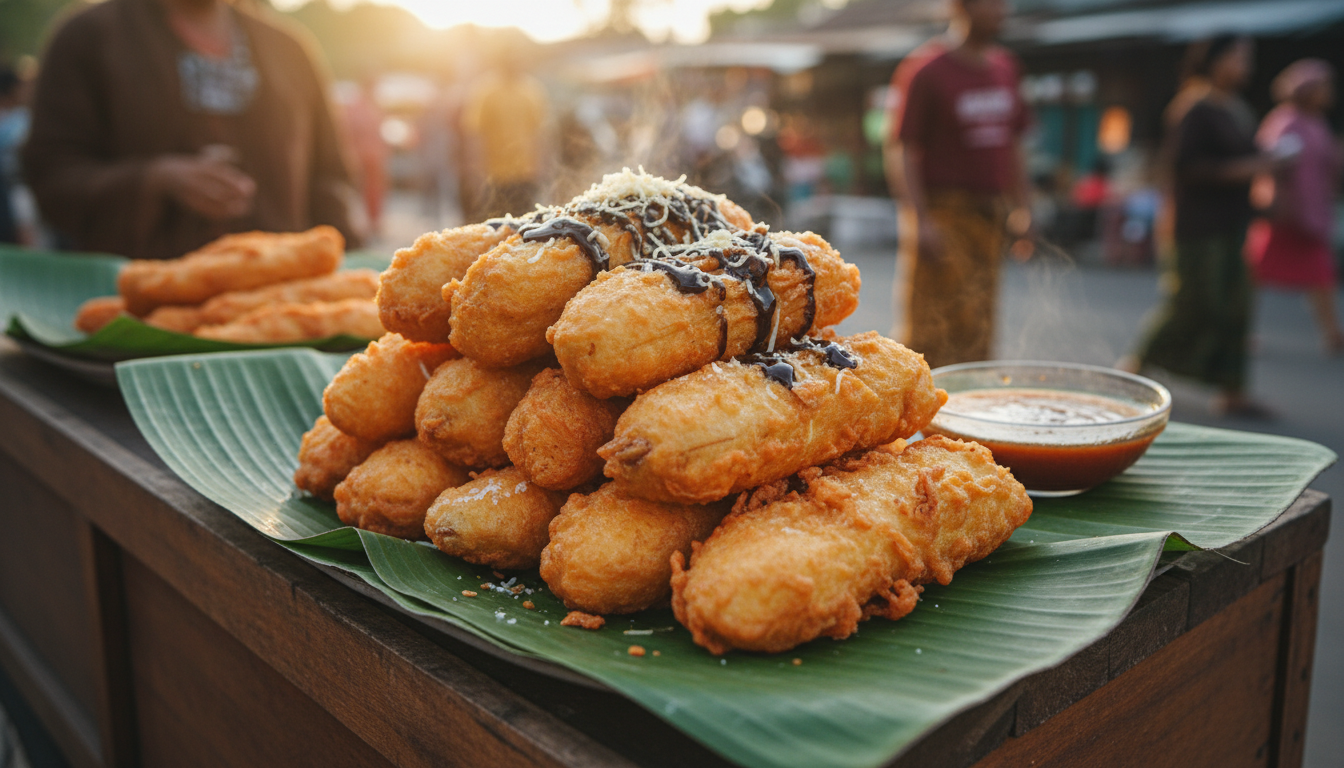
Perhaps the most universally loved Indonesian street snack — ripe plantains or bananas dipped in a light batter and deep-fried until golden and caramelized. Simple but extraordinary when made with the right banana (kepok or raja varieties are preferred). Often served with a drizzle of condensed milk or chocolate sauce.
10. Martabak Manis
A thick, spongy Indonesian pancake cooked in a cast iron pan and filled with combinations of chocolate, cheese, peanut, or condensed milk. The batter is leavened to create a honeycomb-like interior. Modern versions come loaded with Nutella, Oreos, and cheese — a beloved late-night street food in every major Indonesian city.
Cold Dessert Drinks
11. Es Cendol
A refreshing cold dessert drink made with pandan-flavored rice flour jelly strands (cendol), coconut milk, shaved ice, and sweet palm sugar syrup. The colors — bright green jelly, white coconut milk, dark syrup over ice — are iconic. Es cendol is the definitive Indonesian hot-weather treat and one of the most recognizable desserts in Southeast Asia.
12. Es Dawet
Very similar to es cendol but a Javanese specialty — cendol strands in coconut milk and palm sugar syrup, sometimes with rice flour pudding or grass jelly added. Es dawet vendors push carts through neighborhoods in Java, serving it to order in clay cups.
13. Es Campur
“Mixed ice” — a bowl loaded with shaved ice, grass jelly, nata de coco, palm fruit, sweet corn, condensed milk, and a rainbow of colored syrups. Es campur is maximalist and fun — every spoonful is different. It’s a celebration in a bowl.
Regional Specialties
14. Putu Ayu (Steamed Coconut Cake)
Small steamed cakes made with rice flour and coconut milk, inverted so their base of grated coconut becomes the top — a ring of white coconut fringe around a bright green pandan cake center. Putu ayu are soft, fragrant, and just sweet enough. They’re sold by street vendors in the early morning hours in Java and Bali.
15. Serabi (Indonesian Coconut Pancakes)
Traditional coconut milk rice pancakes with slightly crispy edges and a soft, custardy center. Serabi are cooked on a clay griddle over charcoal, which gives them a subtle smoky edge. They’re typically served with coconut sauce and palm sugar syrup — a Javanese breakfast-dessert hybrid that’s been made the same way for centuries.
Indonesian desserts share a spiritual kinship with other Southeast Asian sweet traditions. If you enjoyed this guide, explore our look at traditional Japanese wagashi and the broader global dessert traditions roundup — Indonesian sweets are one of the most distinct and rewarding chapters in the world dessert story.

Frequently Asked Questions
What is the most popular dessert in Indonesia?
Es cendol and klepon are arguably the most widely recognized Indonesian desserts both domestically and internationally. Martabak manis is extremely popular as a street food. Regionally, ketan hitam (black sticky rice pudding) and bubur sumsum are beloved comfort desserts.
Are Indonesian desserts gluten free?
Many traditional Indonesian desserts are naturally gluten free, as they’re made from rice flour, glutinous rice flour, or cassava rather than wheat. Klepon, es cendol, ketan hitam, wajik, and most kue are gluten free. Martabak manis uses wheat flour and is not gluten free.
What is pandan and why is it in so many Indonesian desserts?
Pandan (Pandanus amaryllifolius) is a tropical plant whose leaves are used as a natural flavoring and coloring agent across Southeast Asian cuisine. It imparts a sweet, grassy, vanilla-coconut aroma that is unmistakable. In Indonesian desserts, pandan is used in doughs, custards, syrups, and beverages — it’s as fundamental as vanilla is in Western baking.
Where can I find Indonesian desserts in the US?
Indonesian restaurants and bakeries are found in cities with large Southeast Asian communities — Los Angeles, Houston, New York, and the San Francisco Bay Area. Indonesian grocery stores and Asian supermarkets carry pre-packaged kue and the ingredients to make them at home.
