

Jolly Rancher Gummies are not halal-certified. They contain gelatin derived from non-halal (pork) sources, making them unsuitable for halal diets. This applies to most Jolly Rancher Gummies varieties sold in the United States.

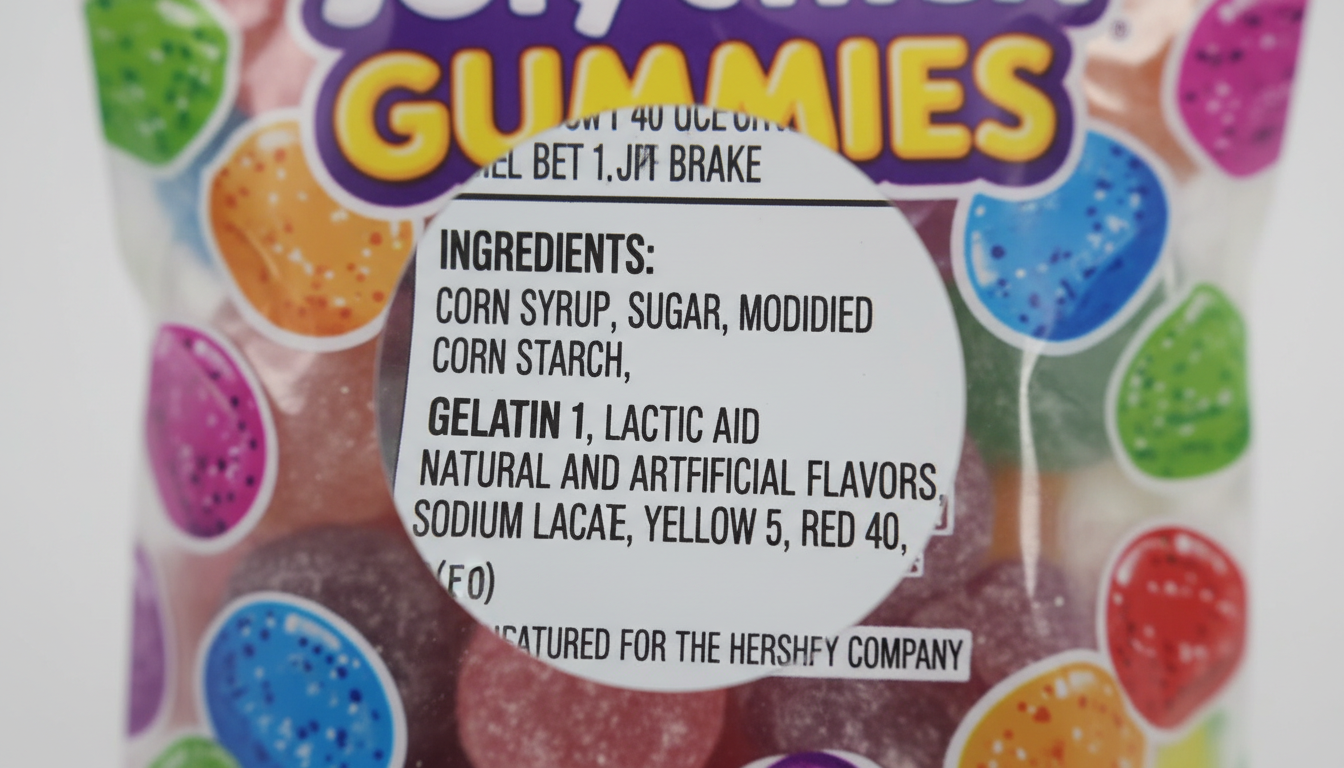
Jolly Rancher Gummies Full Ingredients List
Here is the standard ingredients list for Jolly Rancher Original Gummies:
Corn Syrup, Sugar, Gelatin, Citric Acid, Natural and Artificial Flavor, Mineral Oil, Carnauba Wax, Artificial Color (Red 40, Yellow 5, Yellow 6, Blue 1).
The key concern for halal-conscious consumers is gelatin — the third ingredient on the list.
The Gelatin Problem Explained
Gelatin is a protein derived from animal collagen. In most American confectionery, gelatin comes from pork (pig) sources, which is haram (forbidden) in Islam. Jolly Rancher Gummies use this type of gelatin and carry no halal certification from any recognized halal authority.

Even if a manufacturer switches to beef gelatin, it must still be slaughtered according to Islamic rites to be considered halal. Jolly Rancher does not claim halal compliance for any of its gummy products.
Which Jolly Rancher Gummies Varieties Contain Gelatin?
Virtually all Jolly Rancher Gummies products contain gelatin:
- Jolly Rancher Original Gummies — contains pork gelatin
- Jolly Rancher Gummies Sours — contains pork gelatin
- Jolly Rancher Misfits Gummies — contains gelatin
- Jolly Rancher Gummies Tropical — contains gelatin
By contrast, Jolly Rancher Hard Candies do not contain gelatin and may be suitable for some halal diets (though still not certified halal). If you’re checking other candy, see our guide on whether Twizzlers are halal for a similar breakdown.
Halal-Friendly Gummy Candy Alternatives
If you’re looking for gummy candies that are halal-certified or gelatin-free, here are some options:
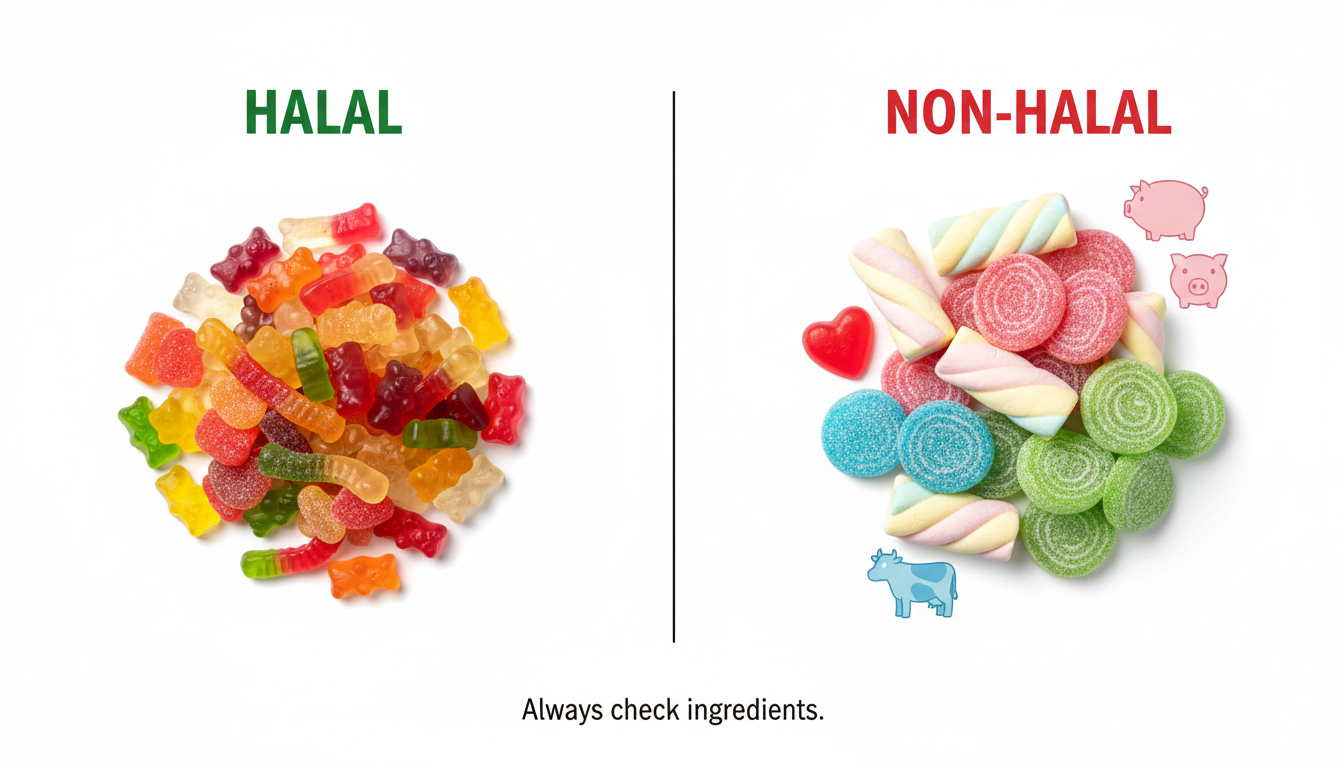
- YumEarth Gummy Bears — vegan, no gelatin, widely available
- Surf Sweets Gummy Worms — gelatin-free, certified organic
- SmartSweets Gummy Bears — pectin-based, no gelatin
- Annie’s Organic Bunny Fruit Snacks — no gelatin
- Haribo Halal range (sold in select countries) — made with bovine halal gelatin
Most halal gummy alternatives use pectin (plant-based) or halal-certified bovine gelatin instead of pork gelatin. Always look for a halal certification logo on the packaging to be sure.
Are Any Jolly Rancher Products Halal?
Jolly Rancher Hard Candies (original flavors) contain no gelatin and no obvious haram ingredients. However, they are manufactured in facilities that also process non-halal products and carry no halal certification. Observant Muslims should treat them with caution. For a broader look at candy and dietary compliance, see our article on reading candy ingredient labels.
Are Jolly Rancher Gummies halal in the US?
No. Jolly Rancher Gummies sold in the US contain pork-derived gelatin and are not halal-certified.
Do Jolly Rancher Hard Candies contain gelatin?
No, the original Jolly Rancher Hard Candies do not contain gelatin. However, they are not halal-certified.

What gelatin is in Jolly Rancher Gummies?
Jolly Rancher Gummies use pork-derived (porcine) gelatin, which is haram under Islamic dietary law.
Are there any halal Jolly Rancher products?
No Jolly Rancher products carry official halal certification. Hard candies are gelatin-free but not certified.
What candy gummies are halal?
Pectin-based gummies like YumEarth, SmartSweets, and Surf Sweets are halal-friendly alternatives to Jolly Rancher Gummies.
Other Halal-Friendly Candy Options
If you’re looking to expand beyond Jolly Ranchers, these candy brands are widely considered halal-friendly (always check current labels as formulas change):
- Skittles: Most Skittles varieties removed gelatin years ago and are now suitable for vegetarians and halal diets. Check label for any fruit varieties with additional ingredients.
- Starbursts (select varieties): Some Starburst varieties in the US still contain gelatin — check the specific product. UK Starbursts are typically gelatin-free.
- Sour Patch Kids: No gelatin — these are halal-friendly. Ingredients are primarily sugar, corn syrup, and tartaric acid.
- Swedish Fish: Gelatin-free and halal-friendly.
- Twizzlers: Gelatin-free and halal-friendly.
- YumEarth Organic Gummies: Certified halal and organic. A great choice for those prioritizing both halal status and cleaner ingredients.
When in doubt, look for the halal certification logo on the packaging, or check the brand’s official halal FAQ. Many candy companies now publish their ingredient sourcing information online.

Best Halal Gummy Candy Alternatives
There are now several mainstream and specialty brands that produce genuinely halal-certified gummy candies. These are widely available online and increasingly in mainstream grocery and candy retailers.
Haribo Halal Line
Haribo — the world’s largest gummy candy manufacturer — produces a separate halal-certified product line using beef gelatin sourced from halal-slaughtered cattle. These products are marked with an official halal certification logo and are manufactured in dedicated halal facilities. The flavor range includes gold bears, worms, and several seasonal varieties. They’re available through Amazon and at select Middle Eastern, South Asian, and specialty grocery stores. Note: not all Haribo products are halal — only those explicitly bearing the halal certification mark.
Trolli Halal Gummies
Some Trolli products produced in Europe and Australia are halal-certified, using either beef gelatin or plant-based alternatives. The US market Trolli line uses pork gelatin. If purchasing Trolli, verify the country of manufacture and certification mark on the packaging. European-origin Trolli products with a halal stamp are a reliable option.
Ziyad Brand
Ziyad specializes in halal food products distributed through Middle Eastern grocery networks and Amazon. Their gummy line covers bears, worms, rings, and sour varieties. All products carry the IFANCA halal certification — one of the most widely recognized halal certification bodies in North America.
Vegan Gummies as a Halal Option
Vegan gummy candies use pectin or agar-agar in place of gelatin — both plant-derived and inherently halal. Surf Sweets, YumEarth, and Annie’s all produce pectin-based gummies that are both vegan and halal-compliant. The texture is slightly different from gelatin-based gummies (softer, less chewy) but the flavor quality has improved significantly in recent years.
How to Read Candy Labels for Halal Compliance
When evaluating any gummy candy product, the label provides enough information to make a determination even without a halal certification:
- Look for “gelatin”: If the source is not specified (i.e., it just says “gelatin”), assume it is pork-derived in US products. Pork gelatin is the industry default due to cost and availability.
- Look for “beef gelatin”: Beef gelatin is halal-permissible in principle, but only if the animal was slaughtered according to Islamic rites. “Beef gelatin” without a halal certification does not guarantee halal compliance.
- Look for “pectin” or “agar”: These are plant-derived and inherently halal — no certification needed for these gelling agents.
- Look for certification logos: IFANCA, Halal MUI, ISA, or ISWA certification marks on the packaging confirm third-party verification. These are more reliable than label claims alone.
- Check for shared production facilities: Some products have a note about shared equipment. This matters for stricter interpretations — cross-contamination from pork products at the facility level can be a concern for some consumers.