
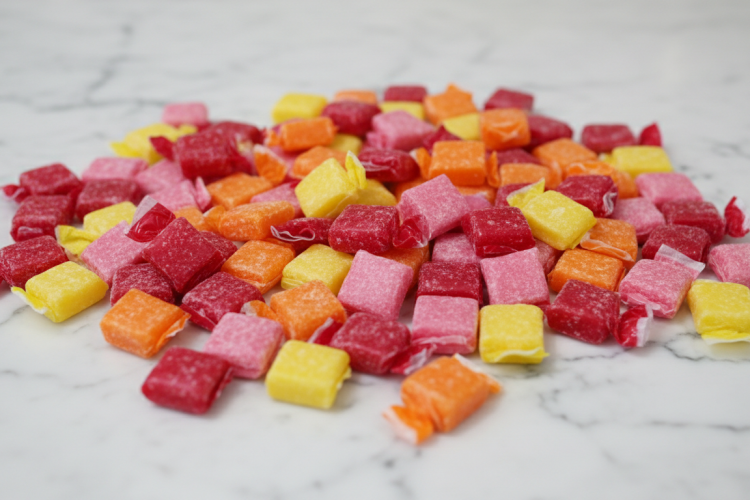
Yes, original Starbursts are gluten free — they contain no wheat, barley, rye, or oats, and the manufacturer does not list gluten as an allergen. However, Starburst products are not certified gluten free, and formulations can vary by variety and region, so people with celiac disease should read the label on every pack before eating.

Are Starbursts Gluten Free? The Short Answer
Starburst candies — made by Mars Wrigley — have been a staple fruity chew since 1960. The core ingredients in Original Starbursts are: sugar, corn syrup, hydrogenated palm kernel oil, fruit juice concentrates, citric acid, dextrin, gelatin, natural and artificial flavors, and food coloring. None of these ingredients contain gluten.
Mars Wrigley does not classify Starburst as containing gluten ingredients, and the product does not carry an allergen warning for wheat on U.S. packaging. For most gluten-sensitive individuals and those following a gluten-free lifestyle by choice, Starbursts are a safe candy option.
That said, “gluten free” as a label claim requires a food to contain fewer than 20 parts per million (ppm) of gluten, as established by the FDA’s gluten-free labeling rule. Starburst does not carry a certified gluten-free label, which means cross-contamination risk during manufacturing cannot be fully ruled out. For people with celiac disease — where even trace amounts of gluten can cause an immune response — this distinction matters deeply and is worth understanding in full detail.
The good news is that among mainstream candy brands, Starburst has one of the cleaner ingredient profiles from a gluten standpoint. No malt flavoring, no wheat flour, no barley malt extract — all common hidden gluten sources in candy and snacks — appear in any standard Starburst variety. That makes them a reliable go-to for most people eating gluten free.
Starburst Ingredients: A Full Breakdown
Understanding the ingredient list helps clarify exactly what you are eating and whether any component poses a gluten risk. Let us go through each ingredient one by one.

Original Starburst (U.S.) full ingredients:
- Sugar — plain sucrose, inherently gluten free. The primary sweetener.
- Corn syrup — derived from corn starch hydrolysis, no gluten content whatsoever.
- Hydrogenated palm kernel oil — plant-based fat used to give Starbursts their characteristic waxy, chewy texture. Gluten free.
- Apple juice concentrate and other fruit juice concentrates — 100% fruit-derived, providing the natural fruit flavor base. Completely gluten free.
- Citric acid — produced by fermentation, typically from corn or sugar beets, provides tartness. No gluten.
- Dextrin — this is the ingredient most worth examining. Dextrin is a starch derivative used as a binding and glazing agent. In the U.S., dextrin in candy is almost always derived from tapioca or corn. Wheat dextrin does exist, but Mars Wrigley uses tapioca-derived dextrin in Starburst, making it gluten free in practice. When in doubt, contact Mars Wrigley directly to confirm the current source for your specific product lot.
- Gelatin — derived from animal collagen (typically pork or beef), fully gluten free. Note: this makes standard Starbursts non-vegan and non-halal.
- Natural and artificial flavors — can theoretically contain gluten carriers in rare cases, but Mars Wrigley’s flavors in Starburst do not include wheat derivatives in the U.S. formulation.
- Food coloring (Red 40, Yellow 5, Yellow 6, Blue 1) — synthetic petroleum-derived dyes, all completely gluten free.
The dextrin ingredient is the one that most commonly causes concern among gluten-free consumers because “dextrin” listed without a source qualifier could theoretically be wheat-based. For Starburst specifically, the consistent confirmation from Mars Wrigley’s allergen policy is that the dextrin source is not wheat. That said, formulations can change, so checking current packaging is always the safest practice.
Which Starburst Varieties Are Gluten Free?
Starburst has expanded well beyond the original pink, red, orange, and yellow chews into a wide family of fruity candy products. Here is a comprehensive variety-by-variety breakdown of gluten status:

Original Starburst (4-Flavor Mix)
Gluten free: Yes. The standard four-flavor pack (strawberry, cherry, orange, lemon) uses no gluten-containing ingredients. This is the variety most thoroughly confirmed as safe for gluten-sensitive consumers, and it has the longest track record for allergen transparency from Mars Wrigley.
Starburst FaveREDs
Gluten free: Yes. FaveREDs contain only the red and pink flavors (strawberry, cherry, fruit punch, watermelon). Same core formulation as original, same gluten-free status. A great option for those who prefer the berry-forward flavor profile.
Starburst Tropical
Gluten free: Yes. Tropical flavors (mango melon, cherry kiwi, pina colada, strawberry banana) share the same base formula. No gluten ingredients detected in the U.S. formulation. The tropical varieties have become extremely popular as a standalone purchase in recent years.
Starburst Sours
Gluten free: Yes. The sour coating adds malic acid and a slightly different flavor profile but no wheat-based ingredients. The outer coating is sugar-based and the inner chew uses the same formula as the original. Considered gluten free and a fan favorite.
Starburst Gummies
Gluten free: Yes. Starburst Gummies use a gelatin-based matrix with similar flavor and color ingredients to the original chews. No gluten ingredients are present. These are chewier and bouncier than the original Starburst format, and the ingredient list remains clean from a gluten standpoint.
Starburst Minis
Gluten free: Yes. Smaller format of the original chew — same formula, just portioned differently for snacking or sharing. Gluten free status matches the original variety.
Starburst Jellybeans
Gluten free: Yes, but verify. Starburst Jellybeans use a confectioner’s glaze coating and a slightly different sugar shell construction than the standard chew. The U.S. formulation does not contain gluten ingredients, but jelly bean manufacturing sometimes involves shared equipment or facilities with products that contain starch (which can be wheat-based in some facilities). Always check the label on your specific package, as manufacturing details can change.
Starburst Airs
Gluten free: Likely yes. Starburst Airs are a newer airy, puffed candy variety with a lighter texture than traditional Starbursts. Current ingredient lists show no gluten ingredients, though as a newer product line, third-party verification and consumer track record are more limited. Always read the package label before purchasing.
The Celiac Disease Caveat: Cross-Contamination Risk
Ingredient lists tell only part of the story for people with celiac disease. Cross-contamination — the unintentional transfer of gluten from one product to another through shared manufacturing equipment, production lines, or facilities — is a real and legitimate concern even when the recipe itself is gluten free.
Mars Wrigley manufactures a wide range of confectionery products, some of which may contain gluten-based ingredients. The company does not publicly certify Starburst as manufactured on dedicated gluten-free lines or in dedicated gluten-free facilities. This means that while the recipe contains no gluten, the risk of trace cross-contamination from shared production equipment is non-zero and unquantified from the manufacturer’s public disclosures.
For people with celiac disease, the general guidance from organizations like the Celiac Disease Foundation is to prefer products certified gluten free by a recognized third-party organization such as GFFS (Gluten-Free Food Service), NSF International, or BRCGS. Starburst does not carry any such certification.
For those with non-celiac gluten sensitivity (NCGS) rather than celiac disease, the absence of gluten ingredients in Starburst typically makes them a safe choice. The trace cross-contamination risk is less clinically significant for NCGS, which does not involve the same autoimmune intestinal damage mechanism as celiac disease.
Are Starbursts Vegan?
While not directly a gluten question, the vegan status of Starbursts comes up frequently in the same conversation because many people managing multiple dietary restrictions need to evaluate candy on several dimensions at once. Standard U.S. Starbursts are NOT vegan — they contain gelatin, which is derived from animal collagen (typically pork or beef bones and connective tissue).
Vegans looking for a similar fruit chew should look for gelatin-free alternatives such as Sour Patch Kids, Swedish Fish, or YumEarth fruit chews. If you are also evaluating other fruity candies for vegan status, our guide on whether Airheads are vegan covers a comparable candy in detail and discusses what ingredients to watch for.
Are Starbursts Dairy Free?
Yes — Starbursts are dairy free. No milk, cream, butter, casein, whey, lactose, or other dairy-derived ingredients appear in the standard U.S. formulation. People with dairy allergies, lactose intolerance, or those following a dairy-free diet can safely eat Starbursts from a dairy allergen perspective. This also means Starbursts can work in recipes and candy pairings where dairy-free is required — for example, serving alongside a dairy-free dessert spread.
Are Starbursts Halal?
Standard U.S. Starbursts are generally not considered halal because they contain gelatin from non-halal-certified animal sources. The gelatin source is not specified as halal-slaughtered on U.S. packaging, and Mars Wrigley does not label U.S. Starbursts as halal certified.
Some international markets receive halal-certified Starburst formulations that use plant-based or halal-certified gelatin — check local packaging for recognized halal certification symbols. For more on halal candy questions in the same flavor category, see our full post on whether Twizzlers are halal which covers how to identify halal certification on candy packaging.
Gluten-Free Candy Alternatives to Starburst
If you are looking for certified gluten-free fruity candy options — especially if you have celiac disease and need the added safety of third-party verification — here are some well-established alternatives worth exploring:

- Skittles — also made by Mars Wrigley, also gluten free by ingredients. We completed a full variety-by-variety check in our Are Skittles Gluten Free? post.
- Dum Dums lollipops — gluten free and explicitly labeled as such by Spangler Candy. See our Dum Dums gluten free guide for a complete breakdown by flavor.
- Laffy Taffy — gluten free by ingredients (Ferrara Candy Company). See our Laffy Taffy gluten free post for the full ingredient and flavor analysis.
- Sour Patch Kids — gluten free by ingredients and also vegan (no gelatin). The cross-contamination disclaimer situation is similar to Starburst, but the base ingredients are clean.
- YumEarth Fruit Snacks — certified gluten free with a GFFS seal, organic, and free from most common allergens. A great option for celiac patients who want the safety net of certification.
- Surf Sweets Fruity Bears — certified gluten free, organic, and free from the top 8 allergens. Positioned specifically for allergy-aware consumers.
How to Check Any Candy for Gluten
Whether you are shopping for Starbursts or any other candy, use this quick systematic checklist to evaluate gluten safety efficiently at the store or before ordering online:
- Scan the allergen statement — U.S. law requires disclosure of the top 9 allergens including wheat. Look for “Contains: wheat” or “May contain wheat / manufactured in a facility with wheat.” If present, avoid for celiac disease; if absent, proceed.
- Check for dextrin, starch, or malt — these can be wheat-derived. If listed without a source qualifier (e.g., “dextrin” rather than “tapioca dextrin” or “corn starch”), research the manufacturer’s allergen FAQ or contact them directly before consuming.
- Look for a certified gluten-free symbol — logos from GFFS, NSF International, or BRCGS mean the product has been independently tested to confirm less than 20 ppm gluten. This is the gold standard for celiac disease.
- Check the manufacturer’s allergen FAQ online — most major candy companies maintain updated allergen FAQ pages. Mars Wrigley, Hershey’s, Mondelez, and Spangler all publish this information.
- When in doubt, contact the company directly — a quick email or phone call to the consumer hotline can get you a definitive, current answer specific to the production facility and recent formulation changes.
This approach works for any candy you encounter — from Jolly Rancher gummies (covered in our Jolly Rancher gummies guide) to Nerds, gummies, and chocolate bars. Building this habit makes gluten-free candy shopping fast and stress-free over time.
Frequently Asked Questions
Do Starbursts contain wheat or gluten ingredients?
No. The U.S. formulation of Starburst candies does not include wheat, barley, rye, oats, or any direct gluten-containing ingredient. The dextrin used is tapioca-derived, not wheat-derived. Mars Wrigley does not list gluten as an allergen on standard Starburst packaging.
Are Starbursts safe for people with celiac disease?
Likely yes for most people with celiac disease, but with an important caveat: Starburst is not certified gluten free, meaning trace cross-contamination during manufacturing cannot be completely ruled out. Highly sensitive celiac patients often prefer products with third-party certification. Consult your gastroenterologist or dietitian if you are unsure about your personal gluten threshold and tolerance level.
Are all Starburst flavors gluten free?
All major U.S. Starburst varieties — Original, FaveREDs, Tropical, Sours, Gummies, and Minis — are free of gluten ingredients. Starburst Jellybeans and newer formats like Starburst Airs are also likely gluten free but should have their current labels verified before eating, as formulations and manufacturing environments can change.
Are UK or international Starbursts gluten free?
UK Starbursts (historically sold as Opal Fruits) are produced under a different formulation and manufacturing arrangement than U.S. Starbursts. The ingredient list differs slightly between regions. Always check the packaging for your specific country of purchase — do not assume the U.S. gluten-free status applies to UK or other international versions of the product.
What fruity candies are certified gluten free?
Several brands offer certified gluten-free fruity candies: YumEarth gummies carry a certified gluten-free seal and are widely available; Surf Sweets products are certified gluten free and free of common allergens; Wholesome brand candies are also certified gluten free. These are the best options for celiac patients who need the added reassurance of independent third-party testing beyond the manufacturer’s own allergen policies.