
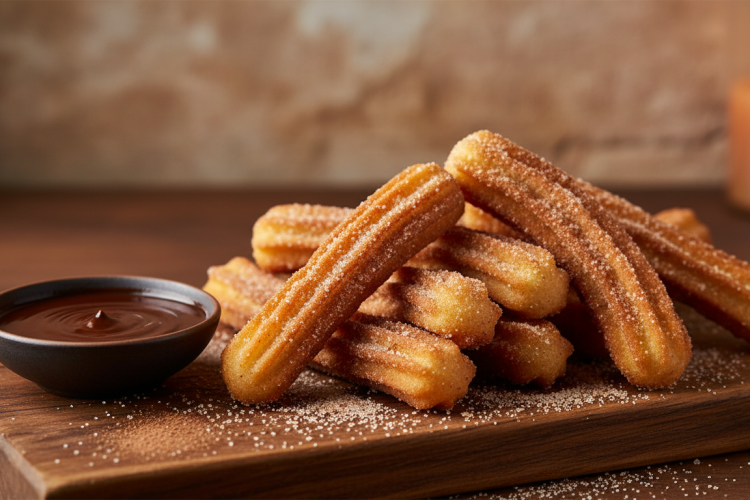
You absolutely can make churros without a piping bag — simply roll the dough into logs by hand or use a zip-lock bag with a corner snipped off as a DIY piping tool. Both methods produce crispy, golden churros with the classic ridged texture. No special equipment required: just a pot of oil, a few pantry staples, and about 30 minutes of your time.

Why You Don’t Need a Piping Bag for Churros
The idea that churros require a special star-tipped piping bag is one of the biggest myths in home baking. Professional churro vendors use a churrera — a metal press — to extrude the dough quickly at high volume. For home cooks making a batch of 12 to 16 churros, a piping bag is a convenience, not a necessity.
Churro dough (pâte à choux base) is thick and malleable. It holds its shape remarkably well when rolled, pressed, or piped. The ridges you see on classic churros come from the star tip, but smooth-sided rolled churros fry just as beautifully, get just as crispy, and taste identical. The cinnamon-sugar coating sticks whether the surface is ridged or smooth.
If you love churros but don’t bake often enough to own a piping bag, this guide is for you. We’ll walk through two no-equipment methods plus the classic piping bag method for comparison — then get into every detail of the dough, the fry, and the dipping sauces.
Ingredients for Churros Without a Piping Bag
Classic churro dough uses simple pantry ingredients. Here’s what you’ll need for about 14 to 16 medium churros:
- 1 cup water — the base for the choux-style dough
- 2 tablespoons unsalted butter — adds richness and helps the dough hold together
- 1 tablespoon granulated sugar — a touch of sweetness in the dough itself
- ¼ teaspoon salt — balances the flavor
- 1 cup all-purpose flour — sifted, for a smooth dough
- 1 large egg — binds the dough and adds structure
- ½ teaspoon vanilla extract — optional but recommended
- Vegetable oil for frying — enough to fill a pot 2 to 3 inches deep
For the Cinnamon Sugar Coating
- ½ cup granulated sugar
- 1 teaspoon ground cinnamon
Mix these together in a wide shallow bowl or a plate before you start frying — you’ll want to roll the churros in the coating while they’re still warm and oily so the sugar adheres perfectly.

Method 1: Roll by Hand (The Easiest Approach)
Rolling churro dough by hand is the most beginner-friendly approach. The dough is stiff enough to hold its shape through frying without any piping tool at all. Here’s exactly how to do it:
Step 1: Make the Dough
In a medium saucepan over medium heat, combine the water, butter, sugar, and salt. Stir and bring to a full boil. The moment the water boils, remove the pan from the heat and dump in all the flour at once. Stir vigorously with a wooden spoon until the mixture pulls away from the sides of the pan and forms a cohesive ball — this takes about 1 to 2 minutes of active stirring.
Let the dough cool for 5 minutes before adding the egg. This is critical: if the dough is too hot when you add the egg, it will scramble. Beat the egg lightly, then add it to the dough along with the vanilla extract. Stir aggressively until fully incorporated — the dough will look slippery and separated at first, then come back together into a smooth, glossy ball. This is normal; keep stirring.
Step 2: Shape the Churros by Hand
Lightly flour your work surface and your hands. Scoop out roughly 2 tablespoons of dough and roll it between your palms to form a log shape about 4 to 5 inches long and ¾ inch in diameter. Set each rolled churro on a parchment-lined baking sheet while you shape the rest. The dough is slightly sticky — a light flour coating on your hands makes this much easier.
Don’t worry about making them perfectly uniform. Slightly irregular churros have a rustic, homemade charm — and they’ll all taste the same once coated in cinnamon sugar. If you want the ridged texture, you can lightly press a fork along the length of each churro to create shallow grooves.

Method 2: The Zip-Lock Bag Trick
If you want churros that look closer to the classic shape — longer and with a slightly more even diameter — the zip-lock bag method is your best friend. This DIY piping bag approach takes about 30 seconds to set up and works better than most people expect.
How to Use a Zip-Lock Bag as a Piping Bag
Spoon your churro dough into a large zip-lock freezer bag (the 1-gallon size works well). Squeeze the dough down to one corner of the bag, pressing out as much air as possible. Seal the bag, then use scissors to snip off about ½ inch from one corner. The larger the cut, the thicker your churros — aim for a ½-inch opening for medium churros.
Hold the bag over the hot oil and squeeze with steady pressure, using a knife or scissors to cut the dough rope to your desired length (4 to 6 inches works well) as it falls into the oil. This produces churros that are round in cross-section rather than star-shaped, but they fry beautifully and get perfectly crispy.
Pro tip: Use a freezer-weight zip-lock bag rather than a regular sandwich bag — the thicker plastic is much less likely to burst under the pressure of squeezing the dough through. The Serious Eats churro guide also recommends letting the dough cool adequately before piping to avoid a bag blowout.

How to Fry Churros Perfectly
Frying is where most churro failures happen. Follow these guidelines for consistently golden, crispy churros every time.
Oil Temperature Is Everything
Heat your oil to 350°F to 375°F (175°C to 190°C). Use a thermometer — this is not a step to eyeball. Oil that’s too cool produces greasy, oil-soaked churros; oil that’s too hot burns the outside before the inside cooks through. A heavy-bottomed pot like a Dutch oven or cast iron skillet retains heat more evenly than a thin-sided pan.
Don’t overcrowd the pot. Fry in batches of 3 to 4 churros at a time — adding too many at once drops the oil temperature dramatically, leading to greasy results. Between batches, let the oil come back up to temperature before adding the next batch.
How Long to Fry
Churros take about 2 to 3 minutes per side at 360°F. Turn them once using tongs or a spider strainer when the bottom side has turned deep golden-brown. The total fry time is typically 4 to 6 minutes per churro. They should be evenly golden-brown all over when done — not pale yellow and not dark brown.
Remove finished churros to a paper towel-lined plate to drain briefly, then immediately transfer to the cinnamon sugar and roll to coat. The residual surface oil acts as glue for the sugar — once the churros cool and dry out, the sugar won’t stick as well.

The Cinnamon Sugar Coating and Dipping Sauces
A churro without cinnamon sugar is just fried dough — the coating is what makes it a churro. Mix ½ cup of granulated sugar with 1 teaspoon of ground cinnamon in a wide, shallow bowl. Once each churro comes out of the oil, let it drain for 10 seconds on the paper towels, then roll it in the cinnamon sugar mixture, turning to coat all sides. Serve immediately while hot for the best texture.
Classic Chocolate Dipping Sauce
Heat ½ cup heavy cream in a small saucepan until just simmering. Pour over 3 oz of finely chopped dark chocolate (or chocolate chips). Let sit for 2 minutes, then stir until smooth. Add a pinch of salt and a splash of vanilla. This is the thick Spanish-style hot chocolate sauce that pairs perfectly with freshly fried churros.
Dulce de Leche
Warm dulce de leche — either store-bought or homemade — is the South American classic pairing for churros. It’s sweet, caramel-rich, and incredibly easy: just spoon it into a ramekin and warm it in the microwave for 20 to 30 seconds. For a more elaborate churro spread with multiple dipping options, see our guide to the 5 best churro fillings, which covers everything from vanilla pastry cream to Bavarian cream.

Troubleshooting: Common Churro Problems and Fixes
My churros fell apart in the oil
This almost always means the dough was too wet or the egg wasn’t fully incorporated. Make sure you stirred the cooked dough thoroughly on the stove before adding the egg. The dough should be stiff enough to hold a shape when rolled — if it’s too soft to roll by hand, add 1 to 2 tablespoons of extra flour and stir well before trying again.
My churros are greasy on the inside
Greasy interiors are a sign of oil that was too cool. The dough absorbs oil quickly when the frying temperature drops below 340°F. Use a thermometer and fry in smaller batches to keep the oil temperature consistent.
My churros are burnt outside but raw inside
The churros were too thick and the oil was too hot. Keep churros between ½ inch and ¾ inch in diameter when rolling by hand, and keep oil temperature at or below 375°F. If you have consistently thick churros, reduce the oil temperature to 340°F and extend the frying time slightly.
The dough won’t hold a shape when I roll it
This can happen if the dough was too hot when you added the egg (causing it to partially cook) or if the egg was very large. Let the dough cool longer before adding the egg, and use a medium egg rather than jumbo. A slightly crumbly dough that doesn’t hold a roll is better fixed by kneading in a few drops of water; a sticky dough that won’t firm up needs more flour.
Variations: Make These Churros Your Own
Once you’ve mastered the basic churro without a piping bag, there are endless delicious directions to take it:
- Caramel churros — serve with homemade caramel sauce instead of chocolate; see our full caramel churros recipe for the sauce details
- Filled churros — use the zip-lock bag method to make slightly thicker churros, then use a skewer to hollow a channel and fill with cream using a squeeze bottle; our churro fillings guide covers every filling option
- Matcha churros — add 1 tablespoon of matcha powder to the flour before cooking; the earthy green tea flavor is a beautiful contrast to the cinnamon sugar; full instructions in our matcha churros recipe
- Churro cake — use the same dough flavors in a layer cake format; our churro cake recipe brings that cinnamon-sugar magic to a birthday-worthy showpiece
- Mini churro bites — roll the dough into 1-inch balls instead of logs for bite-sized churro puffs; kids love these at parties
Storage and Make-Ahead Tips
Churros are always best eaten fresh and hot, within minutes of frying. However, if you have leftovers or want to prep ahead, here’s how to handle it:
- Leftover churros: Store in an airtight container at room temperature for up to 2 days. Reheat in an air fryer at 375°F for 3 to 4 minutes or in the oven at 400°F for 5 minutes to restore crispiness. Do not microwave — they’ll become soft and chewy.
- Make-ahead dough: Churro dough can be made up to 24 hours ahead and stored in the refrigerator. Let it come to room temperature for 20 minutes before shaping and frying. Cold dough is actually slightly easier to roll by hand as it’s firmer.
- Freeze uncooked churros: Shape the churros, place on a parchment-lined baking sheet, and freeze until solid (about 2 hours). Transfer to a zip-lock bag and freeze for up to 1 month. Fry directly from frozen — just add about 1 to 2 minutes to the frying time and watch the oil temperature carefully.

Frequently Asked Questions
Can you bake churros instead of frying them?
Yes, baked churros are a lower-fat option. Pipe or roll the shaped dough onto a parchment-lined baking sheet, brush lightly with melted butter, and bake at 425°F for 18 to 22 minutes until golden. They won’t be quite as crispy as fried churros — the interior is more cakey — but they’re a solid alternative. Toss in cinnamon sugar as soon as they come out of the oven while the butter coating is still tacky.
What’s the best oil for frying churros?
Use a neutral high-smoke-point oil: vegetable oil, canola oil, sunflower oil, or peanut oil all work well. Avoid olive oil — its smoke point is too low for the 350°F+ temperatures needed, and its distinctive flavor doesn’t complement the churro’s cinnamon-vanilla profile. You’ll need enough oil to submerge the churros at least halfway, ideally fully, in a heavy-bottomed pot.
Do churros without a piping bag taste different?
No — the taste is identical. The piping bag and star tip affect only the exterior shape and the surface texture of the ridges. Since the cinnamon sugar coats the outside regardless of shape, and the inside of the churro is the same dough cooked the same way, rolled churros taste exactly like their piped counterparts. The only difference is aesthetic.
Can I make churros without eggs?
Yes. Eggless churros are more fragile but workable. Replace the egg with 2 tablespoons of flaxseed meal mixed with 3 tablespoons of water (let sit for 5 minutes before using) for a vegan binding agent. The dough will be slightly less smooth and the churros a touch more crumbly, but they fry well and taste very similar. The hand-rolling method works better than the zip-lock bag method for eggless dough as it’s slightly firmer.
How do I know when the oil is hot enough without a thermometer?
Drop a tiny pinch of flour or a tiny piece of dough into the oil. At the right temperature (350–375°F), it should sizzle immediately and float to the surface within a second. If it sinks slowly and barely sizzles, the oil is too cool. If it browns in under 10 seconds, the oil is too hot. The wooden spoon test also works: dip the handle of a wooden spoon into the oil — if small steady bubbles form around it, the oil is ready.