
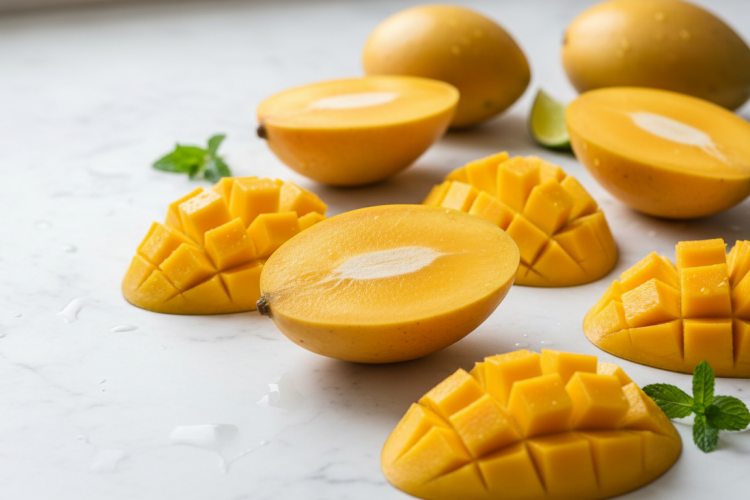
Is mango acidic? Yes — mangoes are mildly acidic, with a pH typically ranging from 3.4 to 4.8 depending on variety and ripeness. That places them firmly in the acidic category on the pH scale, though they are considerably less acidic than citrus fruits like lemons (pH 2.0–2.6) or limes (pH 2.0–2.35). For most people, mango’s natural acidity is not a problem — but if you have acid reflux or GERD, knowing exactly where mango sits on the pH scale matters.
Is Mango Acidic or Alkaline?
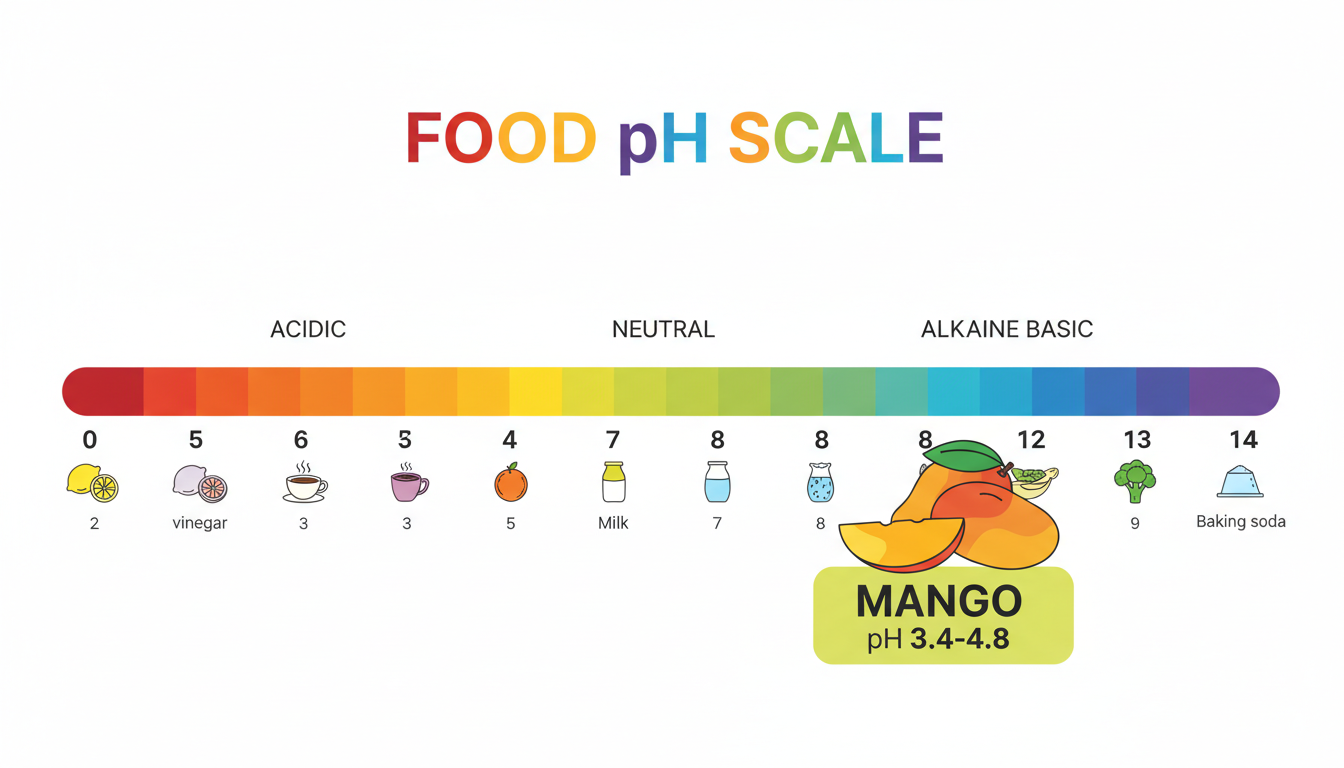
Mangoes are acidic. On the pH scale — which runs from 0 (most acidic) to 14 (most alkaline), with 7 being neutral — mango registers between 3.4 and 4.8. Any value below 7 is considered acidic, so mangoes land solidly in acidic territory. However, “acidic” doesn’t mean harsh or difficult to eat. For context, a glass of orange juice sits around pH 3.3–4.2, and most people have no trouble enjoying it.
The acidity in mangoes comes from a blend of naturally occurring organic acids, primarily citric acid, malic acid, and ascorbic acid (vitamin C). These are the same acids that give tropical and citrus fruits their brightness and tang. Ripe mangoes have a noticeable sweet-acid balance — the sweetness comes from high natural sugar content (mostly fructose), while the acids provide the fruity sharpness that makes a good mango taste complex rather than just sweet.
If you’ve ever wondered whether mango counts as an acidic food the way vinegar or soda does, the answer is: yes, but mildly. Mangoes are nowhere near as acidic as lemons, limes, or even tomatoes. They fall into the category of “moderately acidic fruits” alongside peaches, pineapples, and cherries. If you’re curious about how other sweet foods like chocolate compare, see our breakdown of Ghirardelli chocolate ingredients for a different kind of acidity question.
What Is the pH of a Mango?
| Mango Variety / State | Approximate pH Range | Acidity Level |
|---|---|---|
| Alphonso (ripe) | 3.4 – 3.9 | Moderately acidic |
| Tommy Atkins (ripe) | 3.6 – 4.2 | Moderately acidic |
| Ataulfo/Honey (ripe) | 4.2 – 4.8 | Mildly acidic |
| Unripe/green mango | 2.8 – 3.4 | More acidic |
| Dried mango | 3.6 – 4.5 | Moderately acidic |
| Mango juice (commercial) | 3.5 – 4.0 | Moderately acidic |
The pH of a mango varies quite a bit depending on the variety, how ripe it is, and even the growing conditions. As a general rule:
- Unripe mangoes are more acidic (lower pH, more tart) — green mango can drop as low as pH 2.8
- Ripe mangoes are less acidic (higher pH, sweeter flavor profile) — as the fruit ripens, organic acid levels drop while sugar content rises
- Dried mangoes retain moderate acidity but vary by brand depending on whether citric acid is added as a preservative
Commercial mango juices and purees often sit around pH 3.5–4.0, and many brands add citric acid to standardize flavor and extend shelf life, which can push the acidity slightly higher than a fresh ripe mango.
Why Are Mangoes Acidic? (The Science)
Mangoes contain three primary organic acids that contribute to their acidity:
| Organic Acid | Role in Mango | Also Found In |
|---|---|---|
| Citric acid | Primary acid; sharp, clean tang | Citrus fruits, strawberries |
| Malic acid | Secondary acid; softer, apple-like tartness | Apples, cherries, grapes |
| Ascorbic acid (Vitamin C) | Antioxidant; minor contribution to acidity | Most fruits and vegetables |
These organic acids serve an important biological purpose in the fruit: they deter insects and animals from eating the mango before it’s ripe enough to spread its seeds effectively. As the mango ripens, enzymes convert these acids into simple sugars, which is why a properly ripe mango tastes sweeter and less tart than an unripe one. The acid doesn’t disappear entirely — it just gets balanced out by a much higher sugar concentration.
Vitamin C content also adds a minor acidic note. A single cup of mango provides approximately 60mg of vitamin C (67% of the recommended daily value), making it one of the better fruit sources of this nutrient. That vitamin C is part of why mango tastes bright and lively rather than flat.
Does Mango Acidity Vary by Ripeness?
Yes, significantly. The ripeness of a mango has a direct impact on its acidity level, and this is one of the most practical things to understand if you’re sensitive to acidic foods.
- Green/unripe mango: Most acidic. High malic and citric acid content, low sugar. This is why unripe mango is used in savory dishes like Thai mango salad — the sourness is a feature, not a defect.
- Half-ripe mango: Moderate acidity. Some acid remains, but rising sugar content starts to soften the overall flavor.
- Fully ripe mango: Least acidic of fresh mango. Still below pH 7, but significantly less tart. Best choice for anyone managing acid sensitivity.
- Overripe mango: Can become slightly more acidic again as the fruit ferments slightly. The off-flavor some people notice in overripe mango is partly due to this fermentation process.
For people concerned about acid intake, the practical takeaway is: choose fully ripe mangoes. Look for fruit that gives slightly to gentle pressure, has a fruity aroma at the stem end, and has developed its full color. A hard, green, unforgiving mango is going to be noticeably more acidic in both flavor and chemistry.
Is Mango OK for Acid Reflux and GERD?
This is where the “is mango acidic” question gets most personal. If you have acid reflux, GERD, or a sensitive stomach, the acidity of any food you eat is a real dietary consideration.
Mango sits in a middle zone for acid reflux sufferers. It is more acidic than low-acid fruits like bananas (pH 5.0–5.3), melons (pH 6.0–6.7), and pears (pH 3.6–4.0) — but significantly less acidic than tomatoes, citrus, or pineapple, which are common reflux triggers.
Bottom line for acid reflux: Fully ripe mango in moderate portions is generally tolerated better than citrus or tomato-based foods. Unripe or green mango is more likely to trigger symptoms due to its lower pH. Individual tolerance varies — if mango consistently causes discomfort, reduce portion size or opt for a sweeter, lower-acid variety like Ataulfo.
A few practical tips if you enjoy mango but watch your acid intake:
- Choose Ataulfo (honey) or Keitt varieties, which tend toward the higher-pH (less acidic) end
- Eat mango as part of a meal rather than on an empty stomach
- Avoid commercial dried mango with added citric acid — check the ingredient label
- A good mango slicer makes it easy to prep perfect ripe mango portions quickly without wasting fruit
- Pair mango with alkaline foods like plain yogurt or oatmeal to help buffer acidity
Looking for other dietary ingredient checks? See our guides on whether cocoa powder is dairy-free and whether Nerds Gummy Clusters are gluten-free for more ingredient breakdowns.
How Does Mango Compare to Other Fruits?
| Fruit | pH Range | More or Less Acidic Than Mango? |
|---|---|---|
| Lemon | 2.0 – 2.6 | Much more acidic |
| Lime | 2.0 – 2.4 | Much more acidic |
| Grapefruit | 3.0 – 3.5 | More acidic |
| Orange | 3.3 – 4.2 | Similar / slightly more acidic |
| Pineapple | 3.3 – 3.6 | More acidic |
| Mango (ripe) | 3.4 – 4.8 | — baseline — |
| Strawberry | 3.0 – 3.5 | More acidic |
| Peach | 3.3 – 4.1 | Similar |
| Apple | 3.3 – 4.0 | Similar |
| Pear | 3.6 – 4.0 | Similar / slightly less acidic |
| Blueberry | 3.1 – 3.3 | More acidic |
| Banana (ripe) | 5.0 – 5.3 | Less acidic |
| Watermelon | 5.2 – 5.8 | Less acidic |
| Cantaloupe | 6.1 – 6.6 | Much less acidic |
As the comparison table shows, mango sits in the moderate-acidity zone alongside apples, peaches, and pears. It’s considerably less acidic than lemons, limes, or pineapple, making it one of the more approachable tropical fruits for people managing acid sensitivity. For the lowest-acid fruit options, bananas and melons are the standout choices.
If you enjoy mango in sweet recipes and baked goods, the mild acidity actually works in your favor — it brightens flavors without overpowering. A mango sorbet, mango mousse, or mango layer in a dessert will have that pleasant tropical tang without the face-puckering sharpness of a lime curd. Fans of our salted caramel churros often experiment with mango dipping sauces as a tropical alternative — the acidity of the mango plays off the richness of fried dough beautifully.
Frequently Asked Questions
Is mango more acidic than orange?
They’re similar. Oranges typically range from pH 3.3 to 4.2, while ripe mangoes range from pH 3.4 to 4.8. A fully ripe Ataulfo mango can actually be less acidic than a navel orange. In general, the two fruits sit in roughly the same acidity zone, with oranges trending slightly more acidic on average.
Is mango acidic or alkaline after digestion?
This is a common question based on the concept of “alkaline foods.” While mango itself is acidic (pH 3.4–4.8), some proponents of alkaline diets claim that certain acidic fruits leave an alkaline “ash” after metabolism. The science on this is limited and contested — for most practical dietary purposes, mango is treated as a mildly acidic fruit. If you have acid reflux, focus on the fruit’s actual pH rather than theoretical post-digestive effects.
Can I eat mango on a low-acid diet?
In most cases, yes — especially fully ripe mango eaten in moderate portions. Ripe mango (particularly the Ataulfo/honey variety) is among the more acid-tolerant tropical fruit options, sitting closer to the less-acidic end of the mango pH range. Avoid unripe or green mango if you’re following a strict low-acid diet, as it is noticeably more acidic. Always consult your doctor or dietitian if you’re managing a specific condition like GERD or gastritis.