
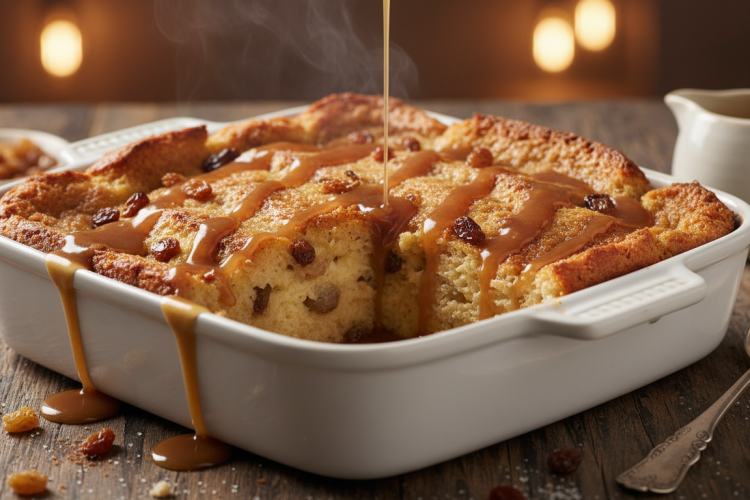
The best bread pudding is made by soaking cubed day-old brioche or challah in a rich vanilla-spiced egg custard, then baking until puffed and golden — the stale bread absorbs every bit of custard, baking into a dessert that is simultaneously crispy on top and silky-soft in the center. Serve warm with a generous pour of buttery vanilla bourbon sauce for a deeply comforting classic that comes together in about an hour.
What Is Bread Pudding?
Bread pudding is one of the oldest known desserts in culinary history — a practical solution for using up stale bread that transformed into something far greater than the sum of its parts. The concept dates back to 11th and 12th century Europe, where cooks combined leftover or dried bread with whatever sweetener and liquid they had available. In the American South, bread pudding became a cornerstone of soul food and Creole cooking, particularly in New Orleans where it is still served in restaurants citywide, often elevated with whiskey sauce, pecans, and fresh berries.
Today’s bread pudding recipes have evolved considerably from their humble origins. The base technique is consistent: cubed bread soaks in a spiced egg custard, then bakes until set. But the variables — bread type, custard richness, mix-ins, and sauce — give home bakers nearly unlimited room to customize. Brioche, challah, French bread, croissants, cinnamon rolls, and even doughnuts have all been used as the base, and each yields a completely different result in texture and flavor.
This recipe focuses on the classic approach: brioche or day-old French bread, a rich vanilla custard, optional raisins, and a warm vanilla bourbon sauce. The result is deeply satisfying comfort food that works equally well as a weeknight dessert, a holiday centerpiece, or a next-day breakfast warmed up with a spoonful of sauce.

Why Stale Bread Makes the Best Bread Pudding
This seems counterintuitive — why would older, drier bread be better? The answer is simple: stale bread has lost most of its moisture, making it far more absorbent. When you soak stale bread in egg custard, it drinks up the liquid deeply and evenly without immediately becoming mushy. Fresh bread, which still contains moisture, can’t absorb as much custard before it breaks down structurally, often resulting in an uneven texture with wet patches and dry spots.
The ideal bread for this recipe is 1–2 days old: not rock-hard, but noticeably drier than fresh. If you’re using freshly baked bread, you can dry it out in a 300°F (150°C) oven for 15–20 minutes, spread in a single layer, until the cubes feel dry and slightly stiff to the touch. Cool completely before soaking.
As for bread type: brioche and challah are the gold standard. Both are enriched breads (made with eggs and butter), which means they have a natural richness that amplifies the custard’s flavor. Day-old French bread is the more traditional American choice and works beautifully — slightly chewier and less sweet than brioche, with an excellent crust that crisps up nicely during baking. Croissants produce the most luxurious, buttery result but also the richest (and most caloric). Avoid sandwich bread — it tends to get gummy and lacks the structural integrity to hold up during soaking.

Ingredients
For the Bread Pudding
- 400g (about 10–12 cups loosely packed) day-old brioche or challah, cut into 1-inch cubes — French bread works equally well
- 4 large eggs, room temperature
- 480ml (2 cups) whole milk — use full-fat for the richest custard
- 240ml (1 cup) heavy cream — makes the custard extra silky; substitute more whole milk for a lighter result
- 150g (¾ cup) granulated sugar
- 60g (4 tablespoons) unsalted butter, melted and slightly cooled
- 2 teaspoons pure vanilla extract
- 1 teaspoon ground cinnamon
- ¼ teaspoon ground nutmeg
- Pinch of salt
- 80g (½ cup) raisins (optional) — golden raisins are milder in flavor; regular raisins add more contrast
For the Vanilla Bourbon Sauce
- 115g (½ cup / 1 stick) unsalted butter
- 200g (1 cup) granulated or light brown sugar
- 120ml (½ cup) heavy cream
- 1 teaspoon vanilla extract
- 2 tablespoons bourbon or whiskey (optional, but traditional) — omit for an alcohol-free vanilla sauce
- Pinch of flaky sea salt
How to Make Bread Pudding (Step by Step)
Step 1: Prepare the Bread and Pan
Preheat your oven to 175°C / 350°F. Butter a 9×13-inch (23×33cm) baking dish generously — use a pastry brush to coat the bottom and all sides. This prevents sticking and contributes to the caramelized edges that are one of bread pudding’s best features.
Cut or tear your day-old bread into rough 1-inch cubes. They don’t need to be perfectly uniform — rustic, varied sizes actually give more interesting texture. If your bread isn’t stale, spread the cubes on a baking sheet and toast at 300°F (150°C) for 15 minutes until dry. Cool completely. If using raisins, scatter them evenly across the buttered baking dish first, then pile the bread cubes on top.
Step 2: Make the Custard
In a large bowl, whisk together the eggs, whole milk, heavy cream, sugar, melted butter, vanilla extract, cinnamon, nutmeg, and salt until completely smooth and the sugar has dissolved. Whisk for a full minute — you want a uniform, slightly frothy custard with no streaks of egg white visible.
Taste the custard at this point — it should taste pleasantly sweet, warm with cinnamon, and rich from the cream. If you want more vanilla flavor, add another half teaspoon. This is also the time to add any other mix-ins to the custard directly: a tablespoon of bourbon, the zest of an orange, or a teaspoon of almond extract.
Step 3: Soak the Bread
Pour the custard evenly over the bread cubes in the baking dish. Press down gently with a spatula or your clean hands so that every piece of bread comes into contact with the custard. The top pieces should be moistened but not submerged. Let the dish sit and soak for at least 20–30 minutes at room temperature, pressing down every 5–10 minutes. For an even more custardy result, cover with plastic wrap and refrigerate overnight — the bread absorbs far more custard with a long soak and the flavors meld beautifully.

Step 4: Bake
Bake at 175°C / 350°F for 45–55 minutes, until the top is deeply golden brown and puffed, and the center jiggles only slightly when you shake the pan. A skewer or knife inserted into the center should come out with just a trace of moist custard — not wet and liquid, but not completely dry either. The internal temperature should reach about 160°F (71°C) for a fully set custard.
If the top is browning too quickly before the center sets, tent loosely with aluminum foil and continue baking. The puffed-up top will deflate slightly as the pudding cools — this is completely normal and expected.

Step 5: Make the Vanilla Bourbon Sauce
While the pudding bakes, make the sauce. Melt the butter in a medium saucepan over medium heat. Add the sugar and cream and stir until the sugar dissolves and the mixture comes to a gentle simmer. Cook for 4–5 minutes, stirring occasionally, until the sauce thickens slightly and coats the back of a spoon. Remove from heat and stir in the vanilla, bourbon (if using), and a pinch of flaky sea salt. The sauce will continue to thicken as it cools — it should be pourable but not watery.

Step 6: Serve
Let the bread pudding cool for 10–15 minutes before serving — it’s best served warm, not scorching hot. Spoon portions into bowls or plates and drizzle generously with the warm vanilla bourbon sauce. Optionally top with a dusting of powdered sugar, a scoop of vanilla ice cream, or a dollop of freshly whipped cream.

Variations
New Orleans-Style Bread Pudding
The classic Creole version uses French bread (not brioche), adds a splash of bourbon directly to the custard, and sometimes includes coconut, pecans, or golden raisins soaked in rum. The signature whiskey sauce is non-negotiable — richer and more intensely buttery than the recipe above. Many New Orleans restaurants also add a cream cheese swirl to the custard before baking, which creates pockets of tangy richness throughout the pudding. If you love cheesecake-adjacent desserts, try adding 4 oz of softened cream cheese blended into the custard — it’s extraordinary, similar in spirit to our easy no-bake cheesecake.
Chocolate Chip Bread Pudding
Scatter 150g (1 cup) of semi-sweet or dark chocolate chips throughout the bread cubes before adding the custard. During baking, the chips melt into pockets of molten chocolate throughout the pudding. Skip the bourbon sauce and serve with a simple dark chocolate ganache instead (equal parts warm cream and chopped dark chocolate, stirred smooth). This variation is exceptional for chocolate lovers and pairs beautifully with vanilla ice cream, similar to the rich experience of our easy chocolate mousse recipe.
Croissant Bread Pudding
Use 6–8 day-old croissants torn into rough pieces instead of brioche. Croissants are already laminated with butter, so the resulting pudding is extraordinarily flaky and rich — almost like a giant baked pain au chocolat in texture. Reduce the butter in the custard to 2 tablespoons since croissants provide so much of their own fat. This is the variation most commonly served at upscale restaurants and brunch spots.
Apple Cinnamon Bread Pudding
Sauté 2 large peeled, diced apples with 2 tablespoons butter, 2 tablespoons brown sugar, and 1 teaspoon cinnamon until just softened (about 5 minutes). Let cool, then scatter throughout the bread cubes before adding custard. Increase the cinnamon in the custard to 1½ teaspoons and add ¼ teaspoon of cardamom. Serve with caramel sauce instead of bourbon sauce. The apple-cinnamon combination creates a dessert reminiscent of our easy apple crisp recipe but in a richer, more custardy form.
Dairy-Free Bread Pudding
Substitute the whole milk with full-fat oat milk or canned coconut milk, and the heavy cream with coconut cream. Use a dairy-free butter alternative (such as Earth Balance) in both the custard and the sauce. The coconut versions add a subtle tropical note that pairs surprisingly well with the cinnamon-vanilla custard. Use dairy-free bread (most brioche contains butter — look for vegan brioche or use French bread instead).

Storage and Make-Ahead Tips
Make Ahead
Bread pudding is one of the most make-ahead-friendly desserts you can prepare. Assemble the full dish — bread, custard, and all mix-ins — up to 24 hours ahead, cover tightly with plastic wrap, and refrigerate. The extended soak actually improves the final texture, as the bread has more time to fully absorb the custard. When ready to bake, remove from the refrigerator 30 minutes before baking to take the chill off, then bake as directed (you may need to add 5–10 minutes to the bake time if starting cold).
Storing Leftovers
Cover the baking dish tightly with plastic wrap or transfer leftovers to an airtight container. Refrigerate for up to 4 days. The pudding will firm up in the fridge but softens beautifully when reheated. Store the sauce separately in a sealed jar for up to 1 week.
Reheating
Microwave: Individual portions reheat in 1–2 minutes on medium power. Cover with a damp paper towel to add steam.
Oven: Cover with foil and reheat at 160°C / 325°F for 15–20 minutes. Adding a tablespoon of cream or milk over the surface before covering helps restore moisture.
Sauce: Reheat gently in a saucepan over low heat, or microwave in 30-second intervals. Whisk in a splash of cream if it has separated or thickened too much.
Tips for the Best Results
Use Day-Old or Dried Bread
As outlined above, stale bread absorbs custard far more effectively than fresh. This is the single most impactful variable in the recipe. If you only have fresh bread, the oven-drying shortcut works very well — 15–20 minutes at 300°F until the cubes feel noticeably dry and stiff.
Don’t Skip the Soak Time
According to Serious Eats, a minimum 30-minute soak at room temperature is necessary for even custard absorption, but an overnight refrigerator soak is even better. Rushing this step is the most common reason for dry patches or undercooked custard in the finished pudding.
Watch the Bake Time Carefully
The difference between perfectly baked bread pudding (creamy, custardy interior) and overbaked (dry, rubbery) is often just 5–8 minutes. Start checking at the 40-minute mark. The pudding is done when the center has a gentle set — it should wobble slightly like a cheesecake, not slosh like liquid, but also not feel completely firm. If you love clean, firm slices like a cake, err toward the longer end of the baking window. If you prefer a more custardy, spoonable consistency, pull it closer to the 45-minute mark. This balance is similar to what makes our classic vanilla cheesecake recipe work — you’re baking a custard, not a sponge, so slight underbaking is always better than overbaking.
Always Serve With Warm Sauce
Bread pudding served without sauce is technically possible but missing the defining element. The sauce doesn’t just add sweetness — it adds moisture back to the exterior of the pudding, provides a textural contrast, and ties all the flavors together. If you’re skipping the bourbon, a simple vanilla caramel sauce (butter, brown sugar, cream, vanilla) works just as well. You can also serve alongside a lightly set panna cotta if you want a two-dessert plate that contrasts textures beautifully.
Frequently Asked Questions
Can I make bread pudding without eggs?
Eggs are the structural binder in bread pudding’s custard — they’re what causes the liquid to set into a soft solid during baking. Replacing them is possible but requires different binders. Flax eggs (1 tbsp ground flaxseed + 3 tbsp water per egg, rested 5 minutes) work reasonably well for texture but lack the richness of real eggs. Silken tofu blended smooth with a little extra vanilla is another option. The result will be slightly less custardy and more bread-forward, but still delicious. Reduce oven temperature to 325°F (163°C) and bake more slowly to prevent the vegan custard from overcooking at the edges.
Why is my bread pudding soggy?
Sogginess usually has one of three causes: (1) The bread was too fresh and broke down structurally during soaking, turning mushy rather than absorbent; (2) The custard ratio was too high — if you have more custard than your bread can absorb, the bottom of the dish may sit in unabsorbed liquid throughout baking; (3) The pudding was underbaked. Make sure a knife inserted in the center comes out with just a trace of moist custard, not liquid. If your dish runs deep, you may need to add an extra 10 minutes to the bake time.
What’s the best bread for bread pudding?
Brioche and challah produce the richest, most tender result. Day-old French bread is the most traditional American choice and gives a slightly chewier texture with a crisp crust. Croissants yield the most buttery, flaky result. For a budget-friendly option, any thick white sandwich bread (like Texas toast) works if well-dried. Avoid thin-sliced sandwich bread — it turns to mush. Do not use rye bread, sourdough, or seeded bread — their strong flavors compete with the vanilla custard.
Can I freeze bread pudding?
Yes. Cool completely, then cut into individual portions and wrap each tightly in plastic wrap, then place in a freezer bag. Freeze for up to 2 months. Thaw overnight in the refrigerator and reheat in the oven at 325°F (163°C) covered with foil for 20 minutes, or microwave individual portions for 2–3 minutes on medium power. The sauce freezes well separately in a sealed container for up to 3 months — thaw in the fridge and reheat gently on the stovetop.
Is bread pudding served warm or cold?
Traditionally warm, with warm sauce — this is when the contrast between the soft custardy interior and the rich glossy sauce is most vivid. That said, leftover bread pudding eaten cold from the fridge the next morning has its own distinct appeal — firmer, almost like a French toast casserole in texture, excellent with a cup of coffee. Some restaurants serve it at room temperature for brunch service, which is a middle ground. If serving at a dinner party, aim for just-warm: pulled from the oven 20 minutes before serving, with sauce freshly made or reheated just before plating.