

Wagashi are traditional Japanese confections made from natural ingredients like sweet bean paste (anko), rice flour, and sugar — designed to be as beautiful as they are delicious. The most beginner-friendly wagashi to make at home are nerikiri (moldable white bean paste sweets) and dorayaki (fluffy red bean pancake sandwiches).


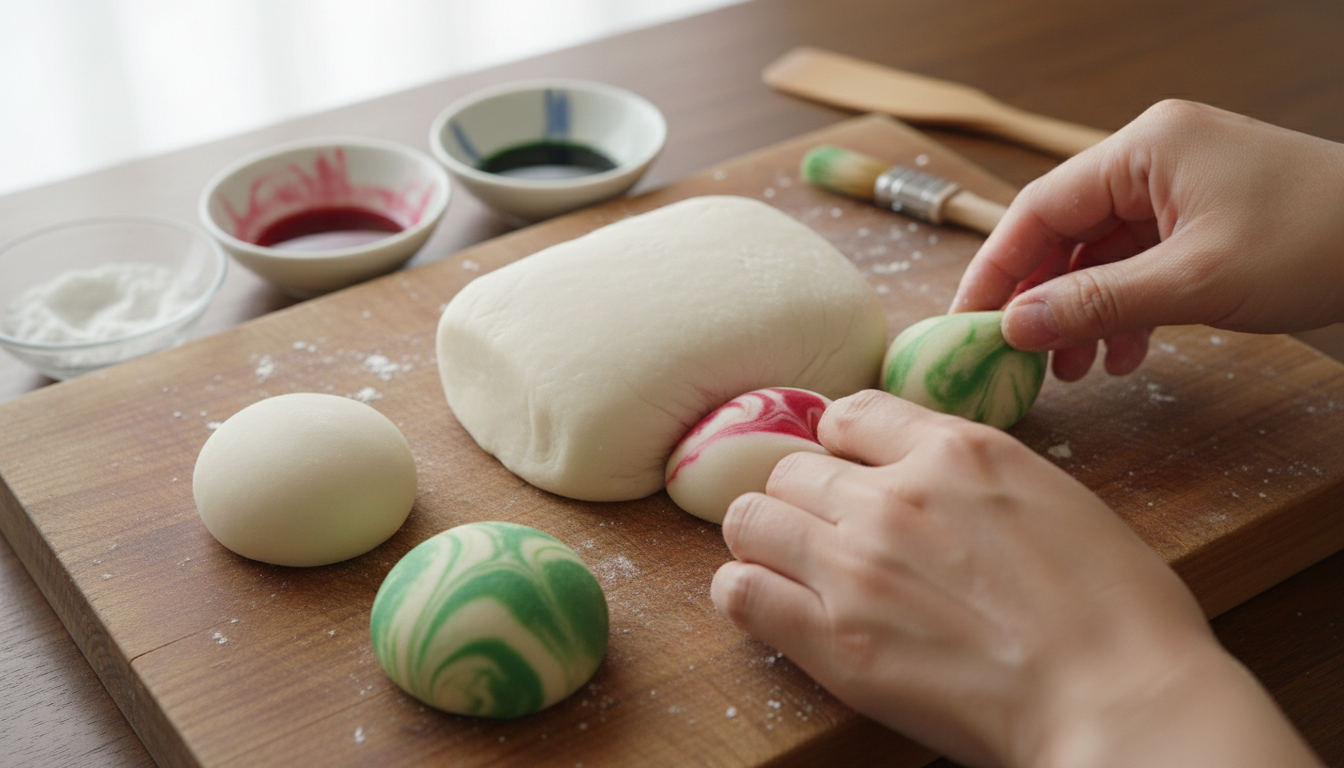
Table of Contents
- What Is Wagashi?
- Common Types of Wagashi
- Easy Nerikiri Recipe (Flower Wagashi)
- Simple Dorayaki Recipe
- How to Make Anko (Sweet Red Bean Paste)
- Tips for Making Wagashi at Home
- FAQ
What Is Wagashi?
Wagashi (和菓子) are Japanese traditional sweets that have been crafted for over 1,000 years. The word breaks down to wa (Japanese) and gashi (sweets). They’re most commonly associated with the Japanese tea ceremony, where their gentle sweetness balances the bitterness of matcha.
What sets wagashi apart from Western confections is their philosophy: they use minimal ingredients, celebrate seasonal beauty through shape and color, and avoid heavy fats like butter or cream. Many wagashi are naturally vegan and gluten free — making them a wonderful option for guests with dietary restrictions.
If you love Japanese-inspired desserts, you might also enjoy our guide to what mochi is and how it’s made — mochi is one of the most widely recognized styles of wagashi outside Japan.
Common Types of Wagashi
| Type | Description | Key Ingredients |
|---|---|---|
| Nerikiri | Sculpted raw sweets, often shaped like flowers or seasonal items | White bean paste, rice flour |
| Dorayaki | Two fluffy pancakes sandwiching sweet red bean paste | Eggs, flour, honey, anko |
| Daifuku | Soft mochi stuffed with anko or fruit | Glutinous rice flour, anko |
| Yokan | Firm, sliceable jelly block made with bean paste and agar | Anko, agar-agar, sugar |
| Manju | Steamed buns filled with sweet bean paste | Flour, baking powder, anko |
| Higashi | Dry pressed sugar confections, crumble when bitten | Sugar, rice flour |
Easy Nerikiri Recipe (Flower Wagashi)
Nerikiri are the most photogenic wagashi. They’re made from shiratama-ko (white bean paste) tinted with natural food colors and sculpted into seasonal shapes. This beginner-friendly version uses store-bought white bean paste to save time.
Ingredients (makes 8 pieces)
- 200g white bean paste (shiro-an), store-bought or homemade
- 20g gyuhi (or 2 tsp glutinous rice flour cooked with 1 tbsp water)
- Natural food coloring (pink from beet powder, green from matcha)
Method
1. If using gyuhi (soft mochi): combine white bean paste and gyuhi in a small saucepan over low heat. Stir constantly until it comes together into a smooth, non-sticky dough. Remove from heat.
2. Divide the dough into portions. Leave one portion white; tint others with a toothpick-dab of food coloring, kneading until evenly colored.
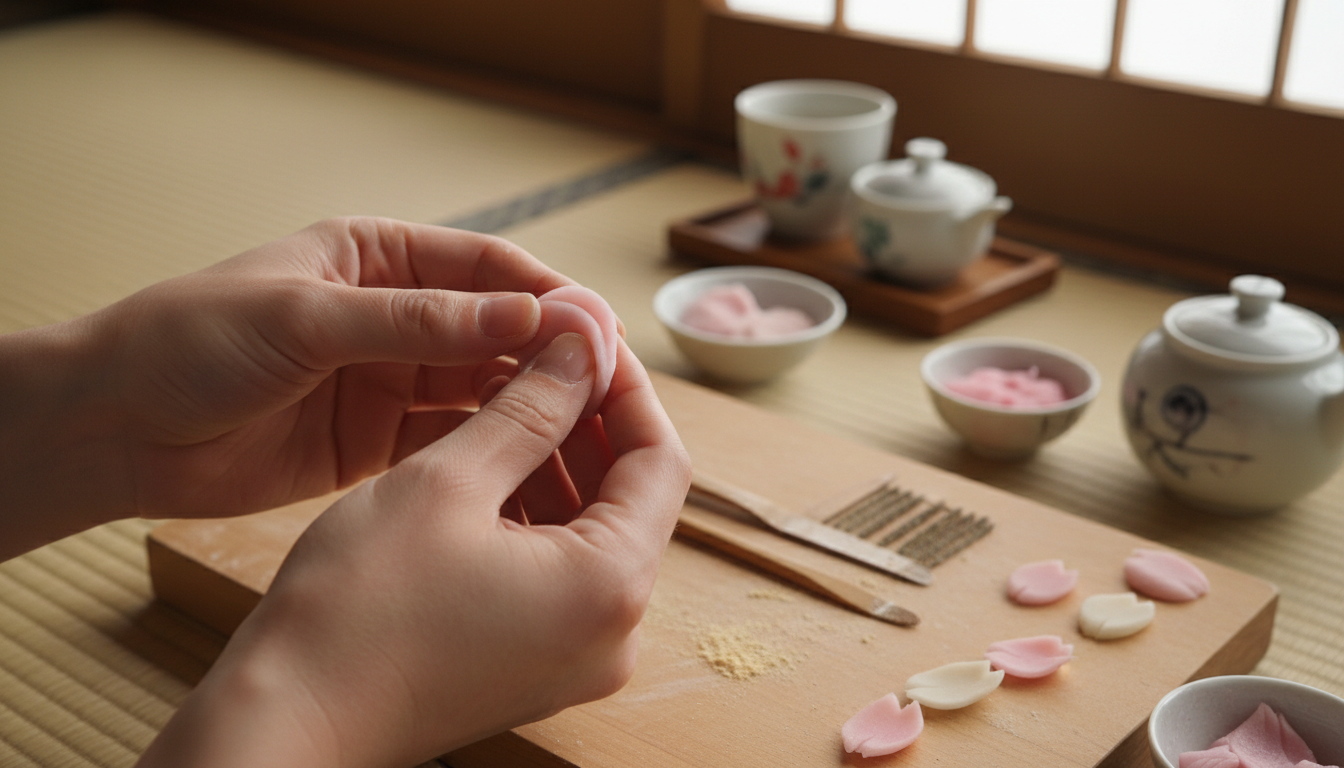
3. To make a flower: flatten a pink disk of dough, place a small ball of white dough in the center, and pull the edges up to encase it. Use a chopstick to press 5 petal impressions into the top.
4. Serve immediately or wrap individually in plastic wrap and refrigerate for up to 3 days.
Simple Dorayaki Recipe
Dorayaki are the most accessible wagashi to make because they require no special equipment or exotic ingredients. The pancakes are honey-sweetened and distinctly springy.
Ingredients (makes 6 dorayaki)
- 2 large eggs
- 3 tablespoons sugar
- 2 tablespoons honey
- ½ teaspoon baking soda dissolved in 1 teaspoon water
- ¾ cup all-purpose flour
- 2 tablespoons water (adjust for consistency)
- 1 cup anko (sweet red bean paste — see below)
Method
1. Whisk eggs, sugar, and honey until pale and slightly thickened. Add dissolved baking soda.
2. Sift in flour and stir gently until smooth. Add water, 1 teaspoon at a time, until the batter is the consistency of thick pancake batter. Rest 15 minutes.
3. Heat a non-stick pan over medium-low heat. Lightly grease. Pour ¼ cup batter per pancake and cook until bubbles form on the surface and edges look set (about 2 minutes). Flip and cook 30 seconds more. The surface should be evenly golden.
4. Pair two pancakes with a heaping tablespoon of anko sandwiched between. Press gently to adhere.
How to Make Anko (Sweet Red Bean Paste)
Anko is the heart of most wagashi. This is a quick tsubuan-style (chunky) anko — for smoother koshi-an, pass through a sieve after cooking.

- 1 cup dried adzuki beans
- ¾ cup sugar
- Pinch of salt
Method: Rinse beans. Cover with water and bring to a boil. Drain and discard water (removes bitterness). Cover with fresh water (3 cups) and simmer 60-90 minutes until beans are very tender. Drain most liquid, leaving just a little. Add sugar and salt. Stir over medium heat 10-15 minutes until thick and paste-like. Cool completely before using.
Tips for Making Wagashi at Home
- Use a kitchen scale. Wagashi recipes are precise — volume measurements can lead to inconsistency in texture.
- Work fast with nerikiri. The dough dries out quickly when exposed to air. Keep portions covered with plastic wrap while you work on individual pieces.
- Natural colorings are traditional. Use matcha for green, beet powder for pink/red, turmeric for yellow. Avoid synthetic dyes if you want an authentic result.
- Start with dorayaki. If you’re new to wagashi, dorayaki is the most forgiving. The pancake technique is familiar and the anko can be store-bought.
For more global dessert traditions, explore our Global Dessert Traditions roundup — wagashi fits beautifully into the story of how different cultures use sugar, beans, and grain to create something transcendent.
Frequently Asked Questions
Is wagashi vegan?
Many wagashi are naturally vegan, including yokan, most nerikiri, and anko-based mochi. Dorayaki contains eggs and honey, so it is not strictly vegan. Always check the specific recipe.
Is wagashi gluten free?
Some wagashi styles are naturally gluten free — nerikiri (white bean paste + glutinous rice flour), yokan (agar + anko), and plain mochi are all gluten free. Dorayaki and manju contain wheat flour and are not.

Where can I buy wagashi ingredients?
Shiro-an (white bean paste), adzuki beans, and gyuhi are available at Japanese grocery stores (like Mitsuwa or Marukai), Asian supermarkets, or online. Canned tsubuan (ready-made anko) is a great time-saver and found at most Asian grocers.
How long does wagashi last?
Fresh wagashi (nerikiri, daifuku, dorayaki) should be eaten within 1-3 days. Drier styles like higashi last up to 2 weeks at room temperature. Store fresh wagashi in an airtight container in the refrigerator.
What’s the difference between wagashi and mochi?
Mochi is a specific type of wagashi made from pounded glutinous rice. “Wagashi” is the broader category that includes mochi plus dozens of other traditional Japanese sweet styles.
