
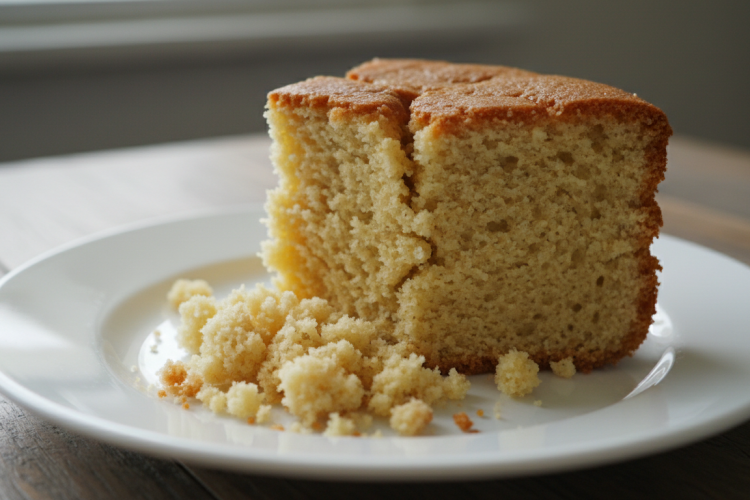
Your cake is crumbly because of too much flour, not enough fat or liquid, over-mixing the batter, or overbaking. These are the four root causes behind nearly every dry, falling-apart cake. The good news: each one is fixable — and often preventable with a single adjustment to your technique or ingredient ratios.
The Most Common Reason: Too Much Flour
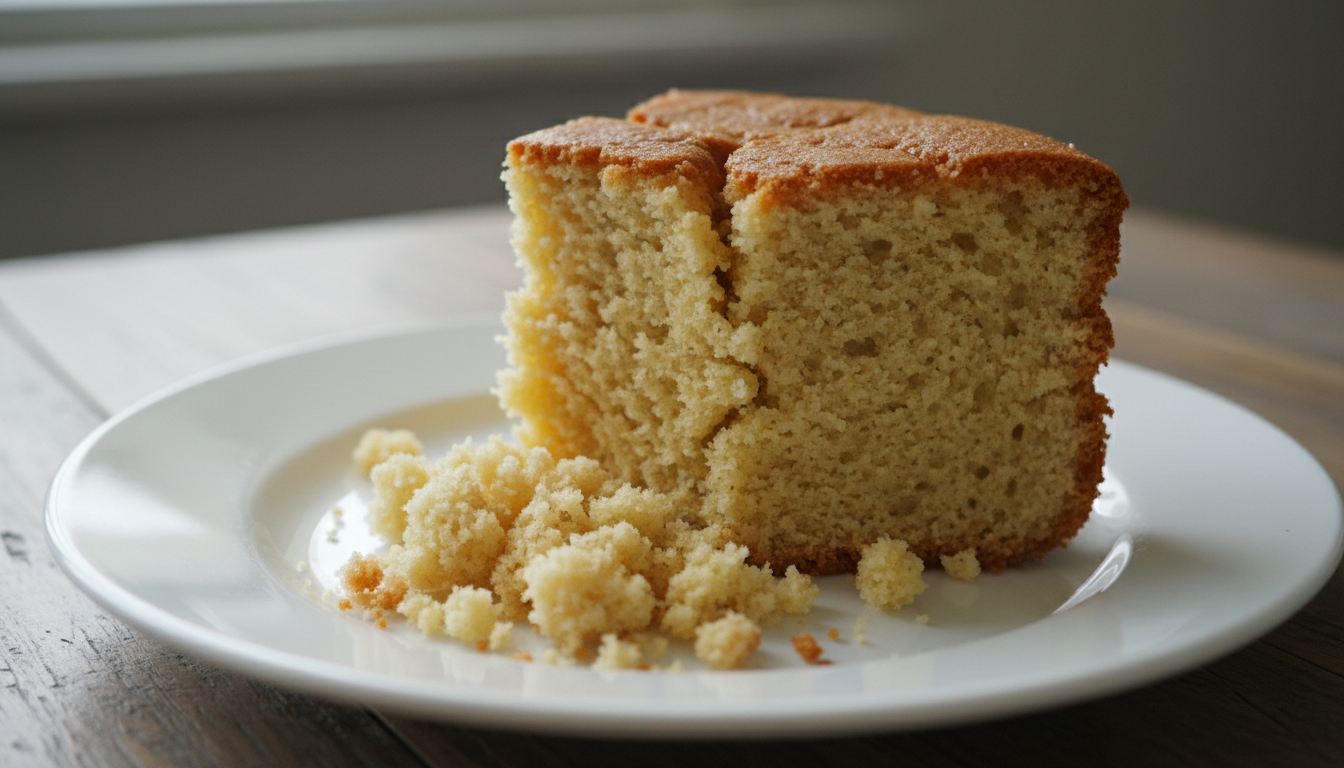
The single most common cause of a crumbly cake is using too much flour. When you scoop flour directly from the bag with your measuring cup, you compact it — and a compacted cup of flour can contain 20–30% more flour than the recipe intends. That excess flour absorbs all the available moisture in the batter, leaving you with a dry, crumbling crumb structure that falls apart when you slice it.
According to Serious Eats’ baking guide, the spoon-and-level method (spooning flour into the cup and leveling it off with a straight edge) or using a kitchen scale in grams is the most reliable way to measure flour accurately. Most professional bakers measure by weight precisely because volume measurements are so inconsistent.
Not Enough Fat or Liquid
Fat — whether butter, oil, or sour cream — is what keeps cake tender and moist. Fat coats the gluten strands in flour and prevents them from bonding too tightly, which is what gives cake its soft, cohesive crumb. When there isn’t enough fat relative to the flour, the gluten network becomes overly rigid and the cake crumbles instead of cutting cleanly.
Liquid ingredients (milk, buttermilk, eggs, water) play a similarly critical role. Eggs are particularly important: they provide both fat (from the yolk) and protein (from the white) that helps bind the structure together. A cake made with too few eggs, or with eggs that were left out and not at room temperature, will often crumble when sliced.
If your recipe calls for butter, make sure it is properly creamed — softened to room temperature, not melted. Melted butter incorporates differently and can result in a denser, sometimes crumblier texture depending on the recipe. For guidance on getting this right, see our Fluffy Chocolate Cake Recipe which walks through the creaming method step by step.

Over-Mixing the Batter
Over-mixing is a counterintuitive cause of crumbly cake — you might think that more mixing means a more cohesive batter, but the opposite is true. When you over-mix cake batter after adding the flour, you overdevelop the gluten, which creates a tough, sometimes sandy or crumbly texture rather than a tender crumb.
The correct technique is to mix only until the dry ingredients are just incorporated — a few streaks of flour remaining is fine, as they will be fully absorbed during baking. Use a rubber spatula for the final folds rather than an electric mixer, and stop the moment you no longer see large dry patches. Over-mixed cakes often also have a dense, gummy center with a crumbly exterior — a distinct texture problem from a cake that’s simply too dry.

Overbaking: The Silent Moisture Killer
Overbaking drives off the moisture that keeps cake cohesive. Even 5–10 minutes too long in the oven can transform a perfectly moist cake into a dry, crumbling disappointment. Oven temperatures also vary significantly from the dial setting — many home ovens run 25–50°F hotter or cooler than indicated, which is why an oven thermometer is one of the most useful tools in a baker’s kitchen.
The standard doneness test — a toothpick inserted in the center comes out clean — can be misleading if you push it all the way to the bottom of the pan where residual heat is highest. A better approach is to pull the cake when the toothpick comes out with just a few moist crumbs attached (not wet batter, but not bone dry either). The cake continues to bake from residual heat for several minutes after it leaves the oven.
Dark-colored pans also bake faster than light pans — if you’re using a dark metal pan, reduce the oven temperature by 25°F and start checking for doneness 5 minutes earlier than the recipe specifies. For context on how baking time and temperature interact, our Chocolate Sheet Cake From Scratch guide covers this in detail, including how pan color affects bake time.
The Role of Leavening Agents
Too much baking powder or baking soda can also cause a crumbly texture. Excess leavening creates a cake that rises too rapidly, forming large air bubbles that burst and leave behind a coarse, open crumb structure. That open structure is physically weaker and more prone to crumbling when cut. Follow the recipe measurements precisely for leavening — it’s one of the few places where “a little more” does not improve results.
Old, expired leavening agents cause the opposite problem — underrising — which can result in a dense, gummy cake. Always check the expiration date on your baking powder and baking soda. A simple freshness test: drop a teaspoon of baking powder into hot water; if it bubbles vigorously, it’s still active. For baking soda, drop a teaspoon into white vinegar — strong bubbling means it’s good.

Ingredient Temperature Matters
Cold ingredients — especially eggs, butter, and dairy — can prevent proper emulsification in the batter. When fat and liquid don’t emulsify correctly, the batter can’t hold together as a uniform structure, and the baked cake may be crumbly or have an uneven, greasy texture. Most cake recipes assume room-temperature ingredients (65–70°F) unless otherwise specified.
A quick fix: place cold eggs in a bowl of warm (not hot) water for 5–10 minutes before using. For butter, you can cut it into small cubes and let it sit at room temperature for 30 minutes, or use a cheese grater to shred cold butter and let the shredded pieces warm up faster. Microwave-softened butter often goes partially melted and behaves differently than properly softened butter — avoid it when precision matters.
Cake Type and Expected Texture
Some crumbliness is normal depending on the cake style. A few cake types naturally have a more crumbly, tender crumb by design:
- Pound cake — dense, slightly crumbly when sliced cold; best at room temperature
- Coffee cake / crumb cake — intentionally tender and crumbly with a streusel topping
- Shortcake — designed to break apart and absorb juices; crumbliness is correct
- Cornbread-style cakes — high cornmeal content naturally produces a more crumbly texture
- Gluten-free cakes — without wheat gluten providing structure, GF cakes can be more fragile unless xanthan gum or another binder is used
If your recipe is for a layer cake, bundt, or sheet cake and it’s crumbling, that’s a sign something went wrong with ingredients, technique, or baking time. If it’s a coffee cake or shortcake and it’s slightly crumbly, that may be exactly right. Our Easy Blue Velvet Cake and Churro Cake Recipe are both designed for a tender but cohesive layer cake crumb — compare those textures as a reference point.
How to Fix a Crumbly Cake That’s Already Baked
If your cake is already baked and crumbly, you have several options to salvage it:
- Simple syrup soak — brush the cut surfaces with a simple syrup (equal parts sugar and water, heated until dissolved) to add moisture back. This is a standard professional bakery technique for slightly dry cakes.
- Frosting as adhesive — a generous layer of buttercream or cream cheese frosting holds crumbly layers together and masks surface cracks. Press the frosting into any gaps and crumb-coat first to seal the surface.
- Cake pops or trifle — if the cake is too far gone to serve as slices, crumble it intentionally and use it in a trifle layered with whipped cream and fruit, or combine with frosting to make cake pops. Both approaches are genuinely delicious and hide any structural issues entirely.
- Wrap and rest — a slightly dry cake sometimes improves after being tightly wrapped in plastic wrap and left at room temperature overnight. The remaining moisture redistributes through the crumb.
For cheesecakes and no-bake cakes the crumbliness problem manifests differently — if your cheesecake base is crumbling, that’s usually too little butter in the crust rather than a baking issue. See our Easy No-Bake Cheesecake for the correct butter-to-crumb ratio that holds the base together perfectly.
Quick Troubleshooting Checklist
Run through this checklist the next time your cake comes out crumbly:
- ☐ Did you measure flour by spooning into the cup and leveling (not scooping)?
- ☐ Were your eggs and butter at room temperature?
- ☐ Did you stop mixing as soon as the flour was just incorporated?
- ☐ Did you use an oven thermometer to verify actual oven temperature?
- ☐ Did you pull the cake when the toothpick had a few moist crumbs (not when bone dry)?
- ☐ Is your baking powder/baking soda fresh and within the expiration date?
- ☐ Did you use the correct pan size? (Too small = under-baked center; too large = thin cake that dries out faster)
If you checked all seven boxes and still got a crumbly cake, review the recipe itself — some older or poorly tested recipes have incorrect flour-to-fat ratios that will produce a crumbly result no matter how carefully you execute them. Cross-reference with a trusted source like a well-rated recipe from a major food publication, or compare ratios with a similar cake that has worked well for you before.
Frequently Asked Questions
Why is my cake crumbly but moist?
A cake that feels moist but still crumbles is usually a sign of over-mixing or too much leavening. Over-mixing overdevelops the gluten and creates a coarse, open crumb that crumbles when cut even though the cake itself isn’t dry. Too much baking powder can also produce this effect — the cake rises rapidly, forms large air pockets, and the structure lacks cohesion. Reduce your mixing time and double-check your leavening measurements.
Why did my cake fall apart when I took it out of the pan?
Cake that collapses or falls apart when unmolded is usually under-baked, didn’t cool long enough before unmolding, or wasn’t properly greased. Always let cakes cool in the pan for at least 10–15 minutes before attempting to turn them out. Run a thin offset spatula or butter knife around the edge of the pan first to release any stuck spots. If it still collapses, the center wasn’t fully set — return the cake to the pan and bake for 5 more minutes, then re-test.
Does too much sugar make cake crumbly?
Yes — excess sugar can contribute to a crumbly texture. Sugar is hygroscopic (it attracts moisture) which sounds helpful, but too much sugar can actually weaken the structural matrix of the cake by interfering with gluten and protein development. The result is a very tender, almost overly soft cake that crumbles easily. Follow recipe measurements for sugar precisely, especially for layered or structured cakes.
Why does my gluten-free cake always crumble?
Gluten-free cakes crumble because wheat gluten normally acts as the structural binding agent in cake — without it, the crumb has less tensile strength. To fix this, make sure your gluten-free flour blend includes xanthan gum (or add ¼ tsp per cup of flour if it doesn’t). Extra eggs or an additional egg yolk also help, as does a rest period after baking — gluten-free cakes are significantly more fragile when warm and firm up considerably as they cool completely.
Can I prevent a crumbly cake by adding more liquid?
Adding more liquid (milk, water, or oil) can help if the problem is insufficient fat or moisture, but it’s not a universal fix. Adding extra liquid without adjusting flour can throw off the entire ratio and create a different set of problems — a gummy center or a cake that won’t set. A better approach is to identify the specific cause first (too much flour, overbaking, or over-mixing) and address that root cause rather than compensating with extra liquid.