
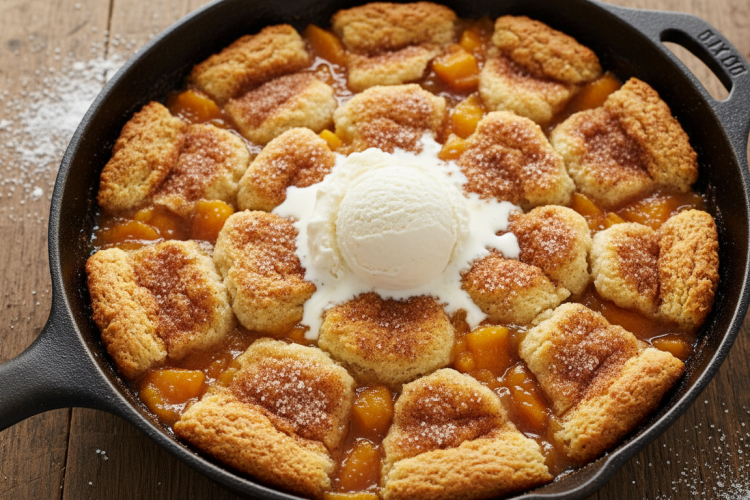
Easy peach cobbler is made by layering sweetened, spiced fresh or canned peaches in a baking dish, pouring a simple butter batter over the top, and baking until golden and bubbling — no pie crust, no special equipment, and under 10 minutes of active prep time. It is one of the most forgiving Southern desserts you can make, and it works beautifully with both fresh summer peaches and canned peaches year-round.

What Is Peach Cobbler?
Peach cobbler is a classic American baked dessert with roots in the Southern United States. It consists of a sweet fruit base — sliced peaches seasoned with sugar, cinnamon, and a splash of vanilla — topped with a thick batter or biscuit topping that bakes up golden and slightly crisp on top while remaining soft and cake-like underneath where it meets the fruit. As it bakes, the filling bubbles up around the edges of the topping, creating those irresistible caramelized, jammy pockets that define the dish.
Unlike a pie, cobbler has no bottom crust. The name likely comes from the “cobbled together” appearance of the rough, uneven topping — it is rustic by nature, and that is entirely the point. Cobbler is not supposed to look perfect. It is supposed to taste like home.
According to food historians at Southern Living, cobbler developed as a practical adaptation when early American settlers lacked the ingredients or equipment for traditional British puddings and tarts. They improvised with what was available — fresh summer fruit and a simple dumpling-style topping — and a beloved American tradition was born.
This recipe uses the classic pour-over batter method (sometimes called the “dump” method), which produces a tender, cake-like cobbler with just the right amount of sweetness. It pairs beautifully with vanilla ice cream, which melts into the warm cobbler and mingles with the peach juices in a way that borders on perfect.
Ingredients
This recipe makes a 9×13-inch cobbler, serving 8–10 people generously.

For the Peach Filling
- 6–8 medium fresh peaches (about 6 cups sliced), OR two 29-oz cans sliced peaches in juice (drained)
- ½ cup (100g) granulated sugar
- ¼ cup (50g) packed light brown sugar
- 1 teaspoon ground cinnamon
- ¼ teaspoon ground nutmeg
- 1 teaspoon pure vanilla extract
- 1 tablespoon fresh lemon juice
- 1 tablespoon cornstarch (for thickening)
For the Cobbler Batter
- ½ cup (115g) unsalted butter
- 1 cup (120g) all-purpose flour
- 1 cup (200g) granulated sugar
- 1 tablespoon baking powder
- ¼ teaspoon fine sea salt
- 1 cup (240ml) whole milk
- 1 teaspoon pure vanilla extract
- 1 teaspoon ground cinnamon (for topping)
- 2 tablespoons granulated sugar (for topping)
Step-by-Step Instructions
Step 1: Prepare the Peaches
If using fresh peaches, peel and slice them into ½-inch thick wedges. To peel easily, score an X on the bottom of each peach and blanch in boiling water for 30 seconds, then transfer immediately to an ice bath — the skin slips right off. If using canned peaches, drain thoroughly; excess liquid will make the cobbler soupy.
Toss the peach slices with both sugars, cinnamon, nutmeg, vanilla, lemon juice, and cornstarch. Stir until every slice is coated. Let the mixture sit for 10–15 minutes while you prepare the batter — the sugar will draw out the peach juices and create a syrupy base that concentrates flavor during baking.

Step 2: Melt the Butter
Preheat your oven to 375°F (190°C). Place the butter in the 9×13-inch baking dish and set it in the oven while it preheats. Watch it carefully — you want the butter fully melted and lightly foamy, not browned. Pull the dish from the oven once the butter is melted. This hot buttered dish is the key to the cobbler’s characteristic crispy bottom edge.
Step 3: Make the Batter
In a medium bowl, whisk together the flour, 1 cup sugar, baking powder, and salt. Add the milk and vanilla and whisk until smooth — a few small lumps are fine, but no large flour pockets. The batter will be thin, almost like a crepe batter. That is correct; do not add more flour.
Step 4: Assemble and Bake
Pour the batter directly over the melted butter in the hot baking dish. Do not stir. The butter will push up around the edges of the batter, and that is exactly what you want — it creates those golden, slightly crispy cobbler edges that everyone fights over. Spoon the peach mixture evenly over the batter. Again, do not stir. The batter will rise up and around the peaches as it bakes, creating the cobbled topping effect.
Mix together the cinnamon and 2 tablespoons of sugar and sprinkle evenly over the top of the peaches.

Step 5: Bake to Perfection
Bake at 375°F for 45–55 minutes, until the top is deep golden brown and the peach filling is visibly bubbling around the edges. The center of the topping should feel set when you press it gently — no jiggly, raw batter. If the top is browning too quickly before the center is set, tent loosely with foil for the last 10–15 minutes.
Remove from the oven and let rest for at least 15 minutes before serving. The filling is extremely hot and needs time to set slightly so it does not run all over the plate. Serve warm, ideally with vanilla ice cream or a dollop of lightly sweetened whipped cream.

Fresh Peaches vs. Canned Peaches
This is the most common question about peach cobbler, and the honest answer is: both work, and the right choice depends on the time of year and how much effort you want to put in.
Fresh Peaches (Peak Season: June–August)
Fresh ripe peaches produce a cobbler with more complex flavor, better texture, and natural sweetness that canned fruit cannot replicate. The fruit holds its shape slightly better during baking, giving you defined, tender peach slices rather than soft wedges. Look for peaches that yield slightly to pressure and smell fragrant at the stem end — underripe peaches will be starchy and tasteless even after baking.
If you can only find firm peaches, let them ripen at room temperature for 1–2 days in a single layer. Do not refrigerate unripe peaches — cold stops the ripening process and makes them mealy.
Canned Peaches (Great Year-Round)
Canned peaches in juice (not syrup) are a perfectly acceptable substitute, especially in winter when fresh peaches are flavorless. They are already soft, which means they break down more during baking, creating a saucier, jammier filling. If using canned peaches, reduce the granulated sugar in the filling to ¼ cup (the canned peaches are already sweet) and drain very thoroughly — pat dry with paper towels if needed. Excess liquid is the enemy of a good cobbler topping.
Frozen peaches (thawed and drained) also work well and are a good middle-ground option — they have better flavor than canned and are available year-round.
Tips for the Best Peach Cobbler
A few techniques separate a great cobbler from a merely good one.
Do Not Stir After Layering
The magic of this cobbler method relies entirely on not stirring once you have added the batter and fruit. The batter rises up through and around the peaches naturally during baking. If you stir, you break the structure and end up with a soggy, undifferentiated mass rather than distinct topping and filling layers.
Use a Hot Pan
Melting the butter in the dish in the oven rather than melting it separately and adding it cold is not just about convenience — the hot butter instantly begins setting the batter as soon as it is poured in, which contributes to the crispy, caramelized bottom and edge that distinguishes a truly good cobbler from a soggy one.
Season the Fruit Well
Peaches need more seasoning than most people give them. The combination of both granulated and brown sugar provides sweetness with depth, cinnamon and nutmeg add warmth, lemon juice brightens the flavor and prevents the filling from tasting flat or one-dimensional, and vanilla ties everything together. Do not skip any of these — each one plays a distinct role in the final flavor.
The Cornstarch Is Important
Cornstarch thickens the peach juices as they release during baking, turning them from watery liquid into a luscious, glossy sauce. Without it, you risk a watery cobbler with a soggy topping. One tablespoon is the right amount for this recipe — enough to thicken without making the filling gluey or starchy-tasting.
Variations on Classic Peach Cobbler
Once you have made the basic recipe, there are many delicious directions to take it.
Peach Cobbler With Brown Butter
Instead of simply melting the butter in the dish, brown it first on the stovetop until it smells nutty and caramel-like, then pour it into the baking dish. Brown butter cobbler has a dramatically deeper, richer flavor that makes the whole dessert taste more complex and sophisticated. This one small change is worth it every time.
Peach Cobbler With Biscuit Topping
For a heartier, more textured cobbler, replace the pour-over batter with dropped biscuit dough. Combine 1½ cups flour, 2 teaspoons baking powder, ¼ teaspoon salt, ¼ cup sugar, 6 tablespoons cold butter (cubed), and ½ cup heavy cream. Mix until clumpy and drop spoonfuls over the prepared fruit. Bake at the same temperature. This version is chunkier and more rustic — closer to a traditional British cobbler.
Peach and Berry Cobbler
Combine the peach filling with 1 cup of fresh blueberries, blackberries, or raspberries. The berries add tartness and color that contrast beautifully with the sweet peaches. This mixed fruit version is especially appealing in late summer when multiple fruits are at their peak simultaneously.
Spiced Peach Cobbler
Add ¼ teaspoon cardamom and a pinch of ground ginger to the filling along with the standard cinnamon and nutmeg. This spice profile adds warmth and aromatic complexity that elevates the dessert from simple to memorable. It pairs especially well with cinnamon ice cream instead of vanilla.
If you enjoy fruit-forward desserts like this, you might also love our easy lemon bars recipe — they have the same approachable, no-fuss spirit with a bright citrus filling on a buttery shortbread base.
How to Serve Peach Cobbler
Peach cobbler is at its absolute best served warm, within 30 minutes of coming out of the oven, with a generous scoop of vanilla ice cream. The contrast between the warm cobbler and cold, melting ice cream is a textural and temperature experience that elevates both components.

If you want to keep it dairy-free, coconut whipped cream is an excellent substitute. It has a subtle tropical note that actually complements the peaches beautifully. Lightly sweetened crème fraîche is another option — its tang balances the sweetness of the cobbler in a way that plain whipped cream does not.
For a dessert table spread, cobbler works well alongside other Southern-inspired bakes. Our classic pound cake recipe is a natural companion — simple, buttery, and completely beloved. Or for a lighter finish, our lemon bars provide a bright contrast on the dessert table.
Make-Ahead and Storage
Can You Make Peach Cobbler Ahead?
You can prepare the peach filling up to 24 hours in advance and refrigerate it covered. Do not add the cornstarch until you are ready to assemble, or the filling will become too thick. Mix in the batter and bake just before serving for best results — cobbler is one of those desserts that is genuinely better freshly baked than reheated.
Storing Leftover Cobbler
Cover the baking dish with plastic wrap or foil and refrigerate for up to 4 days. The topping will soften overnight as it absorbs moisture from the filling — this is normal and not a sign that something went wrong. To restore some crispness, reheat in a 350°F oven for 15–20 minutes uncovered rather than using the microwave.
Can You Freeze Peach Cobbler?
Yes, but with a caveat: the topping loses its texture after freezing and reheating, becoming dense and slightly gummy. If you plan to freeze, consider freezing only the baked peach filling (without the topping), then making fresh batter and baking when you are ready to serve. Frozen peach filling keeps for up to 3 months.
Nutrition and Dietary Notes
A standard serving of peach cobbler (one-tenth of a 9×13 pan, without ice cream) contains approximately 280–320 calories, depending on the exact amount of sugar and butter used. The peaches themselves contribute vitamin C, potassium, and dietary fiber. According to the USDA FoodData Central, one medium fresh peach provides about 2.3g of dietary fiber and 285mg of potassium.
For a reduced-sugar version, you can cut the sugar in both the filling and batter by up to one-third without significantly affecting the structure of the cobbler. Natural sweetness from ripe peaches carries much of the flavor. Substituting half the butter with applesauce in the batter also works as a lower-fat modification, though the edges will not be quite as crispy.
This recipe as written contains gluten, dairy, and eggs. For a gluten-free version, use a 1:1 gluten-free flour blend in the batter — the result is nearly identical to the wheat-flour original. For dairy-free, substitute the butter with refined coconut oil and use oat milk or almond milk in place of whole milk. If you’re interested in dietary-friendly baking more broadly, our post on whether cocoa powder is dairy-free has useful context for navigating ingredient substitutions.
Peach Cobbler vs. Peach Crisp vs. Peach Crumble
These three desserts are often confused, but they are distinct in structure and texture.
Cobbler has a batter or biscuit topping that bakes up soft and cake-like. The topping is mixed and poured or dropped over the fruit — it is not pressed or layered.
Crisp has a topping made from oats, flour, butter, sugar, and often nuts, which bakes to a crunchy, crumbly texture. The oats are the defining ingredient — they provide structure and crunch that cobbler topping does not have.
Crumble is similar to crisp but without oats — it is typically flour, butter, and sugar rubbed together into a sandy, crumbly mixture. Crumbles are common in British baking and tend to have a finer, less chunky texture than American crisps.
All three are excellent with peaches. Choose cobbler when you want a softer, more dessert-forward experience. Choose crisp when you want crunch and texture contrast. Choose crumble when you want something finer and more delicate. For other baking technique deep-dives, our guide to why cakes turn out crumbly covers the mechanics of texture in baked goods in useful detail.

Frequently Asked Questions
Why is my peach cobbler soggy?
The most common causes are: too much liquid in the peach filling (especially with canned peaches that were not drained thoroughly), underbaking, or stirring the batter and fruit together instead of layering them. Make sure the cobbler bakes until the top is genuinely golden and the filling is actively bubbling — a jiggly center means it needs more time.
Can I make peach cobbler in a cast iron skillet?
Yes — and it is arguably the best vessel for cobbler. Cast iron retains and distributes heat exceptionally evenly, which produces a crispier bottom and edges than a glass or ceramic dish. Use a 10–12 inch skillet. Reduce the baking time by 5–8 minutes and check for doneness earlier.
Do I need to peel the peaches for cobbler?
Technically, no — peach skin is edible and softens considerably during baking. However, most people prefer peeled peaches for cobbler because the skin can separate into unappetizing curled strips in the filling. The blanching method (30-second boil, then ice bath) makes peeling fast and easy and is worth the extra 3 minutes.
Can I use other fruits?
Absolutely. This batter recipe works with virtually any stone fruit or berry: nectarines, plums, cherries, blueberries, blackberries, or a mix. Adjust the sugar based on the sweetness of the fruit — tart plums or sour cherries may need more, while very ripe blueberries may need less. Apple cobbler using this same method is a wonderful fall version; just add ½ teaspoon of apple pie spice to the filling.
Why does the batter go under the peaches?
That is intentional and correct. In this style of cobbler, the batter is poured first over the melted butter, then the fruit goes on top. As the batter bakes, it rises up and around the peaches, creating the classic cobbled surface. This produces a softer, more cohesive topping than the biscuit-dropped method. Do not stir after layering.
For more great baking projects, browse our full recipe collection. Our cinnamon rolls from scratch are another crowd-pleasing weekend bake, and if you want something quick and impressive, our fudgy brownie recipe delivers rich results with minimal effort.