
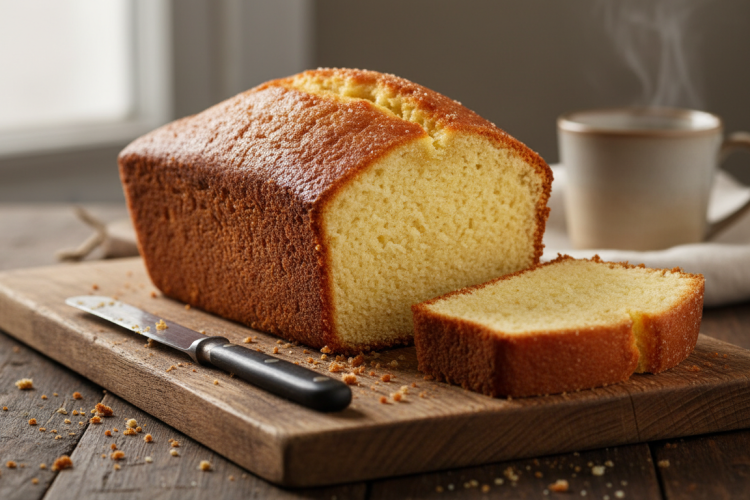
A classic pound cake is a buttery, dense loaf made from a pound each of flour, butter, sugar, and eggs — baked until golden with a tight, velvety crumb that slices cleanly and stays moist for days. It’s one of the most forgiving cakes in the baker’s repertoire, and with a few simple techniques it comes out perfectly every single time.
What Is a Pound Cake?
The pound cake gets its name from the original 18th-century recipe: one pound each of butter, sugar, eggs, and flour. No leavening agents, no dairy — just four equal-weight ingredients beaten together until light, then baked low and slow. The result is a cake that’s denser than a layer cake but moister than a quick bread, with a fine crumb and a slightly crisp golden crust.
Modern pound cakes often include a small amount of baking powder and sour cream or milk to improve rise and tenderness, but the spirit stays the same: fat-forward, buttery, and simple. According to Serious Eats, the key to a great pound cake is the creaming method — whipping butter and sugar together long enough to incorporate air before the eggs go in.
Why You’ll Love This Recipe
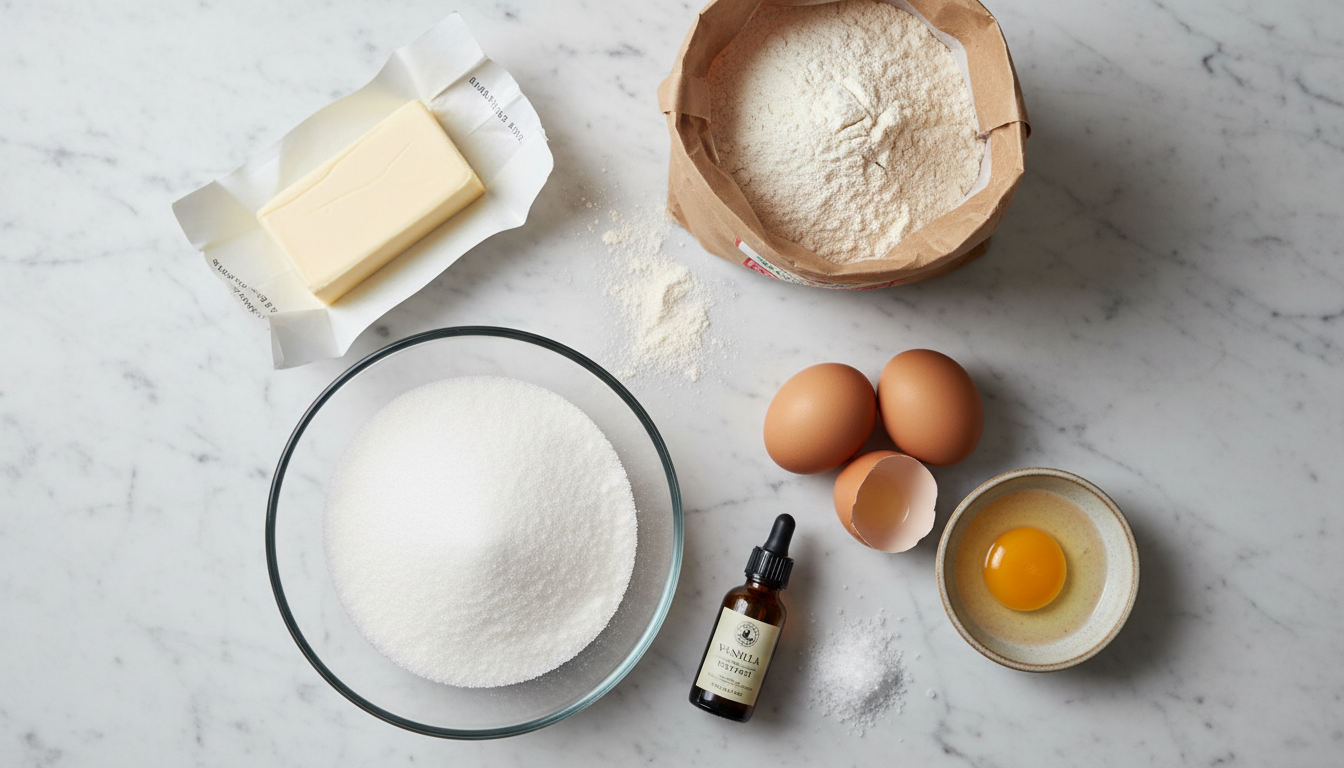
- Only 6 pantry staples — butter, sugar, eggs, flour, salt, and vanilla
- No frosting needed — the golden crust IS the finish
- Stays moist 4–5 days at room temperature, wrapped
- Freezes beautifully — slice and freeze for up to 3 months
- Endlessly versatile — serve plain, toasted with butter, or loaded with berries and whipped cream
Ingredients
These quantities make one standard 9×5-inch loaf (8-10 slices):
- 1 cup (225g) unsalted butter, softened to room temperature
- 1 1/2 cups (300g) granulated sugar
- 4 large eggs, room temperature
- 2 cups (250g) all-purpose flour
- 1/2 tsp baking powder
- 1/2 tsp fine salt
- 1 tsp pure vanilla extract
- 1/4 cup (60ml) whole milk or sour cream (for extra tenderness)
Optional add-ins: 1 tsp lemon zest, 1/2 tsp almond extract, or 1 tbsp poppy seeds.
Step-by-Step Instructions
Step 1: Prepare Your Pan and Oven
Preheat your oven to 325 degrees F (163 degrees C). Grease a 9×5-inch loaf pan generously with butter, then dust it with flour. Alternatively, line with parchment paper leaving an overhang on the long sides for easy lifting. A properly prepared pan is the difference between a cake that releases cleanly and one that tears.
Step 2: Cream Butter and Sugar
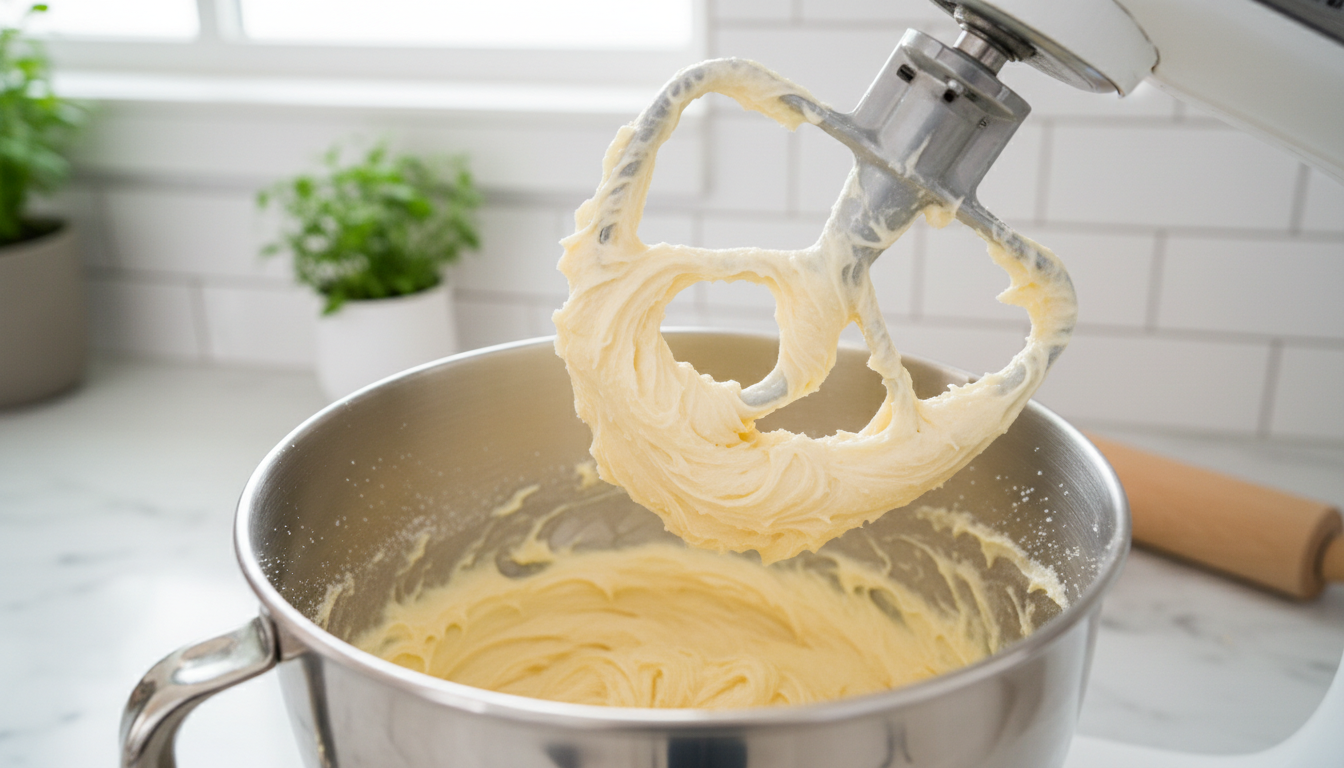
In a large bowl (stand mixer with paddle attachment, or hand mixer), beat the softened butter on medium speed for 2 minutes until pale and fluffy. Add sugar and continue beating for another 4-5 minutes — the mixture should look almost white and feel noticeably lighter. This step is non-negotiable: under-creaming produces a dense, greasy cake. The extended creaming traps air bubbles that expand during baking, giving the loaf its lift despite having minimal leavening.
Step 3: Add Eggs One at a Time
Add eggs one at a time, beating on medium for 30-45 seconds after each addition before adding the next. Scrape down the sides of the bowl between eggs. If the batter looks curdled or broken at any point, continue mixing and it will come back together once the flour is added. Using room-temperature eggs (not cold) is the single most effective way to prevent curdling.
Add the vanilla extract with the last egg.
Step 4: Fold in Dry Ingredients
Whisk together flour, baking powder, and salt in a separate bowl. Add the dry mixture to the butter mixture in three additions, alternating with the milk (dry, milk, dry, milk, dry). Mix on low speed or fold by hand with a rubber spatula — just until combined. Overmixing at this stage develops gluten, which makes the cake tough. Stop the moment you do not see dry streaks of flour.
Step 5: Bake
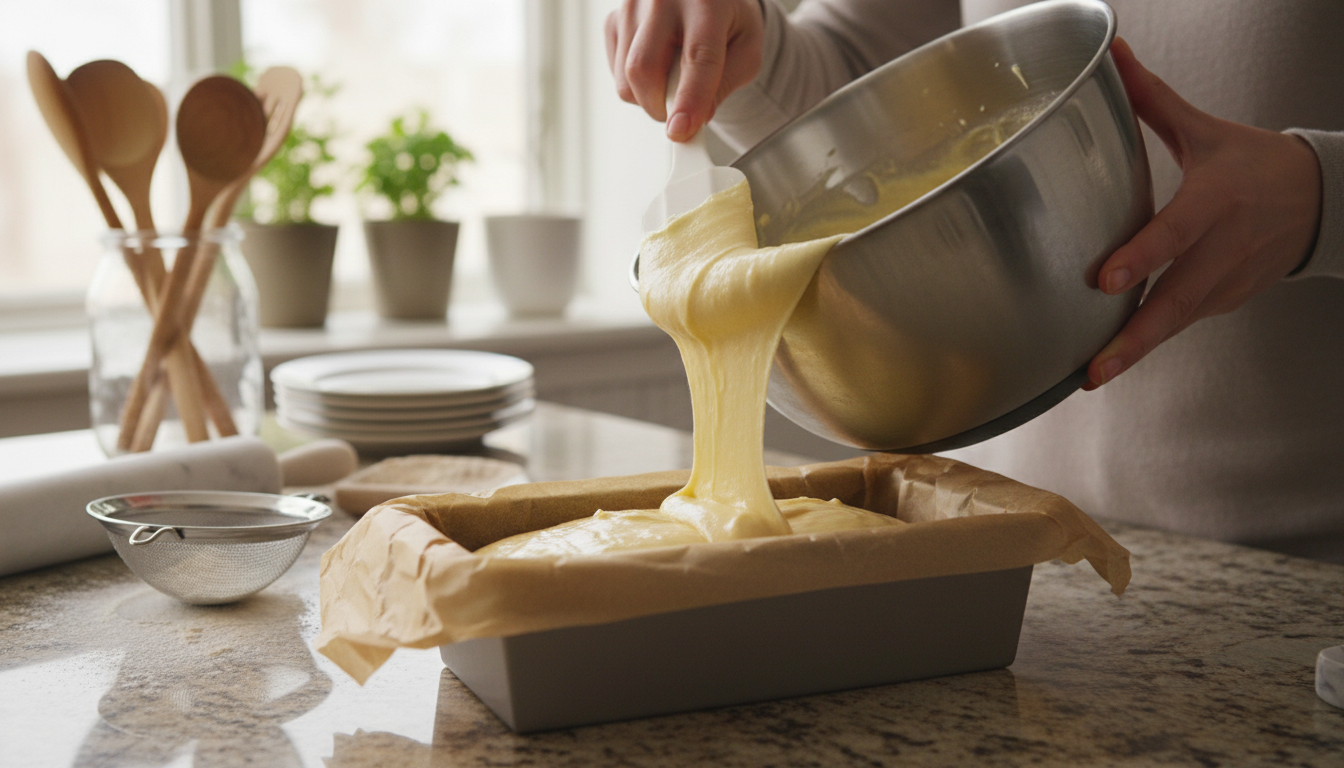
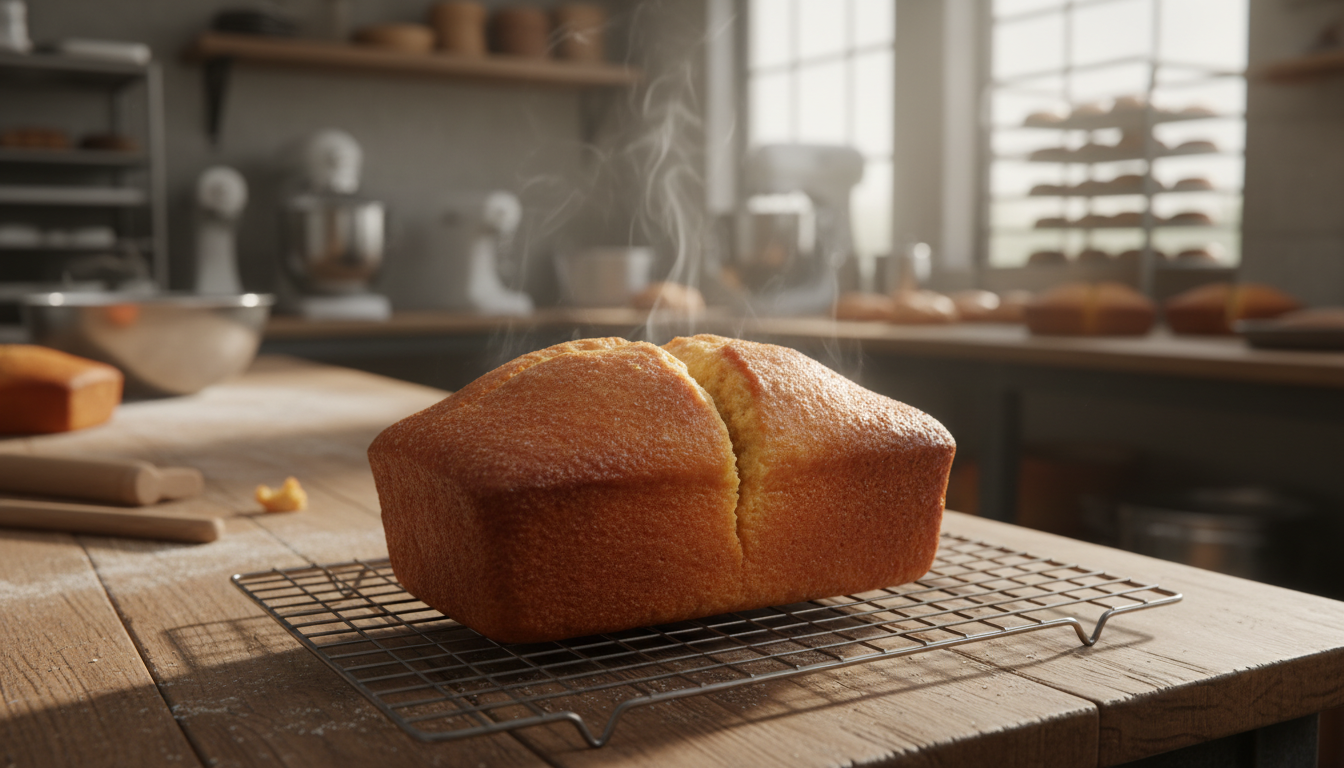
Pour and scrape the batter into the prepared loaf pan. Smooth the top with a spatula. For the classic pound cake crack down the center, use a butter knife to draw a shallow line along the top of the batter before baking — this guides where the cake naturally splits as it rises.
Bake at 325 degrees F for 60-75 minutes, until a toothpick inserted in the center comes out clean and the top is deep golden brown. Start checking at the 55-minute mark. Tent loosely with foil if the top browns too quickly before the center is set.
Step 6: Cool Before Slicing
Let the pound cake cool in the pan for 15 minutes, then turn out onto a wire rack to cool completely — at least 1 hour before slicing. Cutting into a warm pound cake compresses the crumb and makes it gummy.
Tips for the Perfect Pound Cake Every Time
- Room-temperature ingredients are non-negotiable. Cold butter will not cream properly; cold eggs cause the emulsion to break. Pull everything out 1-2 hours before baking.
- Weigh your flour. A packed cup of all-purpose flour can be 30-40% heavier than a properly measured one. Too much flour equals dry, crumbly pound cake. Use a kitchen scale for best results.
- Do not rush the creaming. 6-7 total minutes of creaming butter and sugar produces the best texture. Set a timer.
- Low and slow bake temperature. 325 degrees F ensures the outside does not set before the dense interior bakes through.
- The toothpick test: Insert it straight into the very center, all the way to the bottom. A few moist crumbs are fine; wet batter means more time is needed.
For more baking troubleshooting, see our guide on why cakes come out dense and why cakes crumble.
Pound Cake Variations
Once you have mastered the base recipe, the variations are nearly endless. Here are the most popular riffs:
Lemon Pound Cake
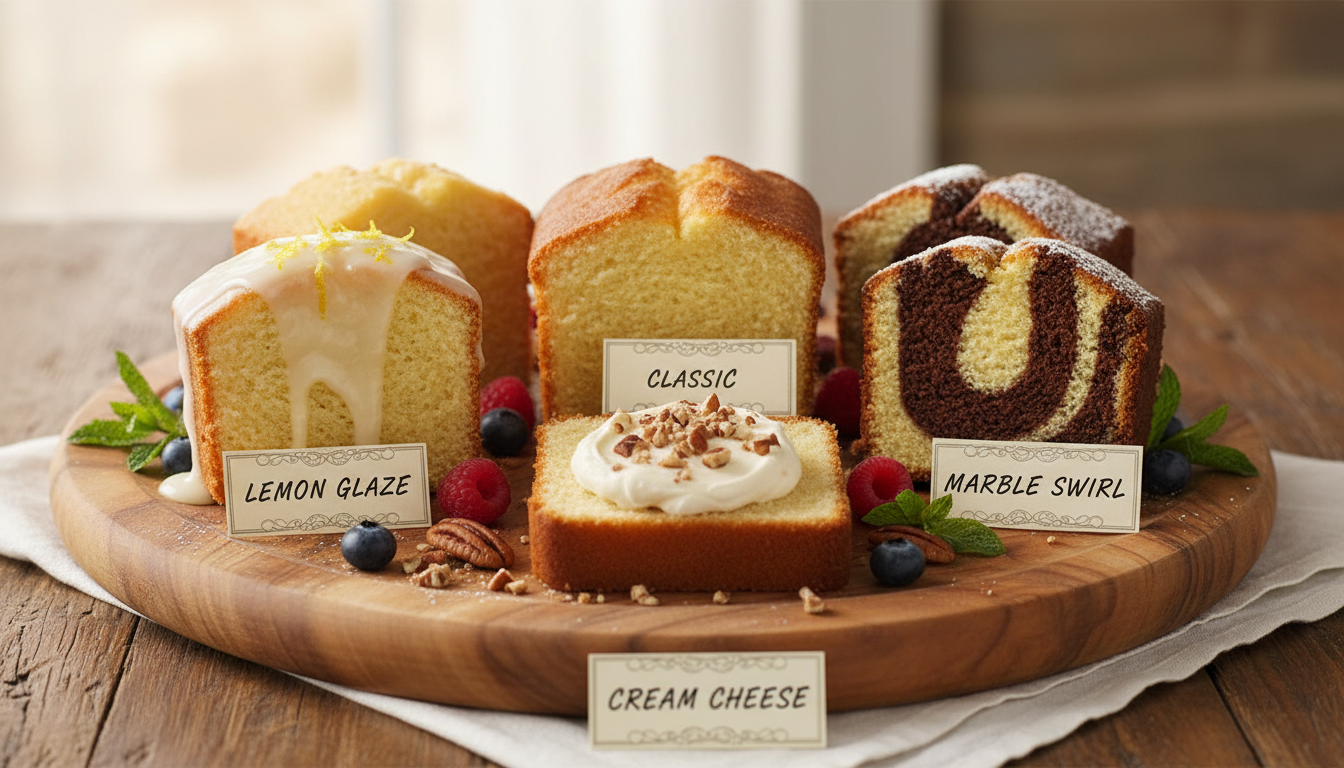
Add 2 tablespoons of fresh lemon zest to the butter-sugar mixture and replace the milk with 2 tablespoons fresh lemon juice. Finish with a lemon glaze: 1 cup powdered sugar plus 2 tablespoons lemon juice, drizzled over the cooled loaf. The citrus cuts through the richness and makes it taste considerably lighter.
Cream Cheese Pound Cake
Replace the milk entirely with 4 oz (115g) of softened full-fat cream cheese, beaten in with the butter. This produces an extraordinarily moist, velvety crumb with a slight tang. It is heavier than the standard recipe but keeps even longer — up to a week at room temperature.
Sour Cream Pound Cake
Swap the milk for 1/2 cup full-fat sour cream. The acidity tenderizes the gluten and adds a subtle savory note that makes the buttery flavor pop. This is arguably the most popular Southern variation.
Marble Pound Cake
Make the standard batter and divide it in half. Stir 3 tablespoons of Dutch-process cocoa powder (mixed with 2 tablespoons hot water into a paste) into one half. Alternate spoonfuls of vanilla and chocolate batter in the loaf pan, then drag a butter knife through once or twice to create the marble effect. Do not over-swirl — you want distinct ribbons.
Love chocolate cakes? Check out our fluffy chocolate cake recipe and chocolate sheet cake from scratch for more ideas.
Serving Suggestions
Pound cake is one of those rare baked goods that works in every context:
- Plain with coffee — just a thick slice, no toppings needed
- Toasted in a skillet — butter a cast-iron pan, press slices in over medium heat for 2 minutes per side until caramelized and crisp
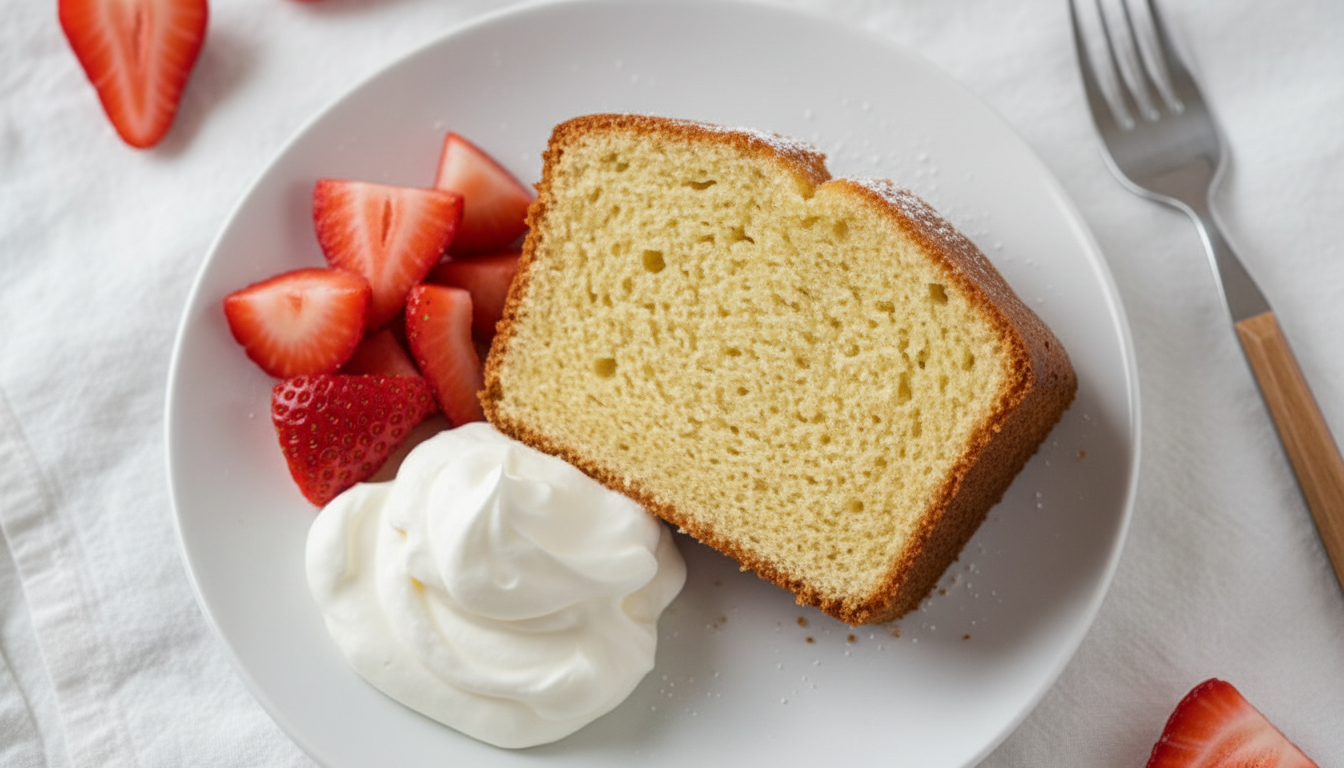
- With fresh berries and whipped cream — a classic summer shortcake presentation
- Grilled and topped with ice cream — brush slices with butter and grill 2 minutes per side, top with vanilla ice cream and caramel sauce
- French toast style — dip thick slices in egg custard and pan-fry until golden
- Trifle layer — cube it and layer with pastry cream, berries, and whipped cream in a glass bowl
For a dessert that really shows off pound cake’s versatility, try pairing it with our easy flan recipe as a plated duo.
How to Store Pound Cake
Room temperature: Wrap the cooled loaf tightly in plastic wrap or store in an airtight container. It keeps 4-5 days. The flavor actually improves on day 2 as the butter fully settles into the crumb.
Refrigerator: The fridge dries out pound cake faster than room temperature storage — avoid it unless your kitchen is very warm. If refrigerating, wrap tightly and allow slices to come to room temperature before serving.
Freezer: Pound cake freezes exceptionally well. Wrap the whole loaf (or individual slices) tightly in plastic wrap, then in foil or a zip-lock bag, and freeze for up to 3 months. Thaw overnight on the counter.
Pound Cake vs. Butter Cake: What’s the Difference?
A pound cake uses equal weights of butter, sugar, eggs, and flour — producing a dense, tight crumb with minimal rise. A butter cake (like a yellow layer cake) uses more leavening, more liquid, and sometimes whipped egg whites to create a lighter, airier texture. Both are delicious; pound cake just has more structure and keeps longer.
Our birthday cake ideas guide and red velvet cake from scratch recipe cover the full spectrum of butter cakes worth having in your repertoire.
Common Pound Cake Problems and Fixes
Dense, gummy center
Almost always caused by underbaking or opening the oven door too early. Bake until the internal temperature reads 200-205 degrees F (93-96 degrees C) at the center.
Sunken top
Too much leavening (causes rapid rise then collapse), or the batter was overmixed after the flour was added. Stick to 1/2 tsp baking powder maximum and fold the flour in gently.
Cracked top that is too wide or uneven
Normal cracking is desirable. An extremely ragged crack usually means the oven is too hot. Lower to 315 degrees F and extend the bake time by 10 minutes.
Sticking to the pan
Thorough greasing and flouring is essential. For insurance, use a parchment sling. If a cake sticks, run a thin offset spatula around all four sides before flipping.
Frequently Asked Questions
Can I make pound cake without a stand mixer?
Yes. A hand mixer works just as well — cream the butter and sugar for the full 6-7 minutes. The butter and sugar mixture must be visibly pale and fluffy before the eggs go in.
Why does my pound cake have a wet, dense strip at the bottom?
This is a classic symptom of underbaking in a too-hot oven. Lower your oven 25 degrees F, move the rack to the lower third, and extend bake time until the toothpick at the center comes out completely clean.
Can I use salted butter instead of unsalted?
Yes, but omit the added salt in the recipe. Unsalted butter gives you more control over the final saltiness.
How do I know when pound cake is done without a toothpick?
Use an instant-read thermometer — the center should reach 200-205 degrees F (93-96 degrees C). The cake will also pull slightly away from the sides of the pan.
Can I add fruit to pound cake batter?
Yes — toss fresh or frozen berries in 1 tablespoon of flour before folding them in to prevent sinking. Use no more than 1 cup of add-ins total.
Want more classic cake recipes? Try our carrot cake from scratch or our funfetti cake from scratch.