
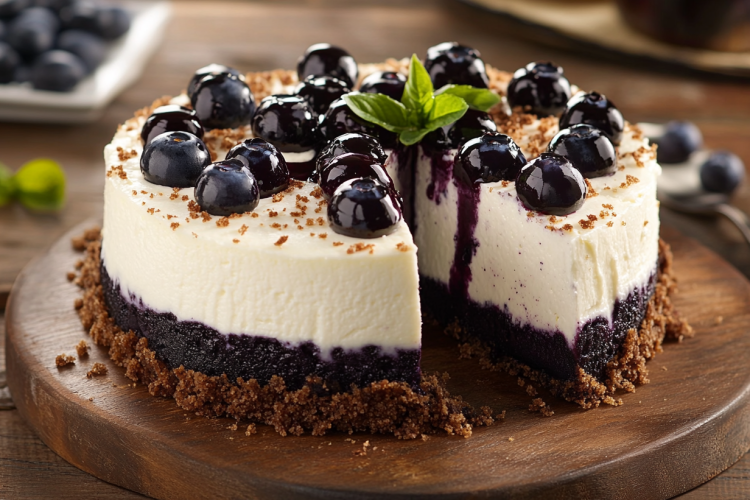
This blueberry cheesecake recipe produces a dense, silky cheesecake baked in a water bath for a crack-free top, finished with a glossy fresh blueberry topping made from scratch. It uses full-fat cream cheese, sour cream for tang, and a thick graham cracker crust for balance. The result is rich, smooth, and loaded with bright blueberry flavor in every bite.

Why This Blueberry Cheesecake Works
Cheesecake has a reputation for being difficult — cracked tops, rubbery textures, sunken centers. This recipe solves every one of those problems. The secret is a combination of proper mixing technique, a water bath, and slow cooling. You get a dense, creamy slice every time with no guesswork.
The filling uses four blocks of cream cheese (full-fat only), sour cream for brightness, and just enough sugar. The blueberry topping is cooked fresh on the stove — far better than canned pie filling. If you love cheesecake, you’ll also want to check out our New York cheesecake with sour cream topping and our lemon cheesecake recipe for more variations.
Ingredients
For the Graham Cracker Crust
- 2 cups graham cracker crumbs (about 16 full crackers)
- ⅓ cup granulated sugar
- ½ cup unsalted butter, melted
- Pinch of salt
For the Cheesecake Filling
- 32 oz (4 blocks) full-fat cream cheese, room temperature
- 1 cup granulated sugar
- 1 cup full-fat sour cream, room temperature
- 1 teaspoon pure vanilla extract
- 2 teaspoons lemon zest
- 1 tablespoon fresh lemon juice
- 4 large eggs, room temperature
For the Fresh Blueberry Topping
- 2 cups fresh blueberries (or frozen, thawed)
- ⅓ cup granulated sugar
- 2 tablespoons lemon juice
- 1 tablespoon cornstarch mixed with 2 tablespoons cold water
- Pinch of salt

Equipment You’ll Need
Before you start, gather the right tools. A 9-inch springform pan is non-negotiable — this is what allows you to release the cheesecake cleanly without destroying the sides. You’ll also need a stand mixer or hand mixer, a large roasting pan for the water bath, and heavy-duty aluminum foil to wrap the springform pan so water doesn’t seep in. A digital oven thermometer helps too, since oven temperature accuracy matters a lot with cheesecake.
If you don’t have a springform pan, this recipe won’t work in a regular cake pan — the sides won’t release. For smaller portions, you can divide the batter into a standard 12-cup muffin tin lined with paper cups, though baking time drops to around 20–22 minutes.
Step-by-Step Instructions
Step 1: Make the Crust
Preheat your oven to 325°F (163°C). In a medium bowl, combine the graham cracker crumbs, sugar, melted butter, and salt. Stir until the mixture looks like wet sand and holds together when you press a handful between your fingers.
Press the crust firmly and evenly into the bottom of a 9-inch springform pan. Use the flat bottom of a glass or measuring cup to compact it. You can press it slightly up the sides if you prefer more crust coverage. Bake for 10 minutes until just golden and set. Let it cool while you make the filling.
Step 2: Mix the Cheesecake Filling
Beat the cream cheese on medium speed for 2–3 minutes until completely smooth and lump-free. This step is critical — any lumps here will remain in the final cheesecake. Add the sugar and beat another minute. Scrape down the sides of the bowl thoroughly.
Add the sour cream, vanilla extract, lemon zest, and lemon juice. Beat on low until just combined. Now add the eggs one at a time, beating on the lowest speed after each addition. Do not overmix after adding the eggs — overbeating incorporates air bubbles that cause cracking and puffing during baking.

Step 3: Prepare the Water Bath
Wrap the bottom and sides of the springform pan tightly in two layers of heavy-duty aluminum foil. This prevents water from seeping through the pan’s seam during baking. Place the wrapped pan in a large roasting pan.
Pour the cheesecake batter over the cooled crust and smooth the top with a spatula. Tap the pan gently on the counter a few times to release any large air bubbles. Bring a kettle of water to a boil. Place the roasting pan (with the cheesecake inside) on the oven rack, then carefully pour the boiling water into the roasting pan until it reaches about 1 inch up the sides of the springform. According to Serious Eats, this water bath method keeps the oven environment moist and regulates temperature, which prevents the surface from drying and cracking.

Step 4: Bake and Cool
Bake at 325°F for 60–70 minutes. The cheesecake is done when the edges are set but the center still has a slight jiggle — about a 2-inch wobble in the middle when you gently shake the pan. It will firm up as it cools. Don’t wait for it to be completely still — that means it’s overbaked.
Turn off the oven. Crack the oven door open about an inch and let the cheesecake sit inside for 1 hour. This gradual cooling prevents the sudden temperature drop that causes cracks and sinking. After an hour, remove from the oven and water bath, peel off the foil, and let it cool completely on a wire rack at room temperature — another 1–2 hours. Then refrigerate uncovered for at least 6 hours, or overnight. This chilling step is where the cheesecake sets into that dense, creamy texture. For other tips on avoiding common baking issues, check our guide on why cakes sink in the middle.
Step 5: Make the Blueberry Topping
In a small saucepan over medium heat, combine the blueberries, sugar, lemon juice, and salt. Cook, stirring occasionally, until the berries begin to burst and release their juices — about 5 minutes. Stir in the cornstarch slurry and continue cooking for 2–3 more minutes until the sauce thickens to a glossy, jam-like consistency. Remove from heat and let it cool completely before spreading over the cheesecake.
The topping can be made up to 3 days ahead and stored in the refrigerator. If you prefer a smoother topping, strain out some of the berry skins after cooking.

Step 6: Assemble and Serve
Once the cheesecake is fully chilled, run a thin knife around the edge before releasing the springform clasp. Slide the cheesecake onto a serving plate or cake stand. Spoon the cooled blueberry topping evenly over the surface. For clean slices, dip a sharp knife in hot water, wipe it dry, and slice — repeat between each cut.
Serve chilled, straight from the refrigerator. The cheesecake keeps well covered in the fridge for up to 5 days. For longer storage, freeze individual slices wrapped in plastic wrap and placed in an airtight container for up to 2 months. Thaw overnight in the refrigerator.

Tips for the Best Blueberry Cheesecake
A few habits separate a good cheesecake from a great one:
- Room temperature ingredients are non-negotiable. Cold cream cheese won’t mix smooth — it will stay lumpy. Cold eggs can cause the filling to curdle. Take everything out of the fridge at least 2 hours before baking.
- Don’t overmix after the eggs go in. Once the eggs are added, mix only until just incorporated. Extra air = cracks.
- The water bath is worth the effort. Yes, it’s a step. No, you can’t skip it and get the same result. The moist heat is what gives cheesecake its signature smooth, dense texture without a rubbery exterior.
- Cool gradually. Oven → cracked door → room temp → fridge. Each step matters. Skipping the gradual cool is the most common cause of cracked cheesecake.
- Chill overnight for best results. Six hours is the minimum. Overnight is ideal. The texture improves significantly with full chilling time.
Variations to Try
Once you master this base recipe, there are endless directions to take it. Swap out the blueberry topping for fresh strawberry compote, cherry preserves, or a lemon curd swirl. For a citrus version, use our full lemon cheesecake recipe with homemade lemon curd built right in.
For a no-bake version using a similar blueberry topping, our easy no-bake cheesecake comes together with no oven required. You can also layer this filling with churro dough for a completely different dessert — see our churro cheesecake bars when that post goes live, or check out our classic vanilla cheesecake recipe for the unflavored baseline.
Storage and Make-Ahead Guide
This cheesecake is an excellent make-ahead dessert. You can bake it up to 3 days in advance and keep it refrigerated (without the topping). Add the blueberry topping the day you plan to serve it for the best visual presentation and freshest flavor.
For freezing: bake and chill the cheesecake, then freeze without the topping. Wrap the whole cheesecake (or individual slices) tightly in plastic wrap, then a layer of aluminum foil. Freeze for up to 2 months. Thaw overnight in the refrigerator and add fresh topping before serving. Do not freeze the blueberry sauce — make a fresh batch when you’re ready to serve.
Nutrition and Serving Size
This recipe serves 12 slices. Per serving (without topping): approximately 490 calories, 35g fat, 38g carbohydrates, 8g protein. The blueberry topping adds roughly 60–80 calories per serving depending on portion size. Cheesecake is a calorie-dense dessert by nature — the fat content from cream cheese and sour cream is what gives it that signature richness. For context on how baking fats work, the FDA’s guidance on dietary fat explains the role of fat in baked goods and daily nutrition.
If you’re looking for lighter alternatives, reducing cream cheese to 24 oz (3 blocks) and increasing sour cream to 1.5 cups will lower the fat while keeping a smooth texture. You can also reduce sugar to ¾ cup without significantly affecting the structure.
Video Tutorial
Watch the full step-by-step process below — from pressing the crust to spooning on the blueberry topping:
Frequently Asked Questions
Can I use frozen blueberries for the topping?
Yes — frozen blueberries work just as well as fresh. Thaw them first and drain any excess liquid before adding them to the saucepan. The sauce may be slightly more watery initially but will thicken the same way once the cornstarch is added.
Why did my cheesecake crack?
Cracking is almost always caused by overmixing (too much air), skipping the water bath, overbaking, or cooling too quickly. If you followed all the steps and still got a crack, don’t worry — the blueberry topping covers it completely. Our post on why cakes go crumbly covers related texture issues if you’d like to troubleshoot further.
Can I make this without a water bath?
Yes, but the results will be different. Without a water bath, the edges tend to overbake before the center sets, and the top is more prone to cracking. If you skip it, reduce the oven temperature to 300°F and expect a longer bake time of 70–80 minutes. Cooling slowly in the oven with a cracked door becomes even more important.
How long does blueberry cheesecake last in the fridge?
Up to 5 days covered in the refrigerator. After that, the crust softens and the texture begins to deteriorate. For longest shelf life, store the blueberry topping separately and add it fresh per slice.
Can I use low-fat cream cheese?
Low-fat cream cheese contains more water and less fat, which produces a looser, less dense cheesecake that’s more prone to cracking. For the best texture, full-fat brick-style cream cheese is strongly recommended. Do not use cream cheese spread from a tub — it has different proportions that will affect the final set.