
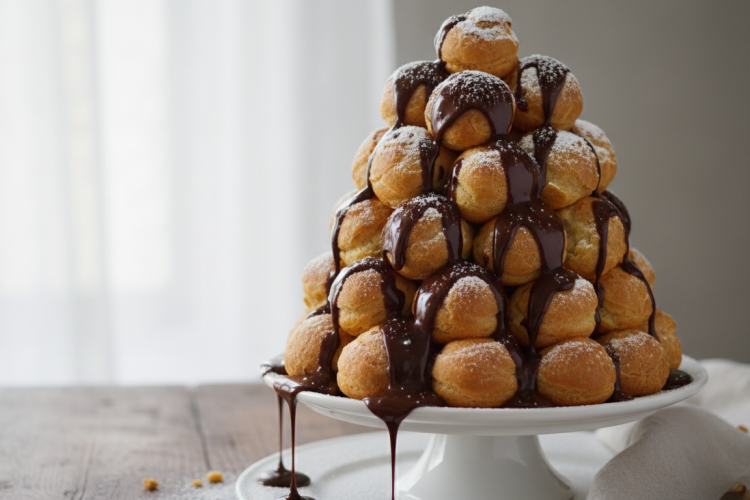
Profiteroles are small, hollow choux pastry puffs filled with whipped cream or pastry cream and finished with warm chocolate ganache — they bake in about 25 minutes at 400°F and require just 6 simple ingredients. The choux dough is made on the stovetop, piped into rounds, and baked until golden and puffed. The key to success is a dry, stiff dough and a fully preheated oven. No mixer required.
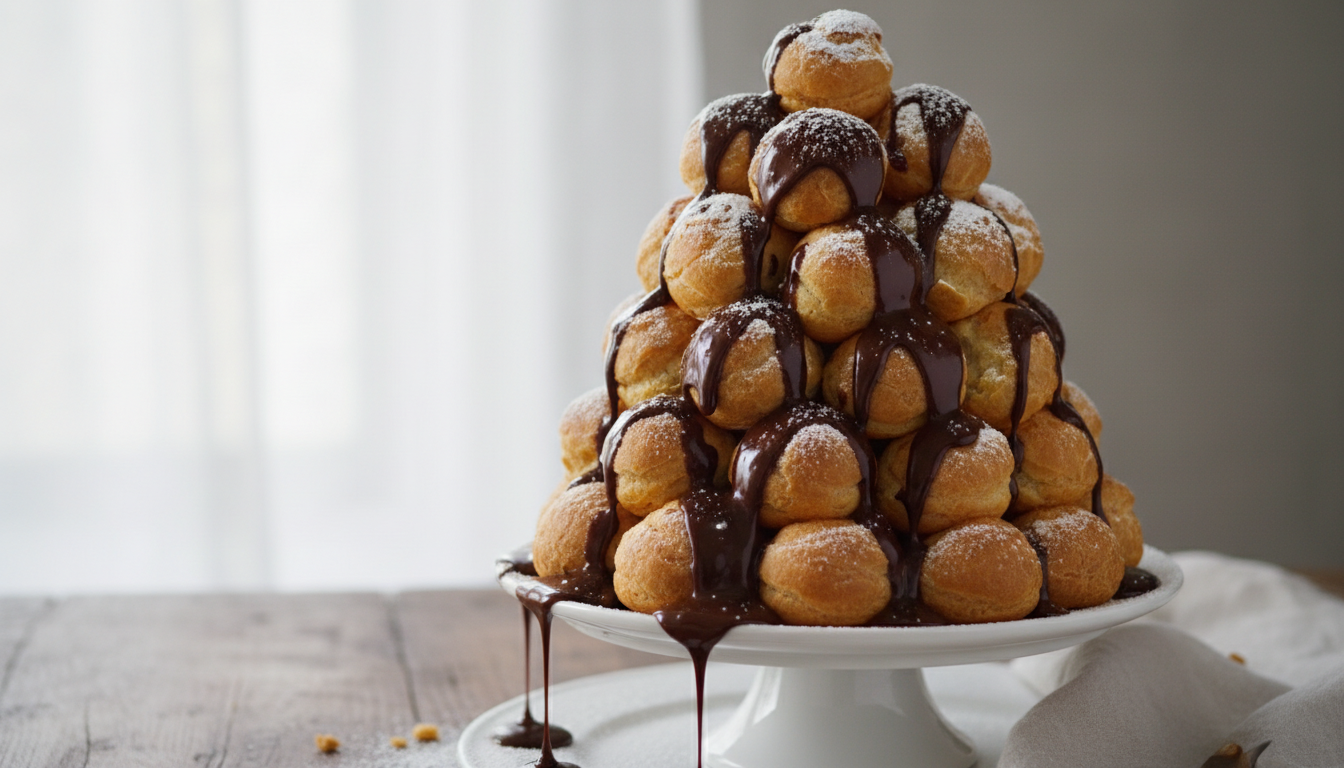
What Are Profiteroles?
Profiteroles (also called cream puffs in the United States) are one of the foundational desserts of French pastry. They’re made from pâte à choux — choux pastry — a cooked dough that relies on steam rather than chemical leaveners to create its characteristic hollow interior. The dough is simple: butter, water, flour, and eggs cooked together until smooth, then piped onto a baking sheet and baked at high heat. As the dough bakes, the moisture in the eggs turns to steam and puffs the pastry into a golden, airy shell.
The finished shells are then split and filled — traditionally with crème Chantilly (sweetened whipped cream) or vanilla pastry cream — and drizzled or dipped in warm chocolate ganache. The word profiterole comes from an Old French term for a small bread roll used as a tip or reward, and the dessert has been part of French culinary tradition since at least the 17th century, as documented by food historians at Wikipedia.
Mastering profiteroles unlocks the entire world of choux pastry: once you have this recipe down, you’re one small step from making creme-filled churros, éclairs, Paris-Brest, and gougères (savory cheese puffs). The dough is identical across all of these.
Ingredients
This recipe makes about 24 standard-sized profiteroles (roughly 2 inches / 5cm across).
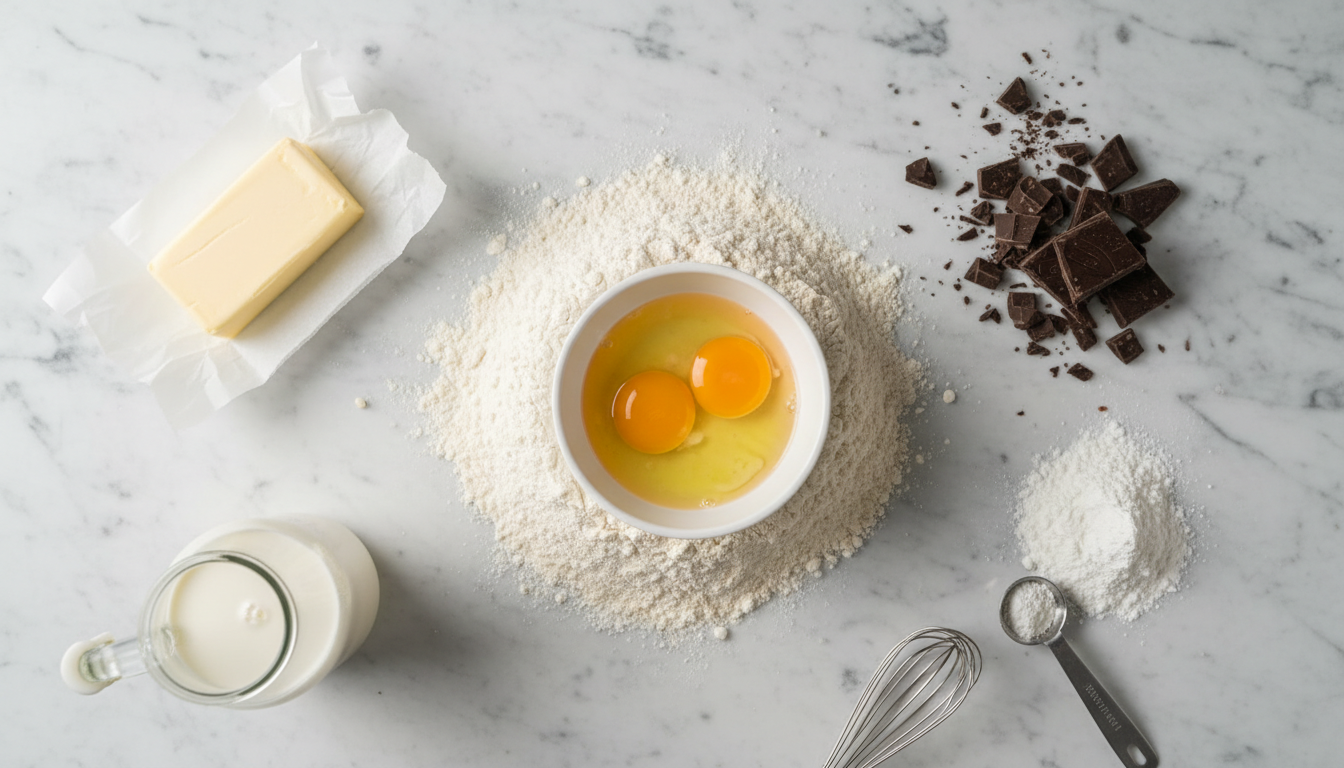
For the Choux Pastry
- Water (240ml / 1 cup) — Some recipes use half milk, half water for a softer, more golden shell. All-water produces a crisper result.
- Unsalted butter (115g / 8 tablespoons) — Cut into small pieces so it melts evenly before the water boils. Salted butter works too but reduces control over seasoning.
- All-purpose flour (130g / 1 cup) — Spooned and leveled, not scooped. Too much flour produces a stiff dough that won’t puff correctly.
- Eggs (4 large) — Room temperature. Cold eggs cool the hot dough too fast and can prevent smooth incorporation. The exact number of eggs determines dough consistency — see the “Dough Consistency Test” section below.
- Salt (½ teaspoon) and sugar (1 teaspoon, optional) — The sugar contributes to browning. Skip for savory applications.
For the Whipped Cream Filling
- Heavy whipping cream (480ml / 2 cups) — At least 36% fat for a stable whip that holds its shape after filling.
- Powdered sugar (3 tablespoons)
- Vanilla extract (1 teaspoon)
For the Chocolate Ganache
- Dark chocolate, finely chopped (170g / 6 oz) — 60–70% cacao. Semi-sweet chocolate chips also work.
- Heavy cream (120ml / ½ cup)
- Butter (1 tablespoon) — For gloss and smoothness.
Step-by-Step Profiteroles Recipe
Total time: ~1 hour 15 minutes | Yield: ~24 profiteroles | Oven: 400°F (200°C)
Step 1: Make the Choux Dough
Combine the water, butter, salt, and sugar in a medium heavy-bottomed saucepan. Heat over medium-high, stirring occasionally, until the butter is fully melted and the mixture comes to a full rolling boil. Remove the pan from the heat immediately and add all of the flour at once. Stir vigorously with a wooden spoon or stiff spatula until the dough comes together into a smooth ball that pulls away from the sides of the pan — this takes about 1 minute.
Return the pan to medium heat and cook the dough, stirring constantly, for 2 minutes. You’re evaporating excess moisture — the dough is ready when it forms a thin film on the bottom of the pan and the dough ball feels dry to the touch. This step is critical: wet dough produces flat, deflated puffs.
Transfer the dough to a bowl (or the bowl of a stand mixer fitted with the paddle). Let it cool for 5 minutes, stirring occasionally, until it’s no longer steaming. You need it to be warm but not hot — if you add eggs while the dough is too hot, they’ll scramble.
Step 2: Add Eggs — The Consistency Test
Beat the eggs lightly in a separate bowl. Add them to the dough one at a time, beating well after each addition until fully incorporated before adding the next. After the third egg, start checking consistency. The dough is ready when it:
- Falls off a spatula in a thick, slow, V-shaped ribbon (not a stiff clump or a runny liquid)
- Is smooth and shiny
- Holds its shape when piped but slowly levels out at the surface
You may not need all 4 eggs — egg sizes vary, and humidity affects dough consistency. Add the fourth egg in small increments if needed. An over-egged dough will spread flat and not puff properly. If you accidentally add too much, there’s no recovery — start again.
Step 3: Pipe and Bake
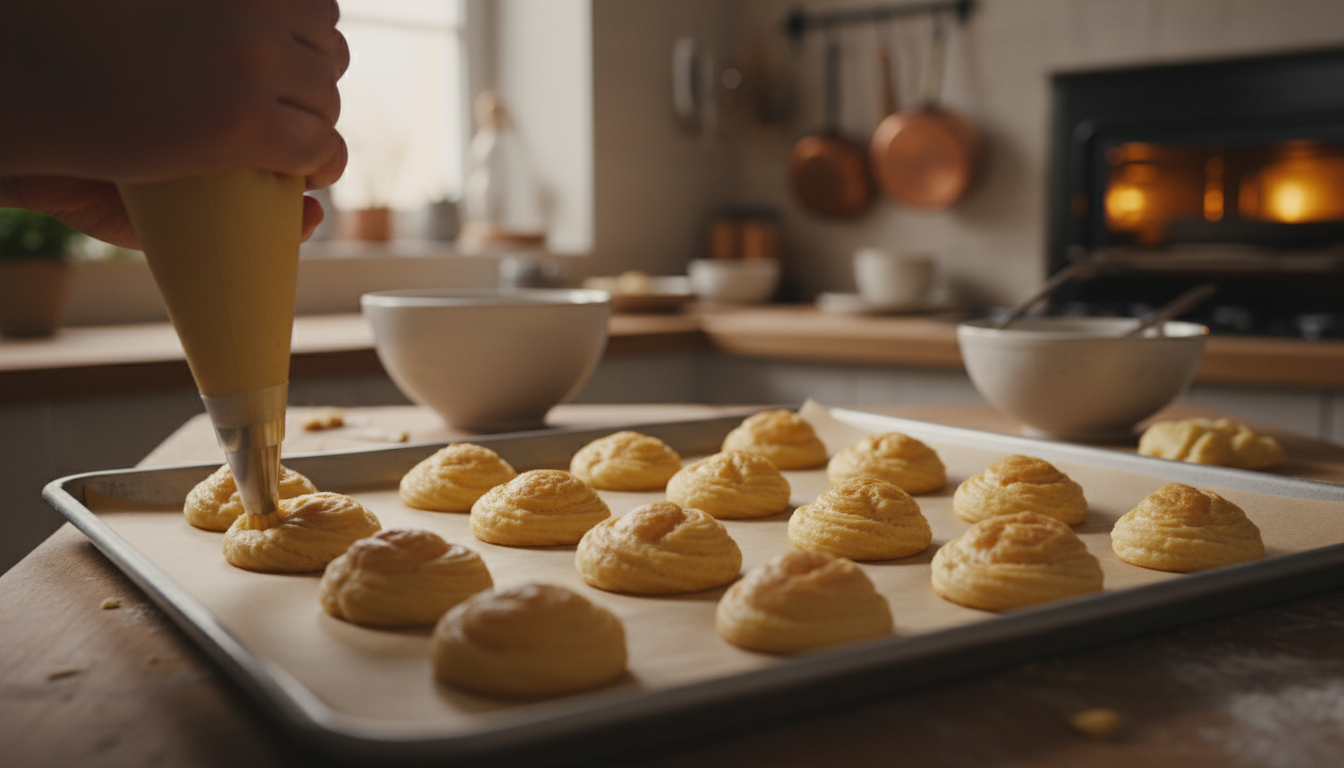
Preheat the oven to 400°F (200°C). Line two baking sheets with parchment paper. Transfer the dough to a piping bag fitted with a large round tip (about ½ inch / 1.2cm). Pipe rounds about 1½ inches (4cm) in diameter, spacing them 2 inches apart — they’ll expand significantly. Wet your fingertip and gently press down any pointed tips from the piping (these will burn before the shell is done).
Brush lightly with egg wash (1 egg beaten with 1 tablespoon of water) for a glossy, deeply golden shell. Bake for 22–27 minutes until deep golden brown. Do not open the oven for the first 20 minutes — the steam inside the shells is doing the work, and a cold draft will collapse them.
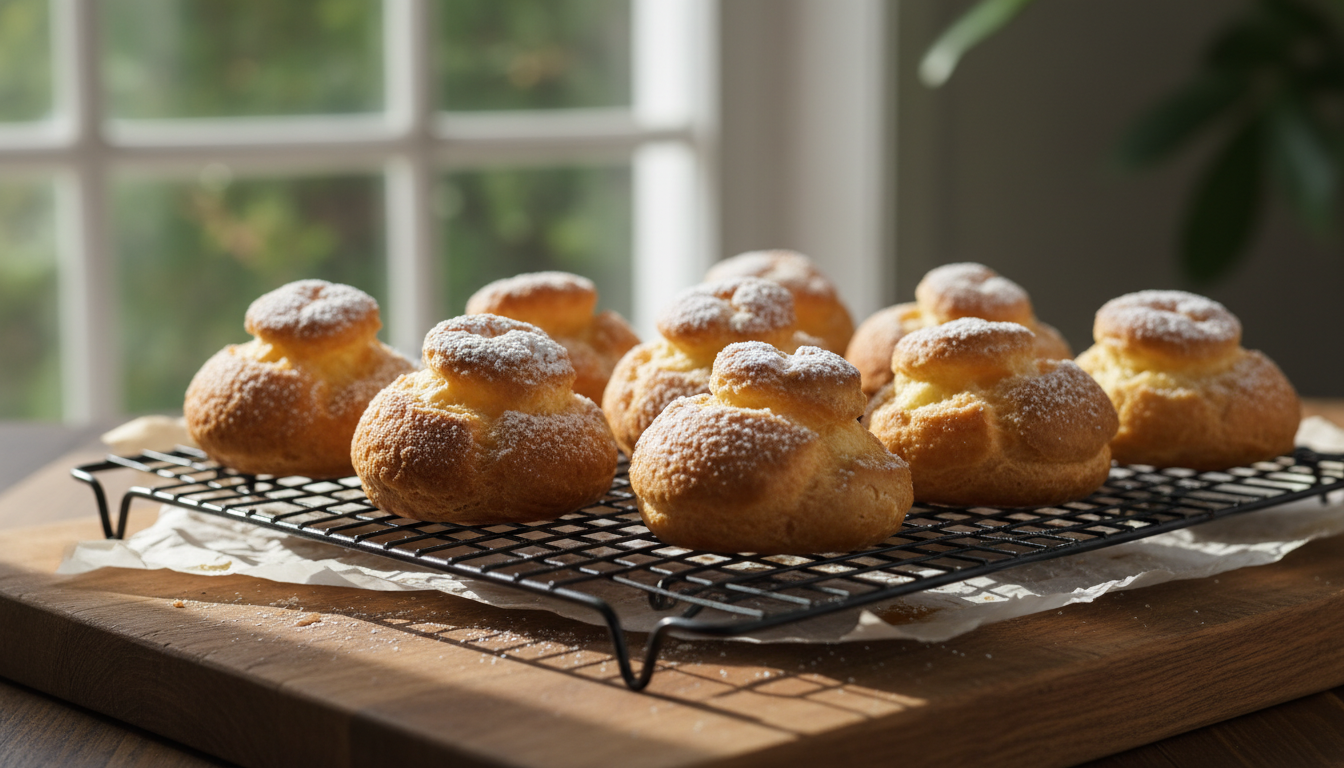
When the shells look deeply golden all over (not pale or mottled), remove from the oven and immediately pierce each shell once on the side with a sharp paring knife or toothpick. This releases trapped steam and keeps the shells crisp. Return to the oven for 5 minutes with the door slightly ajar to dry out the interior. Transfer to a wire rack to cool completely before filling.
Step 4: Make the Whipped Cream Filling
Pour the cold heavy cream into a chilled bowl (cold bowl and beaters help it whip faster and hold its structure longer). Beat on medium-high speed until soft peaks form. Add the powdered sugar and vanilla extract and continue beating until stiff peaks form — the cream should hold its shape when the beaters are lifted and the tip curls over slightly. Do not over-whip or it will become grainy and buttery. Refrigerate until ready to use.
For a more stable filling that holds up for several hours (ideal for parties), use pastry cream instead: whisk 4 egg yolks with 75g sugar and 30g cornstarch, heat 500ml whole milk until steaming, temper the egg mixture, return to the pot and cook until thick, then cool completely before using. Our churro filling recipe walks through the full pastry cream method step by step.
Step 5: Make the Chocolate Ganache
Place the finely chopped chocolate in a heatproof bowl. Heat the heavy cream in a small saucepan until it just begins to simmer (small bubbles around the edges, steam rising — do not boil). Pour the hot cream over the chocolate and let it sit undisturbed for 2 minutes. Then stir from the center outward in slow, expanding circles until the ganache is completely smooth and glossy. Add the butter and stir until melted. Let it cool for 10–15 minutes until it’s pourable but not runny (the consistency of warm honey).
Step 6: Fill and Finish
There are two methods for filling profiteroles:
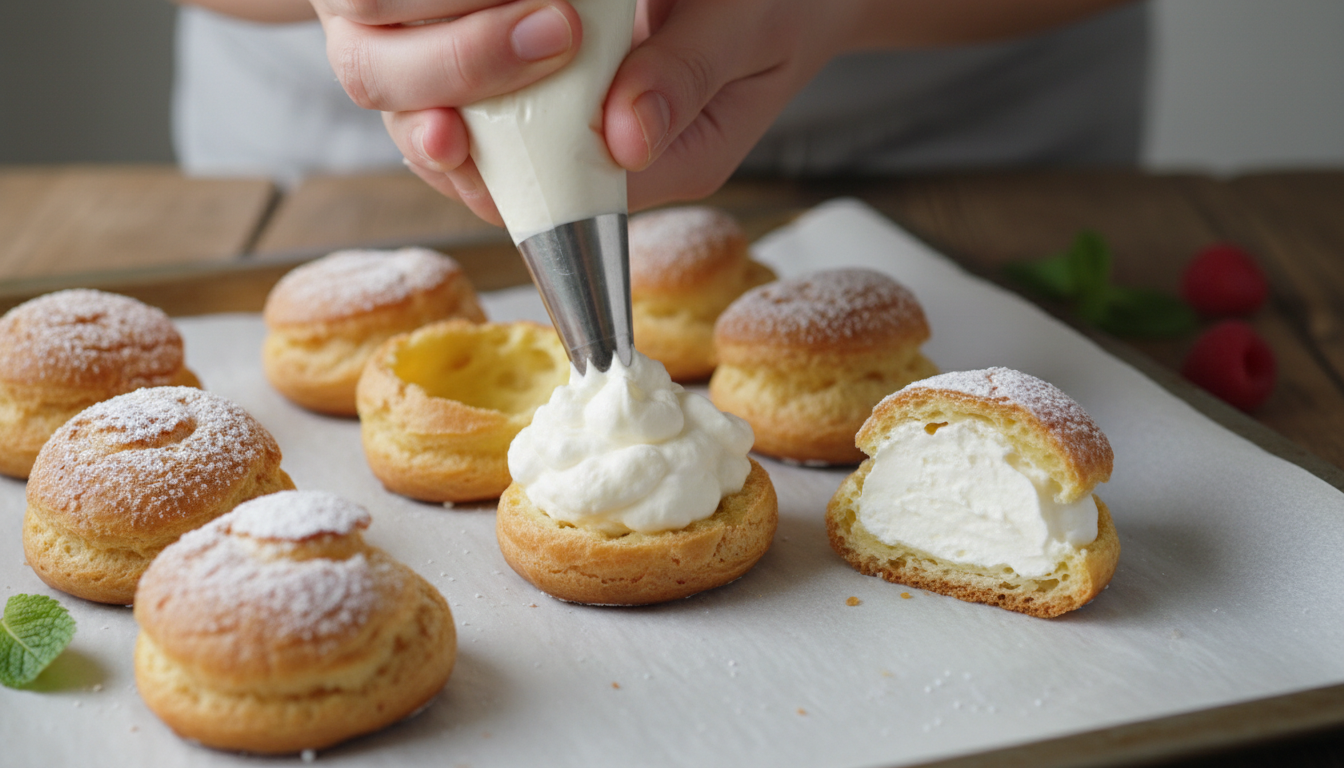
- Slice method: Use a serrated knife to cut each puff horizontally, creating a lid and a base. Pipe or spoon filling into the base, replace the lid, and drizzle with ganache. This method is easier and better for large batches.
- Piping method: Insert a small filling tip (Bismarck tip or a plain ¼-inch tip) into the bottom of each shell and pipe filling directly inside until you feel slight resistance. No cutting required; the exterior stays completely intact for a polished appearance.
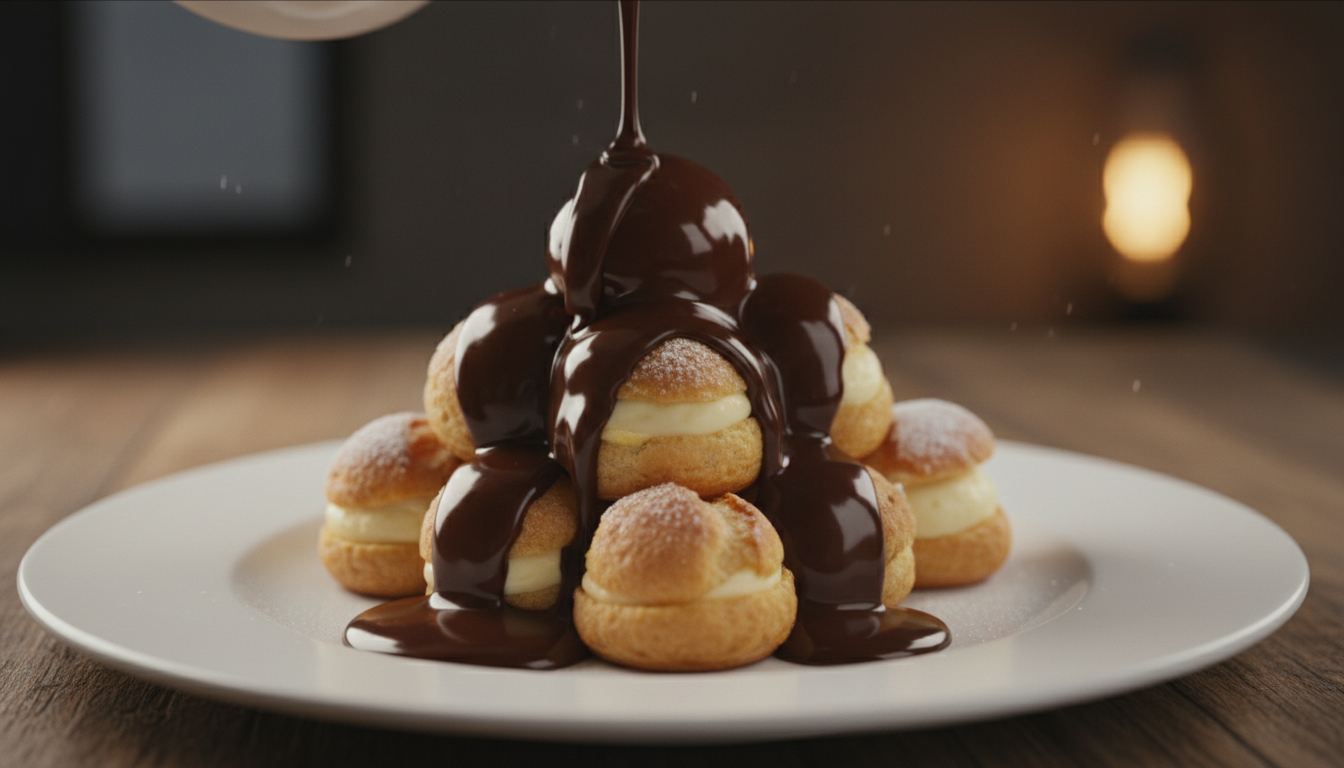
After filling, arrange the profiteroles on a serving plate or build a croquembouche tower (see Variations below). Drizzle generously with the warm chocolate ganache just before serving. The ganache will begin to set as it cools, creating a slightly firm coating after 15–20 minutes at room temperature.
The Chocolate Ganache: Getting It Right
The ganache is what elevates profiteroles from a simple cream puff to a proper French dessert. A few tips for ganache success:
- Use quality chocolate. The ganache is a two-ingredient preparation — the flavor of the chocolate is fully exposed. A 70% dark chocolate with fruity or floral notes makes a noticeably more complex ganache than generic chocolate chips.
- Chop finely. Larger chocolate pieces take longer to melt and can create uneven temperature distribution. Chop to roughly pea-sized pieces or smaller.
- Don’t stir too early. Letting the hot cream sit on the chocolate for 2 full minutes before stirring ensures even melting. Stirring immediately introduces air bubbles.
- Fix a broken ganache. If the ganache looks greasy or separated, add 1–2 tablespoons of warm water and stir vigorously — the added water re-emulsifies the mixture.
- Temperature matters for drizzling. Too hot and it runs everywhere; too cool and it sets before coating. Aim for around 90°F (32°C) — warm to the touch but not hot.
Troubleshooting Flat or Deflated Puffs
Flat, sunken, or soggy profiteroles are the most common problem, and almost all of them trace back to one of four causes:
- Dough too wet (too many eggs): Over-egged dough can’t hold its structure. It will spread flat and won’t puff. The consistency test in Step 2 is your safeguard.
- Dough not dried enough on the stovetop: Skipping the 2-minute cook after the flour is added leaves too much moisture. Puffs may look good initially but collapse as they cool.
- Oven opened too early: Opening before 20 minutes lets cold air in and the steam escapes. The shells collapse immediately and can’t recover.
- Under-baked: Pale shells still contain moisture and will go limp as they cool. Always bake until deep golden — profiteroles should look almost over-baked before they’re right.
If you want to understand why baked goods fail structurally, our guides on why cakes sink in the middle and why cakes turn out dense cover the same leavening physics in depth.
Variations
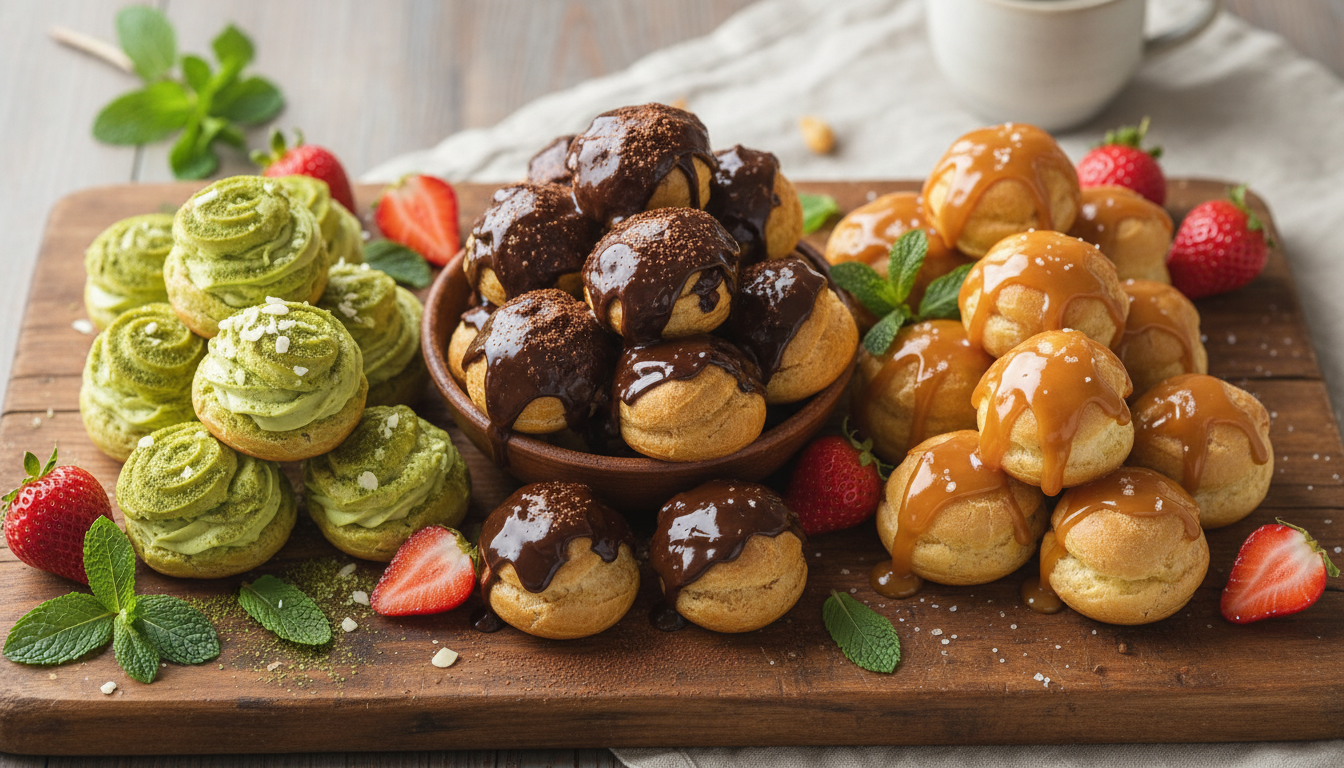
- Croquembouche: The classic French celebration centerpiece — profiteroles stacked into a cone and held together with caramel, decorated with spun sugar, chocolate drizzle, or edible flowers. A traditional French wedding and Christmas dessert.
- Caramel profiteroles: Replace the chocolate ganache with a salted caramel sauce. Our caramel churros recipe includes a quick homemade caramel that works perfectly here.
- Matcha cream profiteroles: Whisk 1 tablespoon of ceremonial matcha into the heavy cream before whipping for an earthy, subtly bitter filling. Drizzle with white chocolate ganache for contrast.
- Ice cream profiteroles: One of the most popular restaurant-style presentations: fill chilled shells with a small scoop of vanilla ice cream (use a melon baller) and pour hot ganache over immediately at the table. The hot-cold contrast is spectacular.
- Mini profiteroles (for parties): Pipe dough into ¾-inch rounds and bake for 18–20 minutes. Fill with pastry cream using a Bismarck tip and serve as one-bite canapés. See our mini churro bites recipe for piping tips on small-scale pastry work.
Make-Ahead and Storage
Profiteroles are easiest to manage when prepared in stages:
- Unfilled choux shells: Store at room temperature in an airtight container for up to 2 days, or freeze in a zip-lock bag for up to 3 months. Re-crisp in a 300°F (150°C) oven for 5 minutes before filling.
- Filled profiteroles (whipped cream): Best eaten within 2–3 hours of filling. The cream softens the shell over time. If making ahead, keep filling and shells separate and assemble at serving time.
- Filled profiteroles (pastry cream): More stable — filled shells can be refrigerated for up to 24 hours before adding ganache.
- Ganache: Store in the refrigerator for up to 2 weeks. Reheat gently in a double boiler or in 15-second microwave bursts, stirring between each, until pourable again.
YouTube: Profiteroles Step-by-Step
Frequently Asked Questions
Why are my profiteroles flat?
The four most common causes are: too much egg in the dough (failed consistency test), dough not dried enough on the stovetop before piping, opening the oven door before 20 minutes, or pulling the shells out while still pale. All four are preventable — the dough consistency test and leaving the oven closed are the two most important rules.
Can I make profiteroles without a piping bag?
Yes. Use a zip-lock bag with one corner cut off — this is the same approach used in our churros without a piping bag guide. A slightly irregular shape won’t affect the texture or flavor. You can also use two wet spoons to shape the rounds, though they’ll be less uniform. A cookie scoop (1½-inch diameter) also works well for consistent sizing.
What’s the difference between profiteroles and éclairs?
Both use identical choux dough. Profiteroles are piped as small rounds and filled with cream. Éclairs are piped as elongated fingers, filled with pastry cream, and topped with fondant or ganache. The technique and flavor profile are nearly the same — profiteroles are simply the round version.
Can I fill profiteroles with something other than whipped cream?
Absolutely. Pastry cream (crème pâtissière) is the classic alternative — it’s more stable and richer. Mascarpone whipped with a little sugar and vanilla is another excellent option. For a dessert-board presentation, vanilla ice cream is spectacular, especially with warm ganache poured tableside. Savory fillings (herb cream cheese, smoked salmon mousse) also work for appetizer applications.
How do I make profiteroles gluten-free?
Choux pastry is one of the few pastry types that adapts fairly well to gluten-free flour. Substitute the all-purpose flour with a 1:1 gluten-free baking flour blend (one that contains xanthan gum). The shells may be slightly less puffy and more delicate, but the basic structure holds. Avoid almond flour or coconut flour — neither has the starch content needed for choux to work.