
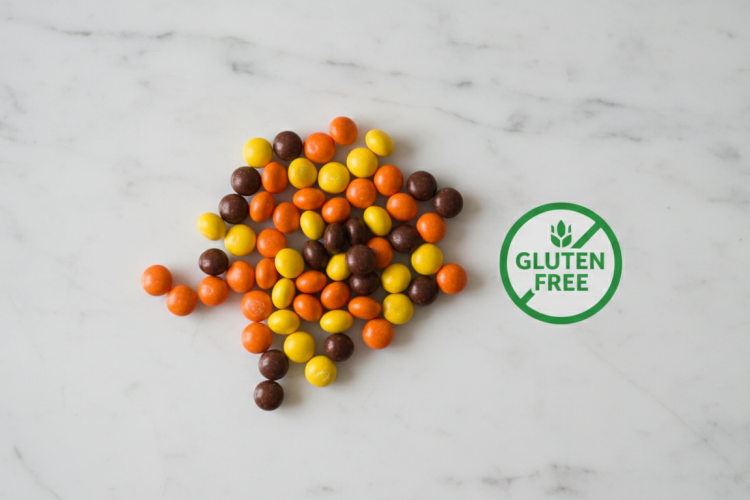
Reese’s Pieces are gluten free — they contain no wheat, rye, barley, or other gluten-containing grains in their ingredient list, and Hershey’s does not list any gluten ingredients in the standard formula. However, Reese’s Pieces are not certified gluten free and are manufactured in facilities that also process wheat-containing products, which means there is a cross-contamination risk. People with celiac disease should weigh that risk carefully, while those with non-celiac gluten sensitivity will generally be fine consuming them.

What Are Reese’s Pieces Made Of?
Reese’s Pieces are candy-coated peanut butter confections made by The Hershey Company. They were introduced in 1978 and became one of the most recognizable peanut butter candies in the world after their prominent appearance in the 1982 film E.T. the Extra-Terrestrial. Unlike Reese’s Peanut Butter Cups, which have a chocolate shell, Reese’s Pieces feature a hard candy coating in orange, yellow, and brown — no chocolate involved.
The current ingredient list for standard Reese’s Pieces reads: Sugar, Peanuts, Partially Defatted Peanut Flour, Hydrogenated Palm Kernel Oil, Corn Syrup, Dextrose, Less Than 2% of Salt, TBHQ and Citric Acid (Preserve Freshness), Confectioner’s Glaze, Carnauba Wax, Artificial Colors (Yellow 5 Lake, Yellow 6 Lake, Red 40 Lake).
Notably absent from that list: wheat flour, barley malt, rye, oats, or any other gluten-containing grain. The candy coating is sugar and corn syrup based — not flour based — which is why the core product is inherently gluten free at the ingredient level. The peanut butter filling is a straightforward peanut and oil mixture with no grain-based thickeners or binders.

Are Reese’s Pieces Certified Gluten Free?
No. Reese’s Pieces do not carry a certified gluten free designation from any recognized third-party certifier such as GFFS (Gluten-Free Food Service), NSF International, or the Celiac Support Association. Hershey’s does not label Reese’s Pieces as “gluten free” on the packaging.
This matters because certification is the gold standard for those with celiac disease. Certified gluten free products must test at or below 10 parts per million (ppm) of gluten — stricter than the FDA’s regulatory threshold of 20 ppm for products labeled gluten free. Without certification, there is no guaranteed testing regime to verify the product consistently meets low-gluten standards in production.
According to the FDA’s gluten-free labeling guidelines, a manufacturer is not required to test or certify their product to voluntarily claim it is gluten free — they simply need to ensure it meets the 20 ppm standard. Hershey’s does not make that voluntary claim on Reese’s Pieces.
Cross-Contamination Risk
Hershey’s produces a wide range of products in shared manufacturing facilities. Some of those products — including certain cookie and snack items in the Hershey’s portfolio — do contain wheat. Shared equipment or production lines can result in trace amounts of gluten migrating into products that do not contain gluten ingredients, a process called cross-contamination.
Hershey’s does publish allergen information on its website and product packaging, but the specific language around shared equipment varies by product and can change with manufacturing updates. The best practice is always to check the current packaging label rather than relying on information from a third-party source, including this article — formulations and manufacturing processes do change.
For people with celiac disease, even trace amounts of gluten — as low as 20 ppm — can trigger an immune response and intestinal damage. If your celiac disease is particularly sensitive or severe, the safest approach is to choose only products that carry third-party certified gluten free labeling. For most people with non-celiac gluten sensitivity, Reese’s Pieces are generally well-tolerated given that there are no gluten ingredients in the formulation.
All Reese’s Pieces Varieties: Gluten Free Status
Reese’s Pieces come in several product formats. Here is the current gluten status breakdown for each variety:

| Product | Contains Gluten Ingredients? | Certified GF? | Notes |
|---|---|---|---|
| Reese’s Pieces (standard) | No | No | No gluten ingredients; shared facility risk |
| Reese’s Pieces (king size) | No | No | Same formula as standard; same risk profile |
| Reese’s Pieces (minis) | No | No | Same formula, smaller size |
| Reese’s Pieces Peanut Butter Cups | No | No | Combines Pieces candy coating with PB cup format |
| Reese’s Pieces Eggs (seasonal) | No | No | Seasonal — check label for each year’s formula |
| Reese’s Puffs Cereal | Yes — contains whole grain corn | No | Different product; cereal may have oat contamination |
| Reese’s Sticks | Yes — contains wheat wafers | No | NOT gluten free — wafer layers contain wheat flour |
| Reese’s Crispy Crunchy Bar | Yes — contains wheat | No | NOT gluten free — crispy layers include wheat |
Key takeaway: The standard Reese’s Pieces in all size formats are gluten free at the ingredient level. Reese’s Sticks and Reese’s Crispy Crunchy Bars both contain wheat and are NOT safe for a gluten-free diet. Reese’s Puffs is a cereal product — it does not contain wheat flour but may have cross-contamination from oats depending on the formula year.
How Do Reese’s Pieces Compare to Other Reese’s Products?
The Reese’s brand covers a wide product range, and gluten status varies significantly across the line. As a general guide:
- Reese’s Peanut Butter Cups (standard) — No gluten ingredients; not certified GF; shared facility risk. The original Reese’s product. Our site already has a dedicated post covering whether Reese’s Peanut Butter Cups are gluten free in full detail.
- Reese’s Pieces — No gluten ingredients; not certified GF (covered in this article).
- Reese’s Pieces (Vegan?) — Reese’s Pieces are NOT vegan — they contain dairy in some formulations and the candy coating uses confectioner’s glaze derived from insects. Our companion article covers whether Reese’s Pieces are vegan in full.
- Reese’s Sticks — Contains wheat wafers — NOT gluten free.
- Reese’s Crispy Crunchy Bar — Contains wheat — NOT gluten free.
- Reese’s Take5 Bar — Check current label; pretzels in the bar typically contain wheat.
- Reese’s Big Cup — No gluten ingredients in standard formula; not certified GF.
The rule of thumb: any Reese’s product with a wafer, crispy layer, pretzel, or cereal component is very likely to contain wheat. The peanut butter cup and candy-coated formats are generally free of gluten ingredients but are not certified.
Reese’s Pieces and Common Allergens
Beyond gluten, Reese’s Pieces contain several other significant allergens that are worth noting for those managing complex dietary restrictions:
- Peanuts — Reese’s Pieces contain peanuts and peanut flour as primary ingredients. They are not safe for anyone with a peanut allergy.
- Tree Nuts — While peanuts are not tree nuts (they are legumes), the shared facility risk means tree nut traces are possible. Check current packaging for specific tree nut warnings.
- Milk/Dairy — Some formulations of Reese’s Pieces contain milk ingredients. The candy shell formulation has varied over the years. Check the current label.
- Soy — Soy lecithin may be present in some formulations as an emulsifier.
Always read the current label before purchasing if you are managing allergies or intolerances beyond gluten. Formulations change, and the information here reflects the general product formula at the time of writing.
Best Certified Gluten Free Alternatives to Reese’s Pieces
If you have celiac disease and need a certified gluten free option with that same peanut butter candy experience, here are the best alternatives currently available:
- Justin’s Peanut Butter Cups (Dark Chocolate) — GFCO certified gluten free, peanut butter cups with no wheat and third-party testing.
- UnReal Dark Chocolate Peanut Butter Cups — Certified gluten free, non-GMO, and free from artificial ingredients.
- Enjoy Life Chocolate Chips / Candy Bites — Allergen-friendly, certified gluten free, manufactured in a dedicated gluten-free, peanut-free facility.
- Surf Sweets Gummy Bears — Not peanut butter flavored, but a certified GF candy option for those who want complete peace of mind.
For more gluten-free candy options across the major brands, check our related guides: Are Skittles Gluten Free?, Are Starbursts Gluten Free?, and Are Sour Patch Kids Gluten Free? — each of those articles covers the full variety breakdown and cross-contamination risk for the respective brand.

Tips for Gluten-Free Candy Shopping
Navigating candy aisles with celiac disease or gluten sensitivity requires a consistent framework. Here are the habits that matter most:
Always Read the Current Label
Candy formulations change. A product that was gluten free in 2022 may have a different formulation in 2026. The label on the package you are buying right now is the only authoritative source. Third-party databases, apps, and articles like this one can go out of date — use them as a starting point, not a final answer.
Look for “May Contain Wheat” Warnings
Precautionary allergen labeling — phrases like “may contain wheat,” “made in a facility that processes wheat,” or “manufactured on shared equipment with wheat” — is voluntary in the United States. Not all manufacturers include it even when cross-contamination risk exists. Absence of a warning does not guarantee a product is safe for celiac disease.
Prioritize Third-Party Certification for Celiac
If you have diagnosed celiac disease, look for the GFCO (Gluten-Free Certification Organization) seal, NSF gluten-free certification, or similar recognized marks. These programs require regular product testing and facility audits to verify compliance at or below the certification’s gluten threshold (typically 10–20 ppm). The extra peace of mind is worth the slightly narrower selection.
Contact the Manufacturer Directly
When in doubt, call or email the manufacturer’s consumer line. Most major candy companies have dedicated allergen teams who can tell you the current facility and equipment status for specific products. Hershey’s consumer care line can be reached via their website and is typically responsive to ingredient and allergen questions.
Frequently Asked Questions
Are Reese’s Pieces safe for celiac disease?
Reese’s Pieces contain no gluten ingredients, but they are not certified gluten free and are produced in facilities that handle wheat-containing products. Whether they are safe depends on your individual sensitivity level. Many people with celiac disease consume Reese’s Pieces without issue, but those with severe reactions to trace gluten should opt for certified products. Consult your gastroenterologist if you are unsure.
Do Reese’s Pieces contain wheat?
No — the current ingredient list for standard Reese’s Pieces does not include wheat, wheat flour, barley, rye, or any other gluten-containing grain. The candy coating is made from sugar, corn syrup, and dextrose. However, always verify the current label, as formulations can change.
Are Reese’s Pieces the same as Reese’s Peanut Butter Cups?
No — they are related products from the same brand but have different formats and textures. Reese’s Peanut Butter Cups have a chocolate outer shell and a soft peanut butter filling. Reese’s Pieces have a hard candy shell (no chocolate) in orange, yellow, and brown with a denser peanut butter interior. Both are made by The Hershey Company and both are free of gluten ingredients in their standard formulas. See our full post on Reese’s Cups gluten-free status for that product’s specific details.
Are the seasonal Reese’s Pieces (eggs, trees, hearts) gluten free?
Seasonal shapes like Reese’s Pieces Eggs, Reese’s Pieces Trees, and Reese’s Pieces Hearts are typically the same base formula as the standard Pieces — no gluten ingredients — but they are seasonal products that may be produced on different lines or in different facilities than the year-round product. Always check the seasonal package label specifically, as seasonal formulations can differ from the year-round product.
Can I use Reese’s Pieces in gluten-free baking?
Yes, for most gluten-free bakers Reese’s Pieces work great as a mix-in for cookies, brownies, and trail mix recipes. Because the Pieces themselves contain no gluten ingredients, they will not add gluten to your recipe. If you are baking for someone with celiac disease, factor in the non-certified cross-contamination risk and decide whether to use them or substitute a certified gluten-free peanut butter candy. Our fudgy brownie recipe is a perfect base for folding in Reese’s Pieces, as is our easy chocolate chip cookie recipe — swap some chips for Pieces for a peanut butter chocolate combination.