
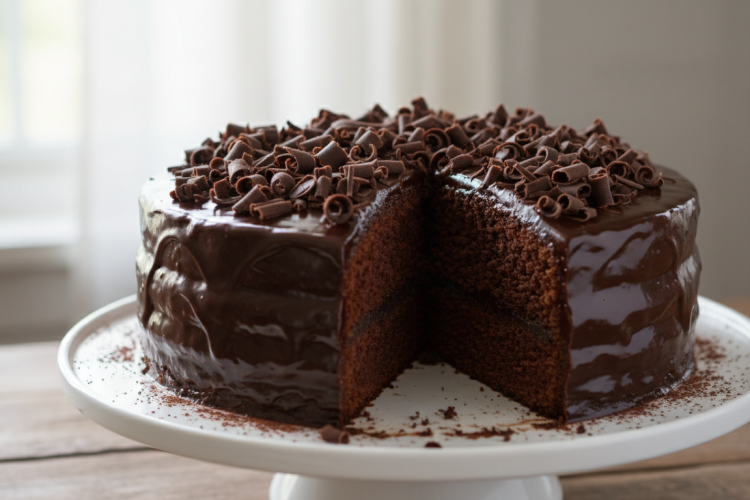
The key to a truly moist chocolate cake from scratch is combining oil with full-fat sour cream — it adds richness, tang, and moisture retention that keeps slices soft for days. Pair with a two-ingredient chocolate ganache frosting for bakery-level results.
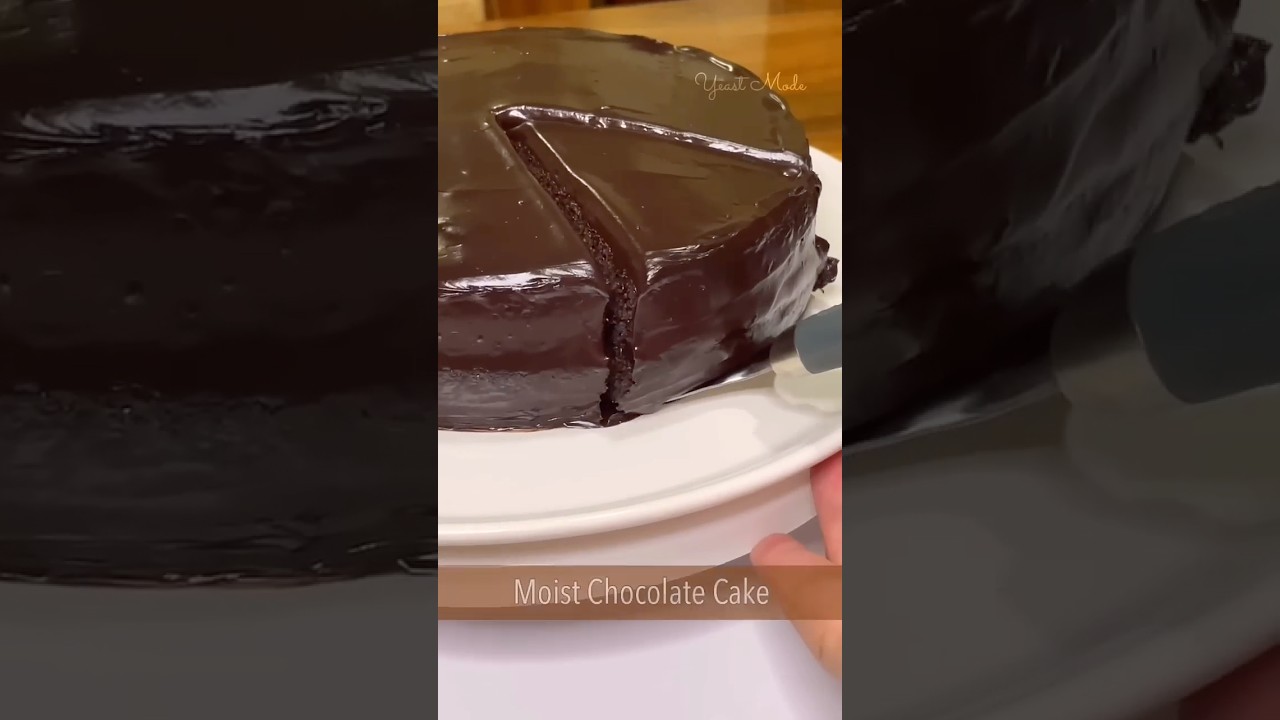
The Sour Cream Method
This recipe uses full-fat sour cream as the primary dairy component. It adds fat for richness, acid to tenderize gluten, and dense creaminess that keeps slices moist three days after baking — no simple syrup needed. For a simpler one-bowl approach, see our Easy Chocolate Cake Recipe.
Ingredients
Makes two 9-inch round layers.
Cake
- 1¾ cups (220g) all-purpose flour
- ¾ cup (75g) unsweetened cocoa powder, sifted
- 2 tsp baking soda, ½ tsp baking powder, 1 tsp salt
- 1¾ cups (350g) granulated sugar
- ½ cup (115g) unsalted butter, softened
- ½ cup (120ml) neutral oil
- 3 large eggs, room temperature
- 1 cup (240g) full-fat sour cream
- 2 tsp vanilla extract
- 1 cup (240ml) hot coffee or hot water
Ganache
- 12 oz (340g) semi-sweet chocolate, finely chopped
- 1½ cups (360ml) heavy cream
- 2 tbsp unsalted butter
Instructions
Step 1: Cream Butter, Oil, Sugar
Preheat oven to 350°F. Prepare pans. Beat butter, oil, and sugar on medium-high 3–4 minutes until fluffy.
Step 2: Add Eggs and Sour Cream
Beat in eggs one at a time. Add vanilla. Fold in sour cream until just combined.
Step 3: Alternate Dry and Wet
Whisk dry ingredients together. Add in three additions, alternating with hot liquid in two additions (dry-wet-dry-wet-dry). Mix on low — stop when streaks disappear.
Step 4: Bake
Bake 30–35 minutes for 9-inch layers. Toothpick should have a few moist crumbs. Cool 10 minutes in pans, then on racks.
Chocolate Ganache Frosting
Heat cream until just simmering. Pour over chopped chocolate, let stand 2 minutes, stir smooth from center out. Stir in butter. Cool to spreading consistency (1–2 hours at room temp). For a poured drip effect as used in our Blue Velvet Cake, use warm ganache.
Layer Cake Assembly
Spread ½ cup ganache on first layer, place second layer, press gently. Apply thin crumb coat, chill 20 minutes. Apply final coat, smooth with offset spatula dipped in warm water.
Troubleshooting
| Problem | Cause | Fix |
|---|---|---|
| Sinks in middle | Underbaked / oven opened early | Bake to 200°F internal |
| Dense, gummy | Overmixing | Stop at no-streak stage |
| Dry, crumbly | Overbaked / too much flour | Use scale; pull early |
| Ganache too runny | Too warm | Refrigerate 10 min, stir, repeat |
Filling Options Beyond Ganache
While the ganache is the signature element of this recipe, there are several filling variations that work beautifully with the sour cream chocolate base and open up different flavor profiles depending on the occasion.
Raspberry Jam Filling
Spread a thin layer of seedless raspberry jam between layers before applying ganache. The acidity of raspberry cuts through the richness of both the cake and ganache — this is the most classic pairing in European-style chocolate gateaux. Use about ¼ cup per layer. Warm the jam slightly so it spreads without dragging.
Whipped Ganache
Make the ganache as directed, then refrigerate until firm (about 2 hours). Whip with a hand mixer until light and fluffy, about 3–4 minutes. The result is a lighter, mousse-like texture that pipes beautifully and cuts more cleanly than poured ganache. This works especially well if you’re making rosettes or decorative piping on top.
Salted Caramel Layer
Add a drizzle of salted caramel between layers before ganache. This elevates the cake dramatically — the salt sharpens the chocolate and the caramel adds a butterscotch note that makes each bite more complex. Use our Churro Tres Leches caramel technique as a starting point.
Serving and Occasions
The sour cream ganache cake is a step above casual — it’s substantial enough for birthdays, dinner parties, and special occasions, but not fussy enough that it requires professional decorating skills.
- Birthday cake: Pipe rosettes on top with whipped ganache, add fresh fruit, and add a simple number candle. No elaborate fondant needed.
- Holiday dessert table: The dark, glossy ganache is naturally striking at the table. Garnish with gold leaf, fresh berries, or crushed praline for a holiday presentation.
- Gifting: Slice, plate individually in takeout containers, and deliver same-day. The ganache sets firm enough for transport. Stack layers in a gift box with parchment between them for a more impressive presentation.
- Restaurant-style plating: Warm a slice briefly in the microwave (20 seconds), pool warm ganache on the plate, set the slice on top, and add a quenelle of crème fraîche and a pinch of fleur de sel. This is a genuinely restaurant-quality plate.
Ganache Troubleshooting
Ganache is forgiving but can go wrong in a few predictable ways. Here are the fixes:
Ganache split or grainy: The fat separated, usually because the cream was too hot or the chocolate was too cold. Fix: add a tablespoon of warm cream and stir gently from the center. If it won’t emulsify, use an immersion blender for 10–15 seconds.
Too thick to pour: Let it warm slightly at room temperature for 10–15 minutes, or set the bowl over warm (not hot) water and stir until it loosens to a pourable consistency.
Too thin and won’t set: The cream-to-chocolate ratio is off. Melt in additional chopped chocolate (1 oz at a time) and stir until incorporated. Let cool again.
Dull finish instead of glossy: Add the butter after the chocolate has fully melted and the ganache has cooled slightly. Butter added too early into hot ganache loses its emulsifying effect.
Baking This Cake for Different Occasions
The sour cream ganache cake is versatile enough to work across a range of presentations depending on the occasion. For a casual gathering, bake it as a sheet cake in a 9×13 pan and frost directly in the pan — no assembly or stacking required, and it feeds 16–20 people cleanly. For a birthday or dinner party centerpiece, the two-layer presentation is impressive without requiring professional decorating skill. The ganache is naturally glossy and sets with a smooth finish that looks intentional even if you’re not a trained cake decorator.
If you’re making this ahead for an event, bake and wrap the layers up to 2 days before. Make the ganache the morning of the event and assemble 2–4 hours before serving — this gives the ganache time to set while keeping it fresh. If the event is more than 4 hours away, refrigerate the assembled cake and bring it to room temperature for 30–45 minutes before cutting. Cold ganache cuts cleanly but doesn’t have the same glossy appearance as room-temperature ganache — both are delicious.
This also pairs well as a base for our other chocolate recipes — the same ganache technique used here is the foundation for chocolate drip work on layer cakes like the Easy Chocolate Cake or as a filling in rolled cakes and crepe cakes.
Flavor Boosters and Mix‑In Ideas
Beyond the classic sour‑cream base, a handful of simple additions can turn your moist chocolate cake into a signature dessert. Swirl in ¼ cup of espresso‑infused simple syrup for a subtle coffee lift, or fold in ½ cup of toasted hazelnuts for crunch and a nutty aroma. For a festive touch, grate a tablespoon of orange zest into the batter; the citrus brightens the deep cocoa while keeping the crumb tender. If you’re looking for a dairy‑free route, replace the sour cream with an equal amount of coconut‑milk yogurt—this adds a whisper of tropical flavor without sacrificing moisture. For more inspiration on creative cake tweaks, see our guide on creative cake variations. The culinary team at Serious Eats notes that incorporating a small amount of melted dark chocolate (about 2 oz) alongside cocoa powder deepens the chocolate profile and improves the crumb structure, so feel free to experiment with that balance.
Mastering the Ganache Consistency
The ganache frosting is the crowning glory of this cake, and getting its texture just right can be a science. Start with a 2:1 ratio of heavy cream to chopped bittersweet chocolate for a glossy, pour‑able glaze; reduce the cream to a 1:1 ratio if you prefer a firmer, pipe‑able frosting. Heat the cream just to a simmer, then pour it over the chocolate and let it sit for a minute before whisking gently to avoid air bubbles. For a silkier finish, strain the ganache through a fine‑mesh sieve before it sets. If you need a quicker set, chill the mixture for 5‑10 minutes and then beat it with a handheld mixer until it reaches a fluffy consistency. Our detailed walkthrough of ganache techniques can be found in the post on ganache basics, and the experts at Serious Eats recommend adding a pinch of sea salt to balance the sweetness and enhance the chocolate’s depth.
Storing, Freezing, and Re‑Serving
Proper storage preserves the cake’s moisture and the ganache’s sheen for days—or even weeks. Once assembled, wrap the cake tightly in a double layer of plastic wrap, then place it in an airtight container; it will stay fresh at room temperature for up to three days. For longer keeping, refrigerate the wrapped cake (still in its container) for up to five days; allow it to come to room temperature before slicing to restore its soft crumb. To freeze, wrap the cake in parchment paper followed by foil, then store in a freezer bag for up to two months. Thaw overnight in the refrigerator, then let it sit at room temperature for an hour before serving. For serving ideas, drizzle a thin ribbon of warm ganache over each slice or dust with cocoa powder for an elegant finish. For more storage hacks, check out our article on cake preservation tips, and see the recommendations from Serious Eats on optimal freezer practices.
Frequently Asked Questions
What makes chocolate cake extra moist?
Oil + sour cream/buttermilk + hot liquid blooming cocoa. Don’t overbake.
Can I substitute Greek yogurt for sour cream?
Yes — full-fat Greek yogurt works 1:1. Avoid low-fat versions.
How far ahead can I bake the layers?
Up to 2 days at room temperature (wrapped) or 2 months frozen. Assemble day before serving.