
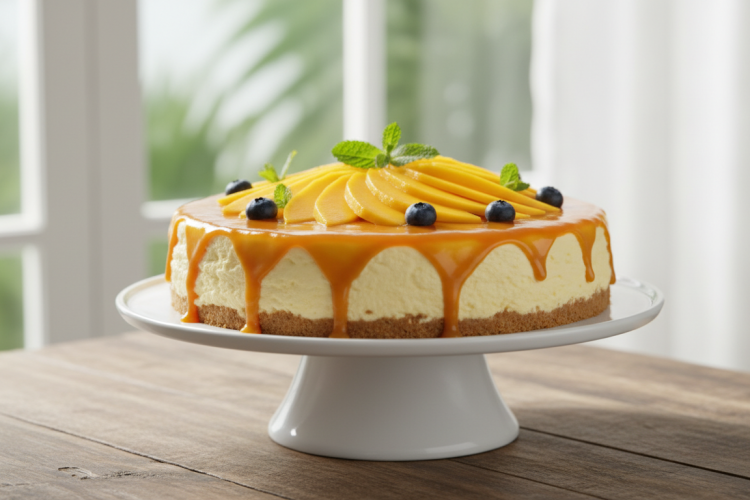
An easy mango cheesecake is a no-bake dessert made with a buttery graham cracker crust, a cream cheese filling swirled with fresh mango puree, and a glossy mango jelly topping — it sets in the refrigerator in 4–6 hours with no oven required. The cheesecake gets its tropical flavor from ripe Ataulfo or Alphonso mangoes blended into a smooth puree that is folded directly into the cream cheese base. The result is a vibrant, creamy, sliceable cheesecake that looks stunning and tastes like the inside of a perfect mango.
Why This Recipe Works
Most mango cheesecake recipes either use artificial mango flavoring — which tastes nothing like actual mango — or underbake the fruit component so the filling ends up watery and pale. This version is built around a very high mango-to-filling ratio: roughly 1 cup of thick mango puree per 16 oz of cream cheese. That ratio gives you a filling with true tropical intensity, not just a faint mango hint.
The second thing this recipe gets right is structure. No-bake cheesecakes can be tricky — too little gelatin and the filling never fully sets; too much and it becomes rubbery. This recipe uses a measured amount of unflavored gelatin that gives a firm, sliceable texture without any bounce. The cheesecake cuts cleanly, holds its shape on a plate, and releases from the springform pan without tearing.
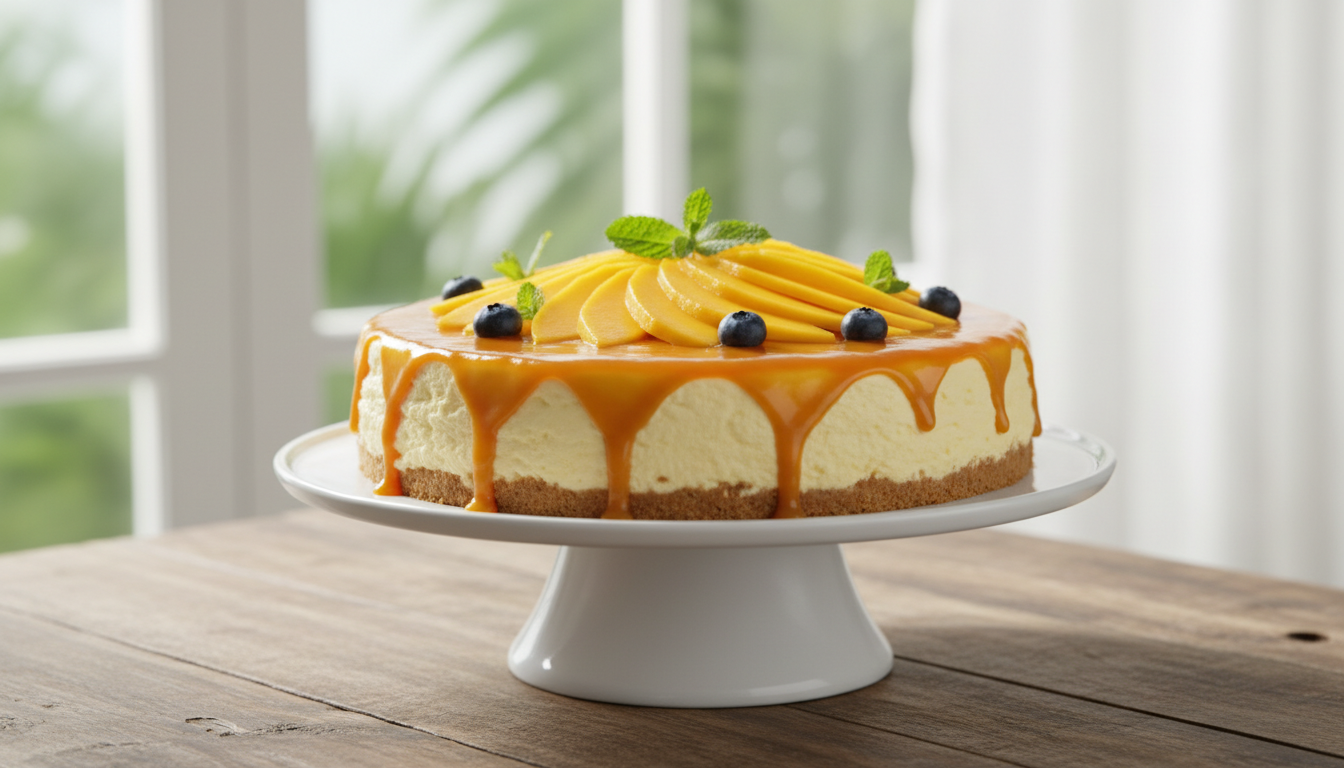
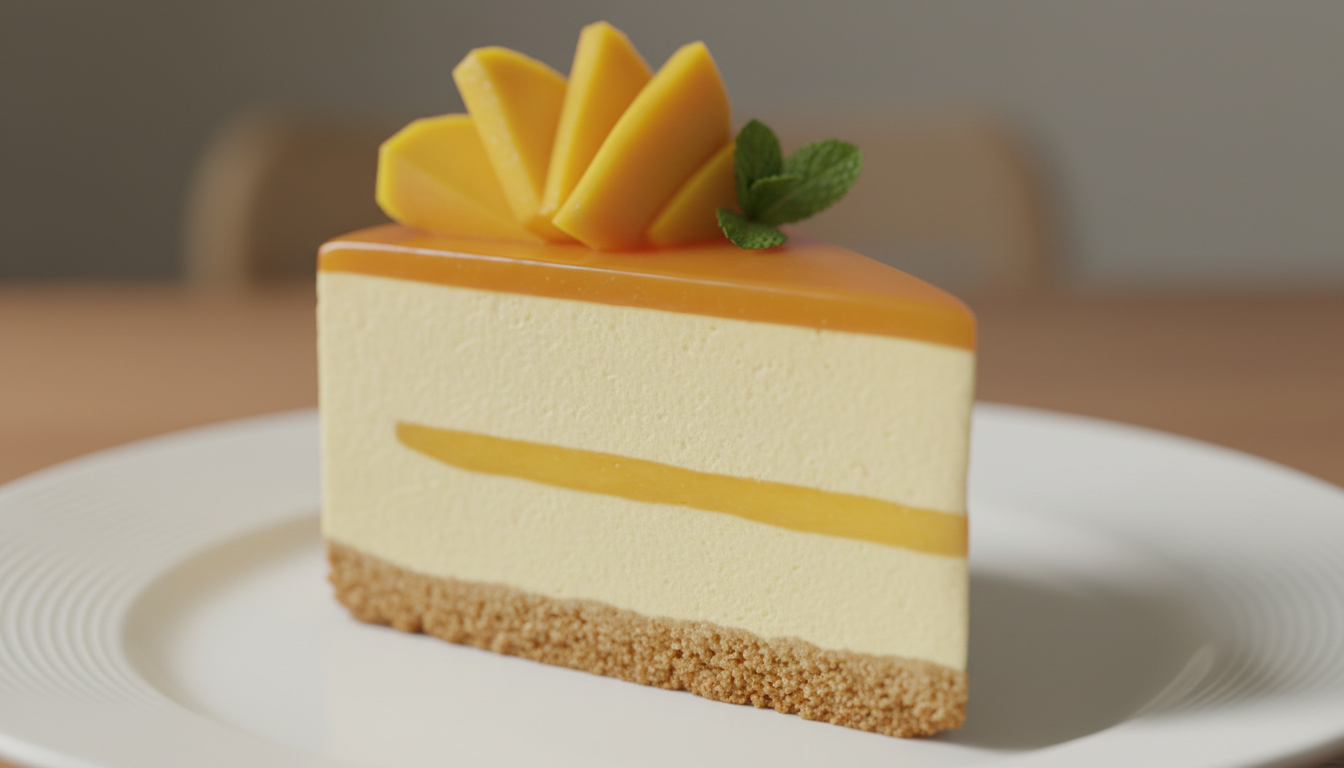
Finally, the mango glaze on top is not optional — it’s what makes this cheesecake look professionally finished. A thin layer of mango jelly (made from the same puree) sets over the filling and gives the cake its signature golden-orange surface. It also protects the filling from drying out in the refrigerator.
Choosing the Right Mango
Mango variety makes a significant difference in this recipe. The best choices are:
- Ataulfo (Honey/Champagne) mango: The gold standard for dessert applications. Fiberless, very sweet, intensely aromatic, and buttery-smooth when pureed. Available at most Latin and Asian grocery stores from March through July.
- Alphonso mango: The classic Indian variety — considered the world’s finest dessert mango. Extremely aromatic, deep orange flesh, concentrated flavor. Often available canned or frozen in Indian grocery stores year-round.
- Tommy Atkins or Kent: The most widely available supermarket mango. Acceptable, but less flavorful and more fibrous. Blend thoroughly and strain if using.
- Frozen mango chunks: An excellent year-round substitute. Thaw completely at room temperature, drain well, then blend. Frozen mango is often picked at peak ripeness and can be more flavorful than off-season fresh mango.
Ripe mangoes should be slightly soft to the touch (like a ripe avocado), fragrant at the stem end, and yield to gentle pressure. A mango that is hard and unscented will produce a pale, mildly-flavored puree. According to the UC Davis Postharvest Technology Center, mango sugar content increases significantly during ripening — fully ripe mangoes can contain 14–18% sugar by weight, giving them their characteristic sweetness and aroma.
Ingredients
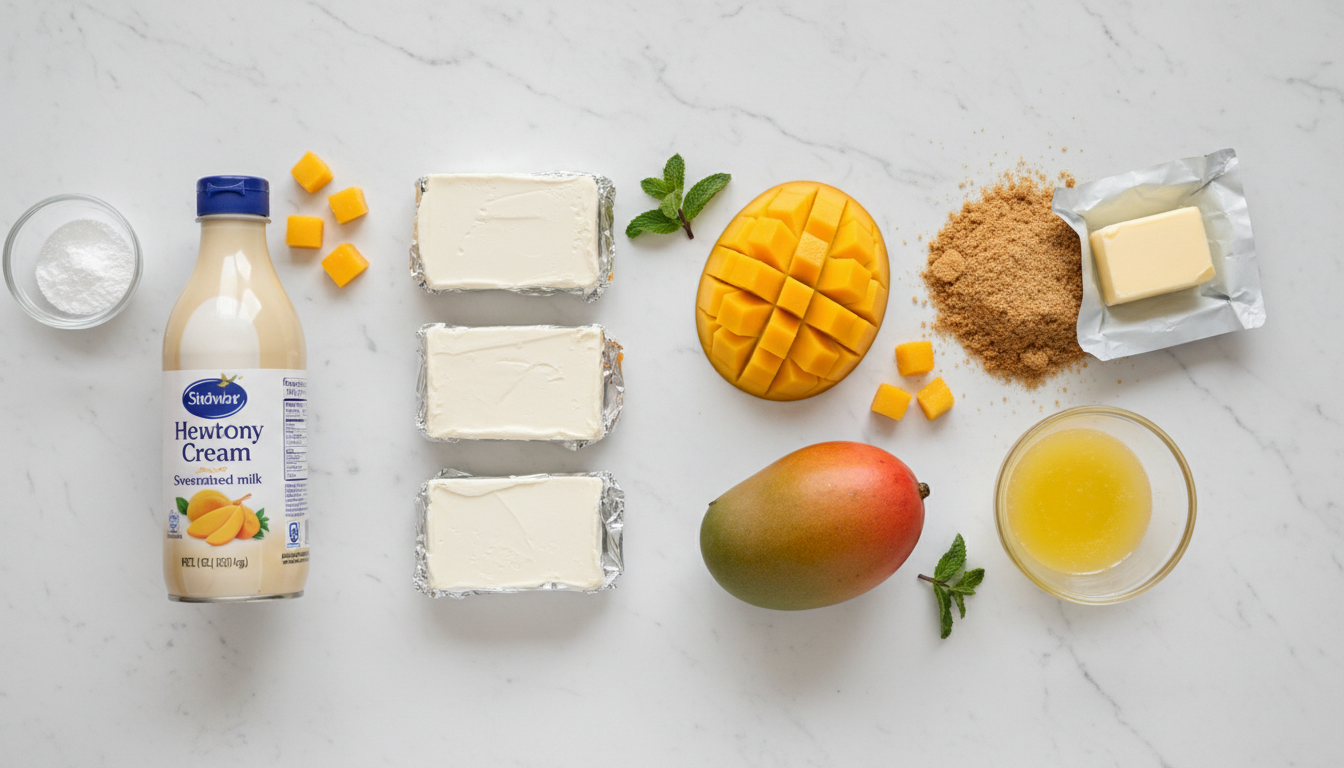
This recipe makes one 9-inch cheesecake (serves 10–12).
Graham Cracker Crust
- Graham cracker crumbs (200g / 2 cups) — about 15 full sheets crushed. Use a food processor or a zip-lock bag and rolling pin.
- Unsalted butter, melted (85g / 6 tablespoons)
- Sugar (2 tablespoons)
- Pinch of salt
Mango Cheesecake Filling
- Cream cheese, full-fat, room temperature (450g / 16 oz / 2 blocks) — room temperature is non-negotiable. Cold cream cheese lumps and never fully smooths out.
- Heavy whipping cream (240ml / 1 cup) — cold, for whipping
- Powdered sugar (100g / ¾ cup)
- Fresh mango puree (240ml / 1 cup) — from approximately 2 large Ataulfo mangoes or 300g frozen mango, thawed and blended until completely smooth
- Vanilla extract (1 teaspoon)
- Unflavored gelatin powder (7g / 1 packet / 2¼ teaspoons)
- Cold water (3 tablespoons) — for blooming the gelatin
- Fresh lime juice (1 tablespoon) — brightens the mango flavor and balances sweetness
Mango Glaze Topping
- Fresh mango puree (120ml / ½ cup)
- Sugar (2 tablespoons)
- Unflavored gelatin powder (3.5g / ½ packet / 1 teaspoon)
- Cold water (2 tablespoons)
- Fresh lime juice (1 teaspoon)
Step-by-Step Instructions
Step 1: Make and Chill the Crust
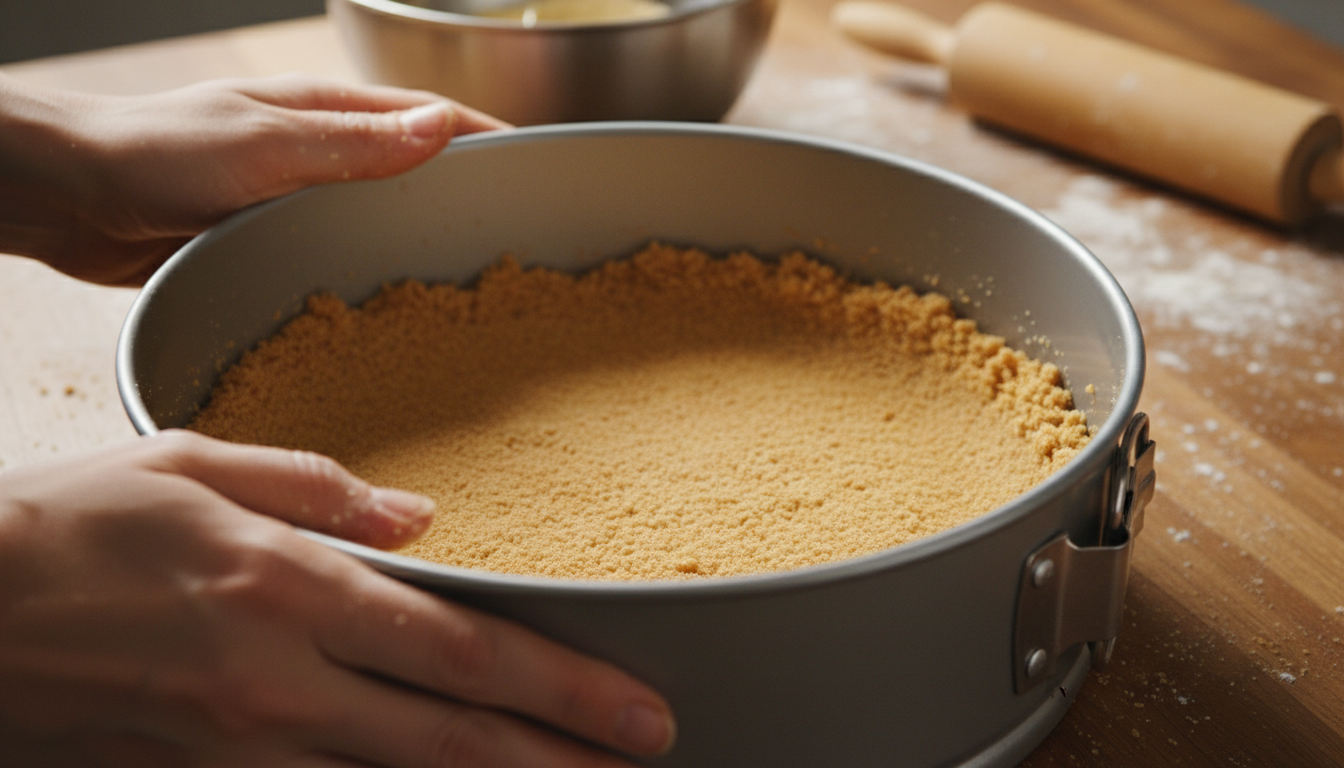
Combine the graham cracker crumbs, sugar, and salt in a bowl. Pour the melted butter over and mix with a fork until the mixture resembles wet sand — every crumb should be coated. Press the mixture firmly and evenly into the bottom and about 1 inch up the sides of a 9-inch springform pan. Use the flat bottom of a measuring cup to pack it down tightly. A loose crust won’t hold together when sliced.
Refrigerate the crust for at least 20 minutes while you prepare the filling. This gives the butter time to firm up and the crust to set so it doesn’t shift when the filling is poured on top.
Step 2: Make the Mango Puree
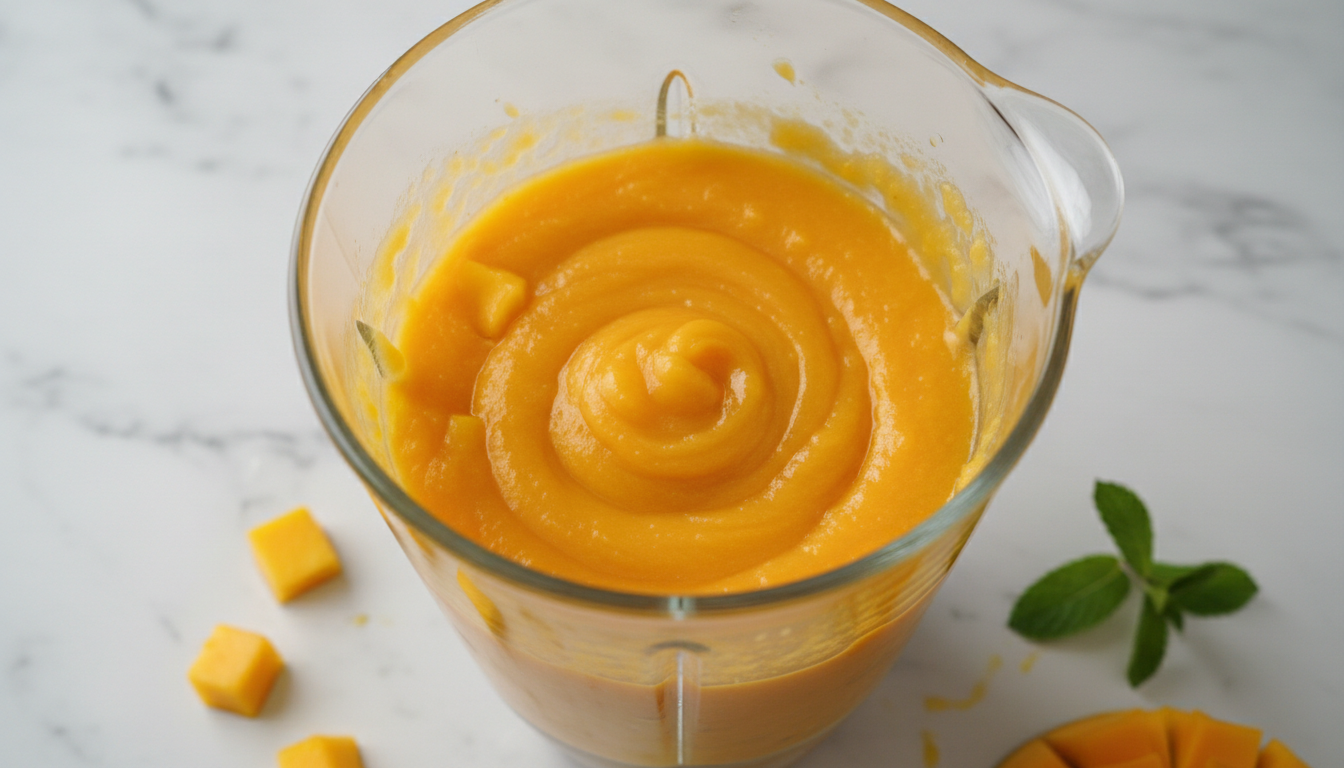
Peel and dice the mangoes, removing the flesh from the pit. Place in a blender (not a food processor — you need a truly smooth puree) and blend on high until completely smooth, about 1–2 minutes. If using a Tommy Atkins mango (which has fibrous flesh), pass the puree through a fine-mesh strainer to remove fibers. Measure out 1 cup for the filling and ½ cup for the topping, keeping them in separate containers. Stir the lime juice into the filling portion.
Step 3: Bloom and Melt the Gelatin
Sprinkle the gelatin powder over 3 tablespoons of cold water in a small microwave-safe bowl. Let it sit for 5 minutes without stirring — the gelatin will absorb the water and swell into a gel (this is called “blooming”). Microwave on high for 15–20 seconds until the gelatin is fully melted and liquid but not boiling. Stir briefly and let it cool for 2 minutes — it should be warm but not steaming. If the gelatin cools and sets again before you use it, microwave in 5-second bursts to re-liquefy.
Step 4: Make the Cheesecake Filling
In a large bowl, beat the room-temperature cream cheese with an electric mixer on medium speed until completely smooth and fluffy, about 2–3 minutes. Scrape down the sides and bottom of the bowl frequently — cream cheese sticks and lumps hide at the edges. Add the powdered sugar and vanilla and beat on medium-low until just combined.
Add the mango puree (with lime juice) and beat on medium speed until fully incorporated and the filling is uniformly orange-gold. Drizzle in the warm liquid gelatin while beating on low speed, then increase to medium and beat for 30 seconds.
In a separate cold bowl with cold beaters, whip the heavy cream to stiff peaks. Gently fold the whipped cream into the mango cream cheese mixture in three additions, using a large spatula and a folding motion (not stirring) to preserve the air. The final filling should be smooth, creamy, and thick enough to mound on a spoon without running immediately.
Step 5: Fill and Set the Cheesecake
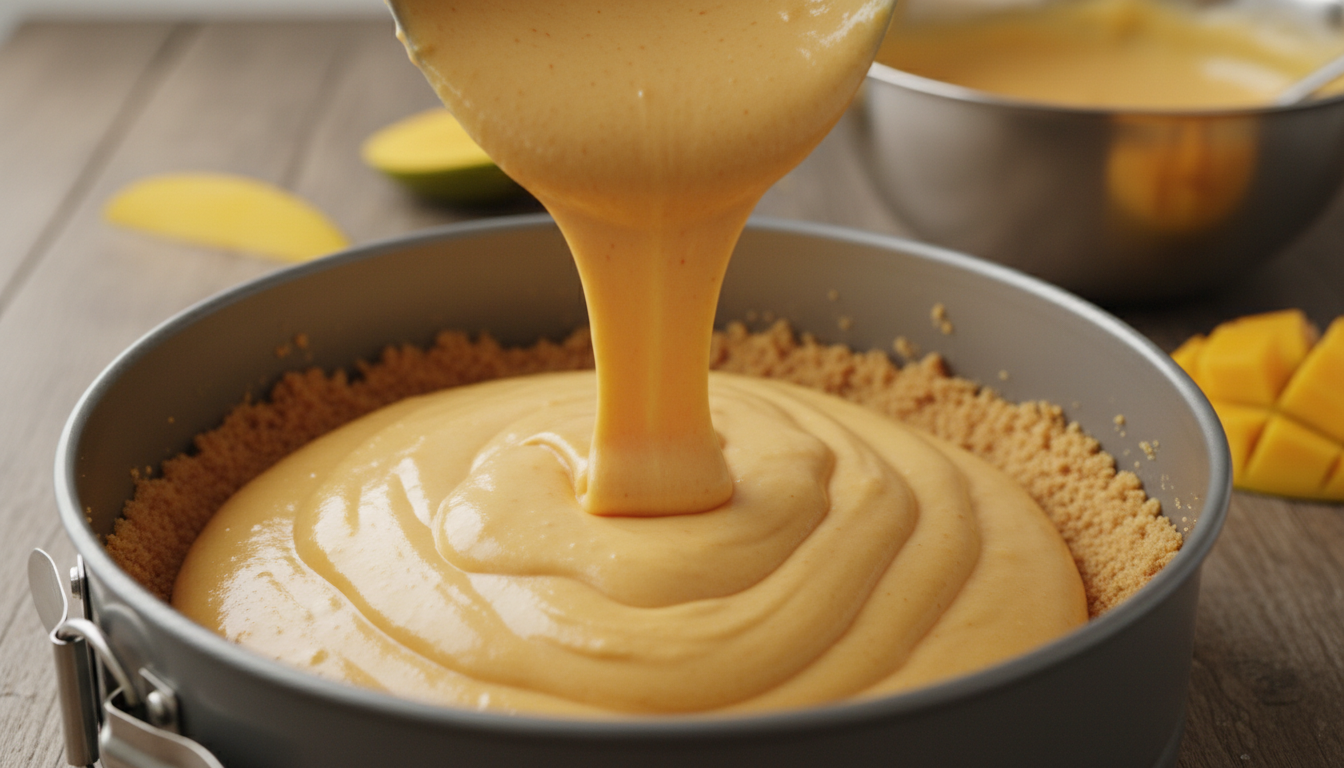
Remove the chilled crust from the refrigerator. Pour the mango cheesecake filling over the crust, spreading it evenly with an offset spatula. Smooth the top as flat as possible — the glaze will be poured on top, and any bumps or valleys in the filling will show through. Tap the pan gently on the counter a few times to release any air bubbles.
Cover loosely with plastic wrap and refrigerate for at least 3 hours — or ideally overnight — before adding the glaze. The filling needs to be completely set and firm before the glaze is applied; otherwise the glaze will sink in and blend with the filling rather than forming a distinct top layer.
Step 6: Make and Apply the Mango Glaze
Bloom the remaining ½ packet of gelatin in 2 tablespoons of cold water for 5 minutes, then microwave to melt. Combine the ½ cup mango puree, 2 tablespoons sugar, and 1 teaspoon lime juice in a small saucepan over low heat, stirring until the sugar dissolves (about 1 minute). Remove from heat. Stir in the melted gelatin. Let this glaze mixture cool to room temperature — about 15–20 minutes — until it is slightly thickened but still pourable (consistency of warm maple syrup). If it cools too much and starts to set, warm gently over low heat.
Pour the cooled glaze over the set cheesecake filling, tilting the pan gently so it spreads to the edges in an even layer. Refrigerate uncovered for 1 hour until the glaze is fully set and firm to the touch.
Step 7: Unmold and Serve
Run a thin, clean knife around the inside edge of the springform pan before unlatching. This releases any filling that may have adhered to the sides. Unlatch the springform ring and lift it away cleanly. Transfer the cheesecake (still on the springform base) to a serving plate or cake stand. Garnish with fresh mango slices, a few sprigs of fresh mint, and a dusting of flaky sea salt if desired.
To slice cleanly, use a sharp knife dipped in hot water and wiped dry between each cut. This prevents the creamy filling from smearing and gives you clean, professional-looking slices.
Variations
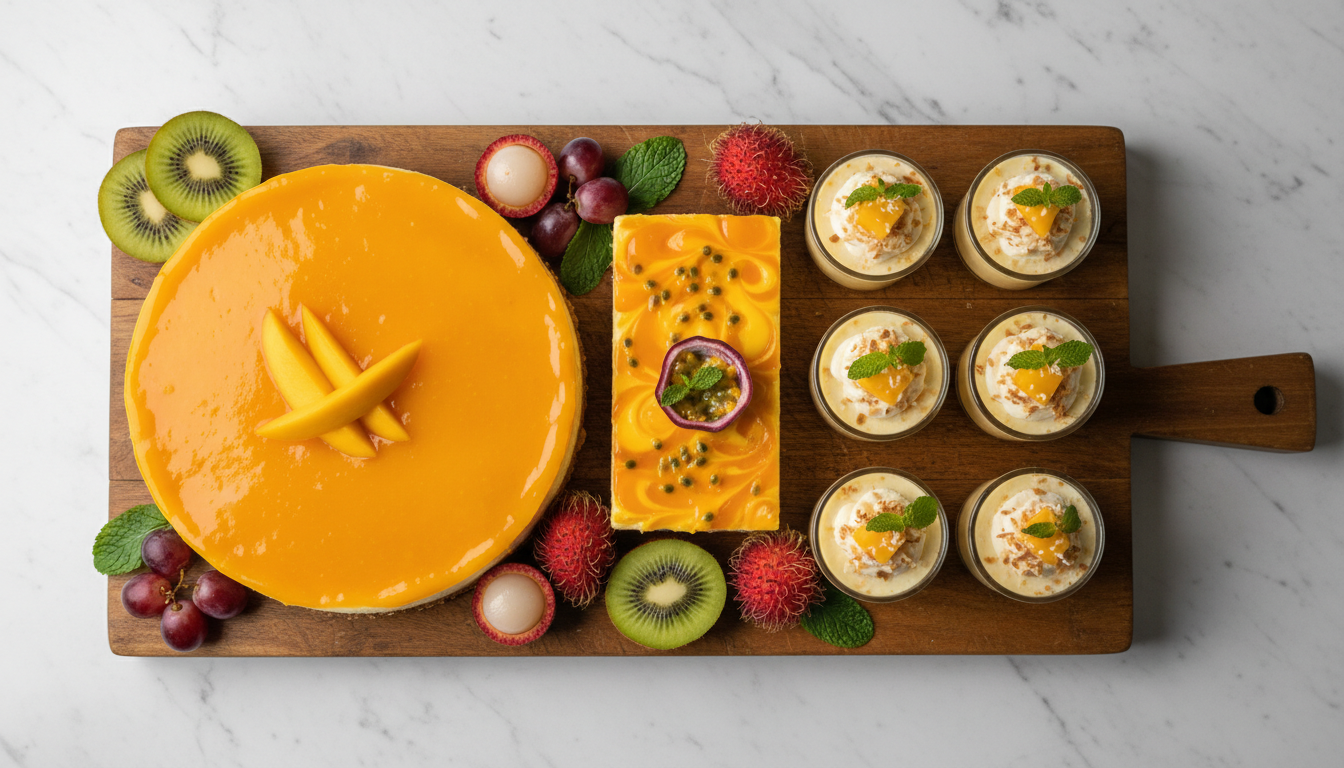
- Mango Passionfruit Cheesecake: Replace ¼ cup of the mango puree with fresh passionfruit pulp (strained or unstrained). The tartness of passionfruit intensifies the tropical character of the filling and creates a more complex flavor profile.
- Mango Cheesecake Bars: Press the crust into a parchment-lined 9×13-inch baking pan instead of a springform pan. The cheesecake will be thinner (about 1 inch) and easier to serve in individual portions without needing a cake knife. This is the same approach used in our blueberry cheesecake bars and churro cheesecake bars.
- Mini Mango Cheesecakes: Press crust into individual silicone cupcake molds or a standard 12-cup muffin tin lined with cupcake papers. Fill and refrigerate as directed. These are perfect for parties and require no slicing.
- Mango Cheesecake With Coconut Crust: Replace ½ cup of the graham cracker crumbs with toasted shredded coconut for a tropical crust variation. The coconut adds fragrance and a slight chew that pairs beautifully with the mango filling.
- Baked Mango Cheesecake: For a denser, more traditional New York-style texture, convert this to a baked version: add 3 eggs and 2 tablespoons of cornstarch to the filling (omit the gelatin and whipped cream), bake in a water bath at 325°F for 55–65 minutes, and chill overnight. Our New York cheesecake guide covers the water bath technique in detail.
Make-Ahead, Storage, and Freezing
Make-ahead: This cheesecake is an excellent make-ahead dessert. The filling improves in flavor and texture after 24 hours in the refrigerator as it fully sets and the mango flavor deepens. Make it up to 2 days in advance and add the garnish right before serving.
Refrigerator storage: Store loosely covered with plastic wrap in the refrigerator for up to 4 days. The crust will soften slightly over time but remains completely edible.
Freezing: Mango cheesecake freezes beautifully. Freeze the whole cake (without garnish) uncovered until solid, then wrap tightly in plastic wrap and foil. Freeze for up to 2 months. Thaw overnight in the refrigerator — never at room temperature, as the condensation will make the glaze weep.
Individual slices: Cut the cheesecake into slices before freezing and freeze individually on a parchment-lined tray. Once solid, stack with parchment between layers in an airtight container. Thaw individual slices in the refrigerator for 2–3 hours.
Troubleshooting: Common Mango Cheesecake Problems
- Filling won’t set / too soft: Usually caused by under-bloomed gelatin, gelatin added to the filling while too hot (which can denature it), or not enough refrigeration time. If the cheesecake is soft after 6 hours, let it sit uncovered in the fridge overnight — it may just need more time.
- Lumpy filling: Almost always caused by cold cream cheese. Even 20 minutes at room temperature is often not enough. The cream cheese must be genuinely soft and yielding before beating. If you see lumps forming during mixing, the cream cheese was too cold.
- Pale orange color: A pale, washed-out filling usually means the mango wasn’t ripe enough, or the variety used (like Tommy Atkins) had less pigment. Add 1–2 tablespoons of additional mango puree to boost color and flavor.
- Glaze sinks into filling: The filling wasn’t fully set before the glaze was applied. Return to the fridge for another hour before attempting the glaze. Also ensure the glaze itself is cooled to near room temperature before pouring.
- Crust crumbles when sliced: The butter-to-crumb ratio was off, or the crust wasn’t packed firmly enough. Check that every crumb was coated with butter (the mixture should feel like wet sand) and press very firmly into the pan.
Serving Suggestions
Mango cheesecake is a complete dessert on its own, but a few additions can make it truly spectacular:
- Fresh mango salsa: Diced mango, red onion, jalapeño, cilantro, and lime juice served alongside each slice for a bright, contrasting topping.
- Coconut whipped cream: Chill a can of full-fat coconut milk overnight and whip the solidified cream with a little powdered sugar and vanilla. Pipe a rosette on each slice for a coconut-mango pairing.
- Toasted coconut flakes: Sprinkle over the top of the glazed cheesecake before serving for crunch and added tropical flavor.
- Pairing with churro desserts: For a full tropical dessert spread, serve alongside our churro ice cream bowls — the warm cinnamon spice of the churro contrasts beautifully with the cold, fruity mango cheesecake.
Video: How to Make No-Bake Mango Cheesecake
Frequently Asked Questions
Can I use canned mango puree instead of fresh?
Yes — Kesar or Alphonso canned mango puree (available at Indian grocery stores under brands like Deep or Swad) is often more intensely flavored than fresh supermarket mangoes. Use it as a 1:1 substitute for fresh puree. Avoid canned purees with added sugar or artificial flavoring, which will make the filling overly sweet and artificial-tasting.
Can I make this without gelatin?
You can, but the cheesecake will be softer and less sliceable — more like a mousse. Without gelatin, it’s best served in individual glasses as a no-bake mango cheesecake parfait. If you need a vegan or vegetarian option, substitute an equal amount of agar-agar powder, but note that agar sets firmer than gelatin and needs to be dissolved in simmering liquid (not just warm water).
How much mango does this recipe require?
You need about 1½ cups of mango puree total (1 cup for filling, ½ cup for glaze). For Ataulfo mangoes (which are small), plan on 3–4 mangoes. For larger varieties like Kent or Keitt, 2 large mangoes should be sufficient. You can also use 400g / 14 oz of frozen mango chunks, thawed.
Why is my mango cheesecake filling too sweet?
Very ripe Ataulfo or Alphonso mangoes are naturally very sweet — when combined with full powdered sugar, the filling can taste cloying. If you find the filling too sweet after tasting, add an extra teaspoon of lime juice to balance. You can also reduce the powdered sugar to ½ cup if using exceptionally sweet mangoes. The lime juice is the most effective sweetness balancer in this recipe — don’t skip it. This is the same balancing technique used in our lemon cheesecake recipe, where citrus plays the same role.
Can I make this mango cheesecake gluten-free?
Easily. Swap the regular graham crackers for gluten-free graham crackers (Kinnikinnick is a widely available brand) or use gluten-free digestive biscuits. The filling and glaze are naturally gluten-free. The rest of the recipe stays the same. This makes it a perfect tropical dessert option for gluten-free guests — see our guide to identifying gluten-free candy and dessert options for more substitution ideas.