
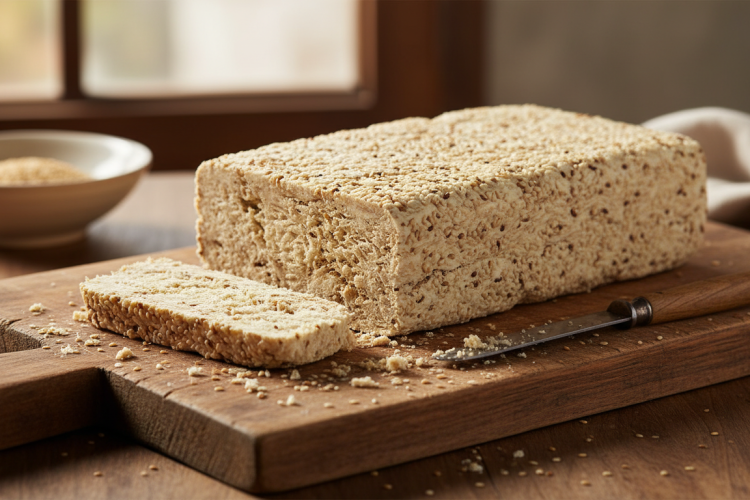
Halva does not need to be refrigerated. Store-bought and homemade halva keeps best at room temperature in an airtight container, away from light and heat, for up to two weeks. Refrigerating halva can cause it to sweat, become sticky, and absorb unwanted odors from other foods. For longer storage, freezing is the better option.

What Is Halva?
Halva (also spelled halvah or halwa) is a dense, crumbly confection made primarily from tahini — ground sesame paste — combined with sugar syrup. It originated in the Middle East and South Asia and has been enjoyed for centuries across dozens of cultural traditions, from Greek pastry shops to Israeli supermarkets to Indian sweets counters.
The texture is unlike most Western confections: dry, slightly grainy, and semi-solid, with an intensely nutty, sweet flavor that can range from plain sesame to pistachio, chocolate, vanilla, and even coffee. Because it is made primarily from oil-rich tahini and concentrated sugar, halva has a naturally long shelf life — similar to nut butters or hard candy.
Understanding what halva is made of is the key to understanding how to store it properly. It contains no eggs, no dairy (in most varieties), and no significant moisture — which means the standard rules for refrigerating perishable foods simply do not apply here.
Does Halva Need to Be Refrigerated?
No — halva does not need to be refrigerated under normal conditions. Most commercial halva is sold on unrefrigerated store shelves, often near other shelf-stable sweets like Turkish delight, nougat, or dried fruits. That alone tells you something important: manufacturers and food scientists have determined that halva is stable at ambient room temperature.
The reason halva stays stable without refrigeration is its low water activity. Water activity measures how much “free” water is available in a food to support microbial growth. Halva’s combination of tahini and dense sugar syrup creates an environment where bacteria and mold cannot easily thrive. This is the same reason honey, hard candy, and certain jams stay shelf-stable for long periods.
That said, “does not need refrigeration” is not the same as “can be stored anywhere.” Temperature extremes, humidity, and exposure to air can all degrade halva’s quality — even if they do not make it dangerous to eat. Proper pantry storage is always the goal.

How to Store Halva at Room Temperature
Room-temperature pantry storage is the standard and recommended method for halva. Follow these guidelines and your halva will stay fresh, crumbly, and delicious for weeks.
Use an Airtight Container
Halva absorbs moisture and odors from its environment. Left exposed to air, it can become sticky on the surface, develop off-flavors, or lose its characteristic crumbly texture. Wrap cut halva tightly in plastic wrap, then place it inside a resealable bag or airtight container — a glass jar with a lid works especially well for smaller pieces.
Keep It Cool and Dark
Store halva away from direct sunlight and heat sources like the stovetop or oven. A pantry, cupboard, or even a cool corner of the counter works well. The ideal storage temperature is between 60°F and 75°F (15°C–24°C). In very hot climates or during summer months, if your kitchen regularly exceeds 80°F, you may want to briefly refrigerate halva — but use a sealed container to prevent condensation issues.
How Long Does Halva Last at Room Temperature?
Properly stored halva will keep at room temperature for 1–2 weeks after cutting (if bought as a block) or until the “best by” date on packaged halva. Unopened commercial halva often has a shelf life of 6–12 months at room temperature. Once cut, the exposed surface is more vulnerable to drying or oxidation, so proper wrapping becomes more important.
Can You Refrigerate Halva?
Yes, you can refrigerate halva — but it is generally not recommended as a first choice. Cold temperatures slow any potential oxidation of the sesame oil, which can marginally extend shelf life. However, refrigeration comes with trade-offs:
- Condensation: When cold halva is brought back to room temperature, it can sweat and become sticky or wet on the surface.
- Odor absorption: Halva is notorious for absorbing refrigerator smells — leftover onions, garlic, or other strong foods can subtly alter its flavor.
- Texture changes: Refrigerated halva can become harder and denser, losing some of its light crumble.
If you do refrigerate halva, use a double seal — plastic wrap first, then a zip-lock bag or airtight container — to protect against both moisture and odor transfer. Let it come to room temperature for 10–15 minutes before serving for the best texture and flavor.

Can You Freeze Halva?
Yes — freezing is the best long-term storage method for halva. Properly frozen halva keeps for up to 12 months with very little quality loss. Many home bakers and sweet-lovers buy halva in bulk precisely because of how well it freezes.
To freeze halva correctly:
- Cut halva into individual or portion-sized pieces before freezing — you do not want to thaw the whole block every time.
- Wrap each piece individually in plastic wrap or parchment paper.
- Place wrapped pieces in a freezer-safe zip-lock bag or airtight container. Press out excess air.
- Label with the date and freeze for up to 12 months.
To thaw, transfer the halva to the refrigerator overnight, then let it sit at room temperature for 30 minutes before serving. Avoid thawing in the microwave, which can melt the sugars unevenly and create a grainy, sticky texture.
How to Tell If Halva Has Gone Bad
While halva is shelf-stable, it is not immune to spoilage. Here are the signs that halva has gone past its prime:
- Rancid smell: Sesame oil can go rancid when exposed to heat, light, or air over time. If your halva smells sharp, bitter, or like old paint, the oil has oxidized and the halva should be discarded.
- Visible mold: This is rare in properly stored halva but can occur if the halva was exposed to significant moisture. Any fuzzy growth means discard immediately.
- Extreme dryness or crumbling to dust: Very old or improperly stored halva may become excessively dry. While not necessarily unsafe, the flavor and texture will be unpleasant.
- Off-flavors: If halva tastes noticeably bitter, soapy, or stale despite having no visible issues, it has likely oxidized or absorbed off-flavors from its storage environment.
As a general rule: if it smells fine and looks fine, halva is almost certainly safe to eat, even past its printed date. The “best by” date reflects quality, not safety.

Halva Storage by Type
Not all halva is identical. Different base ingredients affect how it should be stored:
Tahini-Based Halva (Most Common)
The most widely available type — made from sesame paste and sugar. This is the fully shelf-stable variety. Room temperature storage for up to 2 weeks (cut), or up to 6–12 months (sealed commercial package). Freezes exceptionally well.
Sunflower Seed Halva
Popular in Eastern Europe and Russia, sunflower halva behaves similarly to sesame halva for storage purposes. Shelf-stable at room temperature, best kept airtight, freezes well.
Flour-Based Halva (Indian Halwa)
Indian-style halwa — made from semolina, flour, or vegetables like carrot or pumpkin — is quite different. It contains significant moisture and often butter or ghee, which means it does need to be refrigerated. Store Indian halwa in the fridge for 3–5 days and reheat gently before serving. This is the main exception to the “no refrigeration needed” rule for halva.
Filled or Garnished Halva
Some specialty halva is layered with chocolate, filled with nuts, or covered with a chocolate coating. These are generally still shelf-stable, but check the manufacturer’s label — chocolate-enrobed varieties can get sticky in warm conditions, and any filling with fresh fruit or cream would change the storage requirements.
Halva and Other Sesame-Based Sweets
If you love halva, you likely enjoy other sesame and nut-based confections with similar storage profiles. What Is Mochi? covers the storage needs of another beloved Asian confection that also surprises people with its shelf life. For baking with sesame, our guide on Is Natural Cocoa Powder Dairy Free? covers another pantry staple with a long shelf life that people frequently overthink.
Tahini — the base ingredient in sesame halva — is itself shelf-stable, requiring refrigeration only after opening to slow oil separation. This gives you a good analogy: Easy Flan Recipe and other egg-based sweets are completely different, requiring refrigeration within 2 hours. Halva is on the other end of the spectrum — closer to peanut brittle or hard candy in its stability.
For those interested in the broader world of Middle Eastern and international confections, our guide to Baklava Origin and History explores another famously shelf-stable sweet that uses similar sugar-and-nut logic to stay fresh. And if you are exploring candy and confection shelf lives more broadly, our piece on How Long Does Cotton Candy Last? tackles another common storage question.
Quick Reference: Halva Storage Chart
| Storage Method | How Long It Lasts | Notes |
|---|---|---|
| Room temperature (sealed) | 1–2 weeks (cut); up to 12 months (sealed commercial) | Best option for daily use |
| Refrigerator (double-wrapped) | Up to 1 month | Use airtight container; allow to warm before serving |
| Freezer (airtight) | Up to 12 months | Best for bulk or long-term storage; thaw overnight in fridge |
| Room temperature (unwrapped) | 3–5 days | Not recommended; dries out and absorbs odors |
Tips for Buying and Serving Halva
When buying halva from a deli counter or specialty store, ask how long the block has been sitting out and whether it was cut recently. Fresh-cut halva from a well-sealed block will have a longer life at home than halva that has been exposed at a counter for days. At home, always slice only what you need and immediately reseal the remaining block.
For serving, halva is best enjoyed at room temperature when its full aroma and crumbly texture are at their peak. It pairs beautifully with strong coffee, dark chocolate, or fresh fruit. Crumbled halva also makes an excellent topping for cookies or ice cream — a technique common in Israeli and Greek dessert preparation.
Video: How to Store Halva Properly
Halva Across Cultures: Why Storage Traditions Vary
One reason people get confused about halva storage is that the word “halva” covers a wide range of completely different foods across cultures. In the Middle East and Mediterranean, halva almost exclusively refers to tahini-based confections — the shelf-stable, sugar-dense blocks sold in delis and specialty food stores. In South Asia, however, “halwa” is a broad term for sweet preparations made from grain flour, nuts, vegetables (carrot, bottle gourd), or lentils — dishes cooked with water, milk, or ghee that need refrigeration like any cooked food.
In Central Asia and parts of Russia, halva made from sunflower seeds is a regional staple, and its shelf life mirrors sesame halva closely. In Turkey, a flour-based halva called un helvası (made with wheat flour, butter, and sugar) is often served warm and requires refrigeration once cooled. The key takeaway: always consider what type of halva you have before defaulting to any single storage rule. If it came in a sealed foil or plastic package from a deli or import store shelf, it is almost certainly the shelf-stable tahini variety.
Understanding the full spectrum of halva types also makes you a more informed shopper. When exploring world desserts — like the ones featured in our guide to Traditional Indonesian Desserts or Korean Desserts You Need to Try — you will encounter many sweets with deceptively long or short shelf lives based on their base ingredients. Moisture content is always the deciding factor. Low-moisture, high-sugar confections like tahini halva, hard candy, and certain baked goods share this shelf-stable characteristic precisely because bacteria and mold cannot thrive without available water.
Frequently Asked Questions
Does halva go bad if not refrigerated?
Tahini-based halva does not go bad quickly at room temperature as long as it is wrapped airtight and stored away from heat and light. It can safely sit at room temperature for 1–2 weeks after cutting, and up to 12 months if still in the original sealed commercial packaging. Refrigeration is not required.
How do you know when halva has gone bad?
The clearest sign is a rancid, bitter, or sharp smell caused by oxidized sesame oil. Visual mold (though rare in properly stored halva) is also a definitive sign. If the halva simply looks dry or feels harder than usual but smells normal and tastes fine, it is still good — just a bit stale.
Can you freeze halva to make it last longer?
Yes — freezing is excellent for halva. Wrap pieces individually in plastic wrap, place in a freezer-safe bag, and freeze for up to 12 months. Thaw overnight in the refrigerator and then bring to room temperature before serving.
Does Indian halwa (halva) need to be refrigerated?
Yes — Indian halwa made with semolina, flour, vegetables, or dairy is a completely different product from tahini halva and should be refrigerated within 2 hours of cooking. Store in the fridge for 3–5 days and reheat before serving.
What is the best container to store halva?
An airtight glass container is ideal — it prevents moisture and odor absorption without any risk of plastic flavors transferring to the halva. A wide-mouth mason jar or a lidded glass food storage container works perfectly. If using plastic, ensure the container is fully airtight and odor-free.