
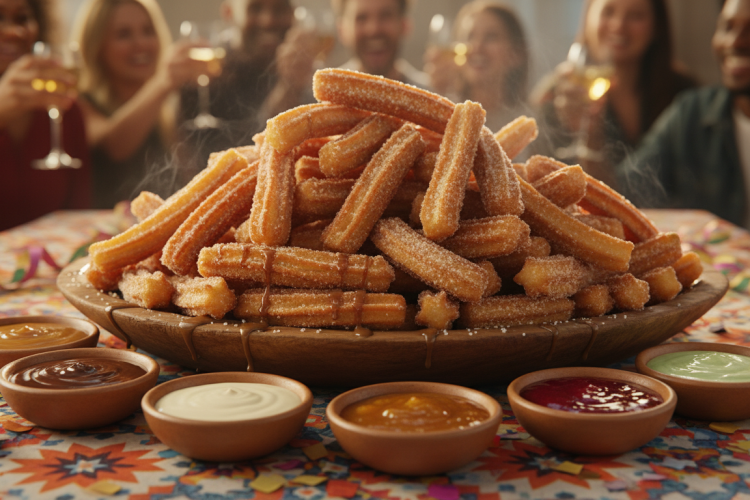
To make churros for a crowd, scale the standard dough recipe 4–6x, use a large heavy-bottomed pot or electric fryer, and pipe multiple churros simultaneously in batches of 6–8 at a time. With one large pot and a piping bag, one person can produce 60–80 churros in about 90 minutes — enough to serve 20–30 guests. This guide covers everything: the scaled recipe, frying logistics, keeping churros warm and crispy, make-ahead tips, and the best dipping sauces for a party setup.
Why Churros Are Perfect for Parties
Churros have a natural advantage over most party desserts: they are fried to order, they smell incredible, and they are endlessly customizable with different dipping sauces. Unlike cakes or pastries that require slicing, plating, and refrigeration, churros can be piled high on a platter and eaten with hands. They stay crispy for 20–30 minutes after frying — long enough to serve a full wave of guests.
The main challenge when making churros for a crowd is logistics: keeping the oil at temperature, piping fast enough, and organizing the cinnamon-sugar station so every churro gets coated before cooling. This guide solves all of those problems with a tested batch strategy.
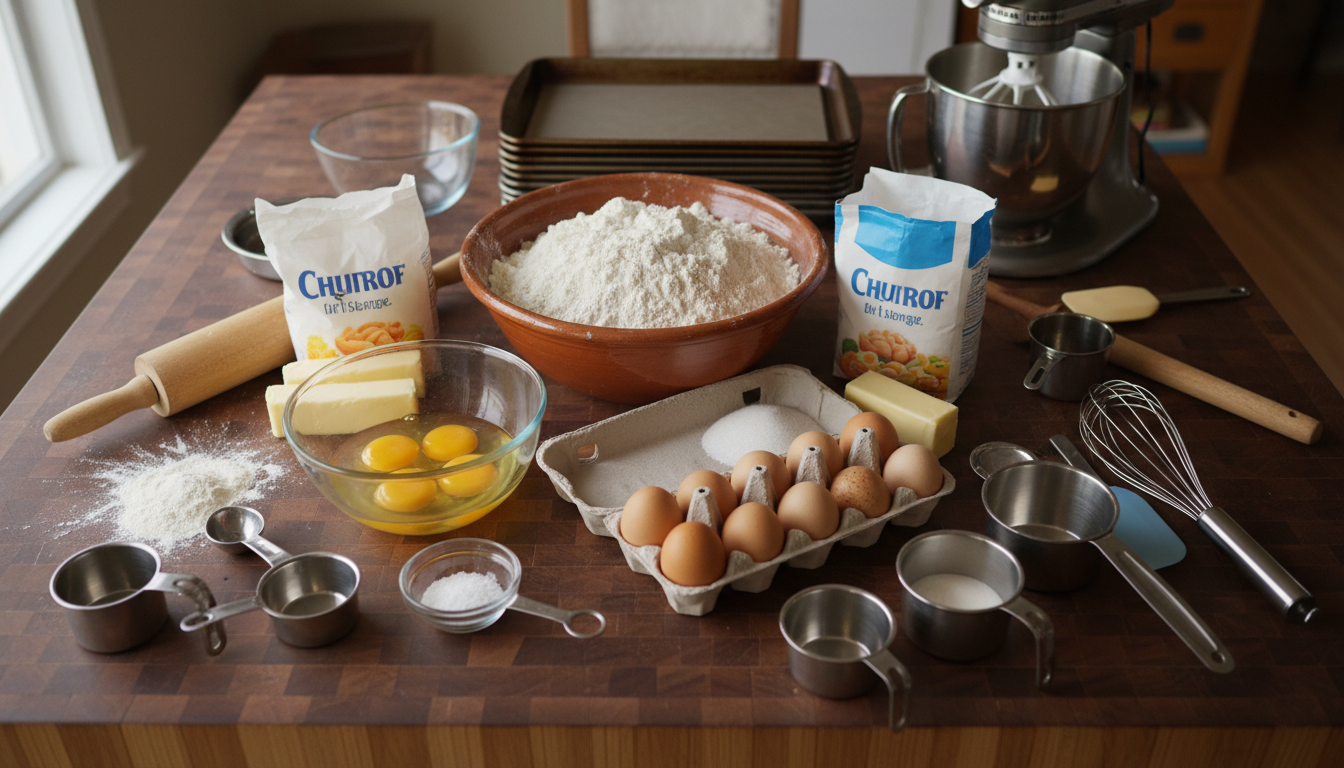
Large Batch Churro Recipe (Serves 20–30)
This recipe yields approximately 60–80 churros, each about 6 inches long. Scale up or down as needed — the ratio is forgiving and the dough can be made in two or three separate batches if you don’t have a pot large enough to hold it all at once.
Ingredients
- 4 cups water
- 2 teaspoons salt
- 2 tablespoons granulated sugar
- 4 tablespoons unsalted butter
- 4 cups all-purpose flour
- 4 large eggs
- 2 teaspoons vanilla extract
- Neutral oil for frying (vegetable, canola, or sunflower) — about 2 quarts for a large pot
For the Cinnamon Sugar Coating
- 2 cups granulated sugar
- 3 tablespoons ground cinnamon
Equipment You’ll Need
- Large heavy-bottomed pot (6-quart or larger) or electric deep fryer
- Candy/deep-fry thermometer
- Piping bag with a large open star tip (1M or Wilton 1M equivalent, 3/4-inch opening minimum)
- 2 large wire racks set over sheet pans
- Large baking dish or sheet pan for the cinnamon sugar toss
- Tongs or spider strainer
Step-by-Step Instructions
Step 1: Make the Dough
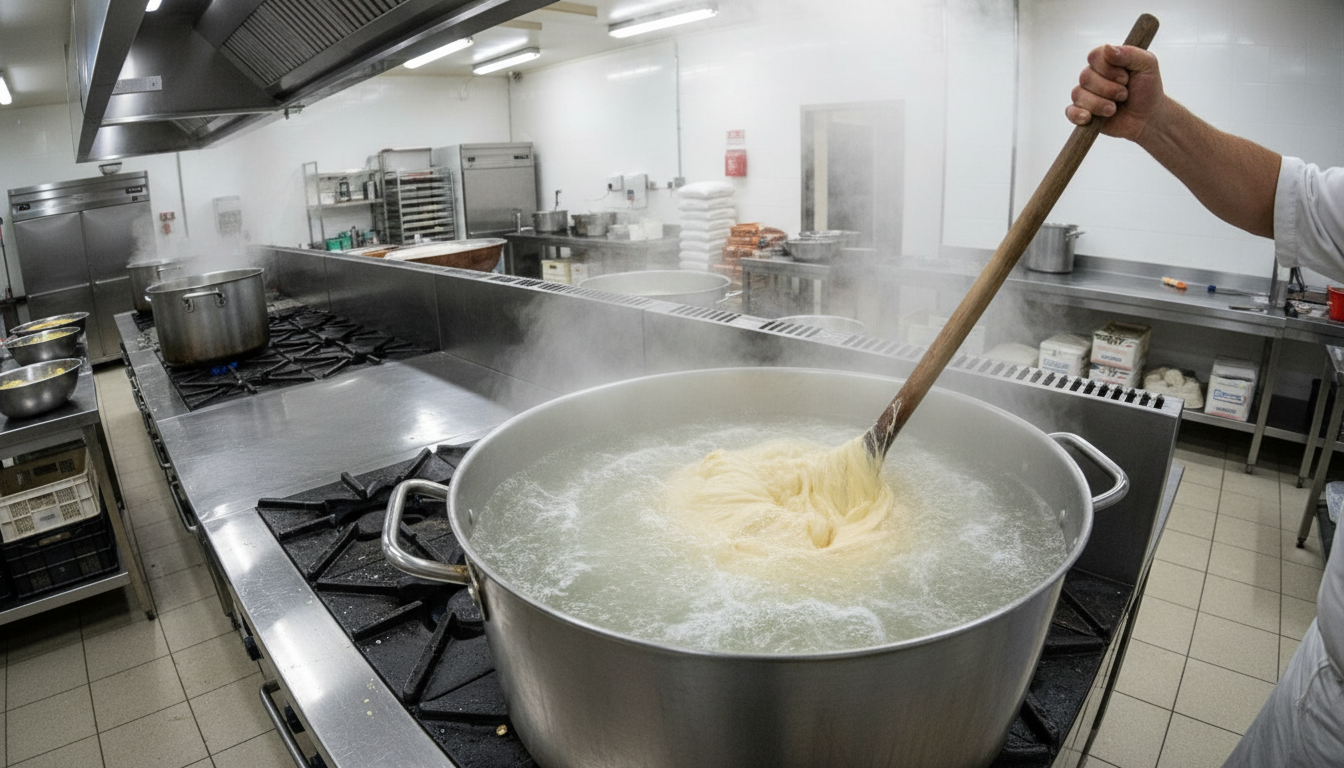
Combine the water, salt, sugar, and butter in your largest pot. Bring to a rolling boil over high heat, stirring occasionally to melt the butter. Once boiling, remove from heat and immediately dump in all of the flour at once. Stir vigorously with a wooden spoon or silicone spatula until the dough comes together into a smooth ball and pulls cleanly away from the sides of the pot. This takes about 2 minutes of hard stirring — don’t be shy about it.
Let the dough cool for 5 minutes, then beat in the eggs one at a time, stirring thoroughly after each addition. The dough will look broken and slippery after each egg, then come back together — keep going. Finally, stir in the vanilla. The finished dough should be thick, glossy, and smooth — stiff enough to hold its shape when piped but still pliable. For a deeper dive on perfect dough texture, see our easy homemade churros recipe.
Step 2: Set Up Your Frying Station
Pour oil into your large pot to a depth of at least 3 inches — 4 inches is better for even frying. Heat to 375°F (190°C). Use a thermometer — this is non-negotiable for large-batch frying. Too cool (below 360°F) and the churros absorb oil and turn greasy. Too hot (above 390°F) and the outside burns before the inside cooks through.
Set up your assembly line: piping bag loaded with dough → oil → wire rack → cinnamon sugar tray. Having everything within arm’s reach is what makes the difference between a smooth frying session and a chaotic one.
Step 3: Pipe and Fry in Batches
Hold the piping bag about 2 inches above the oil surface and pipe churros in 6-inch ropes directly into the hot oil, using kitchen scissors or a sharp knife to cut the dough rope at the desired length. Fry 6–8 churros at a time — don’t crowd the pot, as adding too many at once will drop the oil temperature. Fry for 3–4 minutes per batch, turning once at the halfway point, until deeply golden on all sides.
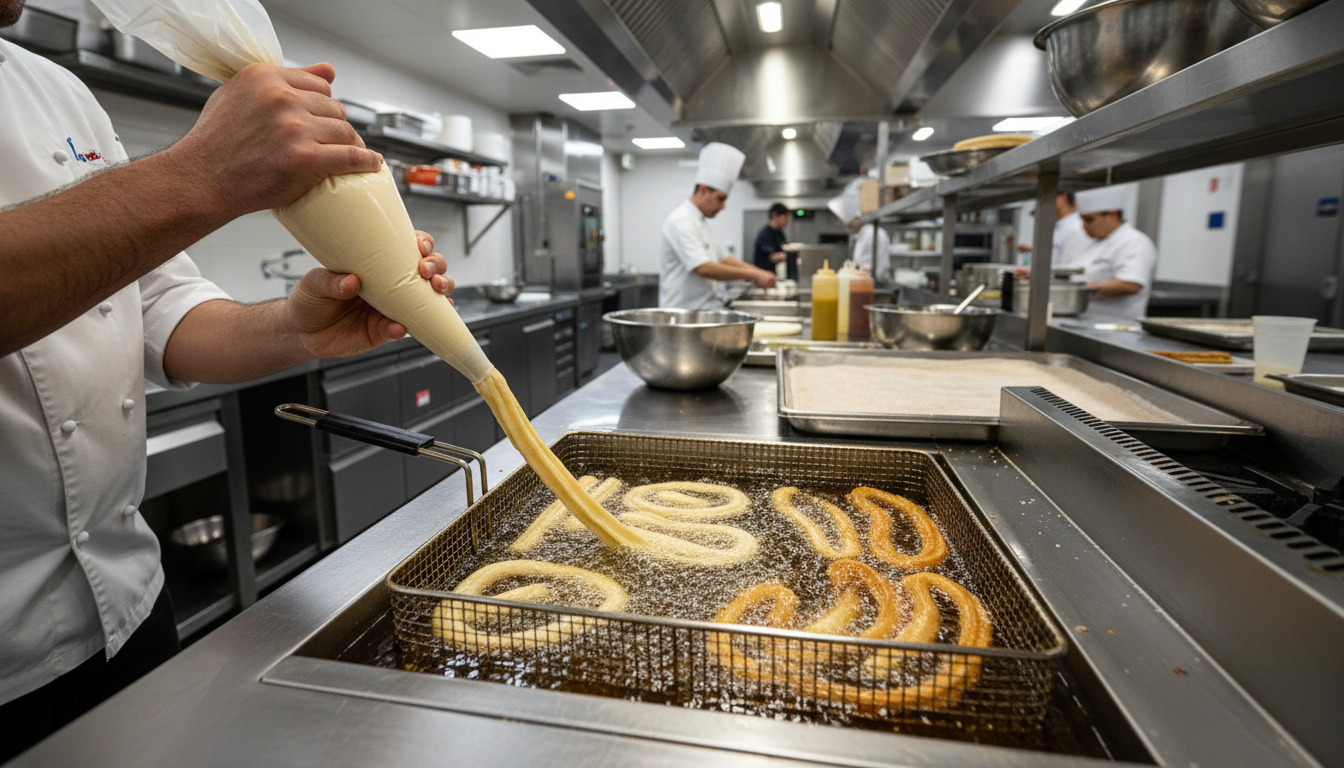
Between batches, check the oil temperature and let it recover to 375°F if it dropped. Cold churros going into the oil will pull it down quickly — with a large electric fryer this recovers in about 30 seconds; with a stovetop pot it may take 60–90 seconds. Don’t rush this step.
Step 4: Drain and Coat
Remove churros with tongs or a spider strainer and transfer to the wire rack to drain for 30 seconds. Then immediately toss them in the cinnamon sugar while they are still hot — the residual oil on the surface helps the sugar stick. Roll each churro in the sugar mixture or toss the whole batch in a large tray. Work fast here; once churros cool below 120°F or so, the sugar won’t adhere as well.
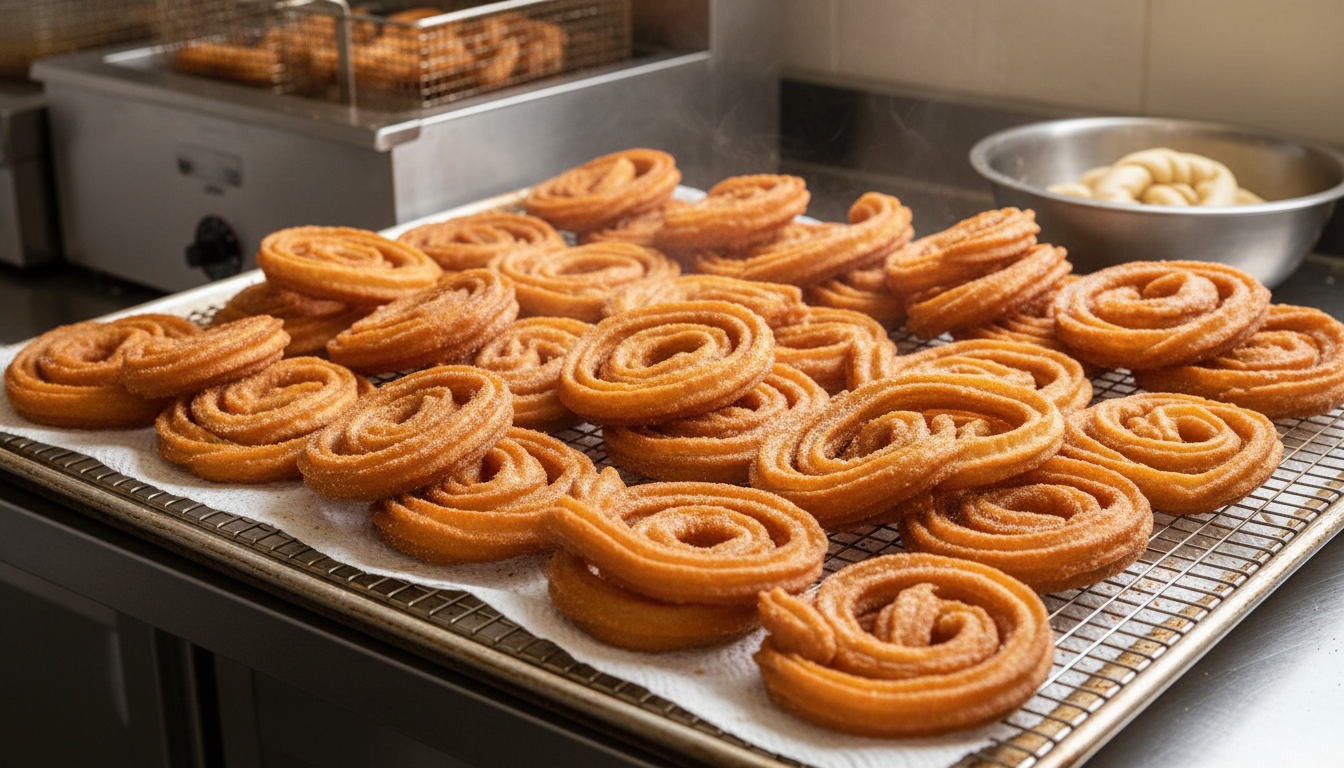
Step 5: Toss in Cinnamon Sugar
Mix the 2 cups of sugar with 3 tablespoons of cinnamon in a large baking dish or rimmed sheet pan. Tip the drained churros into the tray and use tongs to roll them around until fully coated. Transfer to a serving platter. Replenish the cinnamon sugar mixture as needed — it gets depleted quickly when you’re coating 60+ churros.
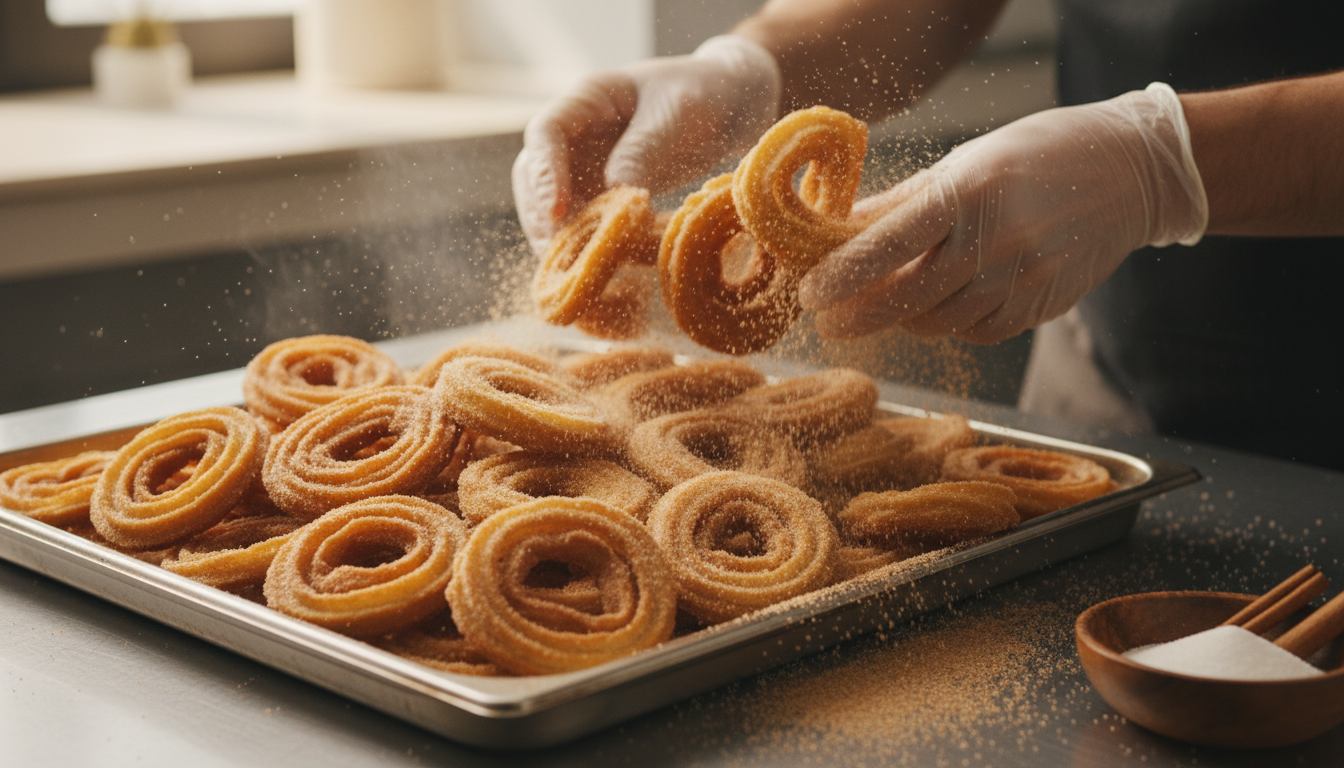
How to Keep Churros Warm for a Party
Churros are best eaten within 20–30 minutes of frying, but for a party setup you have a few solid options to extend their window:
- Low oven method: Preheat your oven to 200°F (93°C). After coating, transfer churros to a sheet pan in a single layer and hold in the oven. They’ll stay crispy for up to 45 minutes. Don’t stack them — steam from the pile will soften them.
- Chafing dish: A commercial-style chafing dish with a wire rack insert (so churros aren’t sitting in liquid) works well for large events. Keep the flame at low.
- Fry in waves: The most reliable approach for parties is to fry in 3–4 waves timed to guest arrival — the first batch comes out as people arrive, a second batch 30 minutes in, and so on. Fresh is always better than reheated.
What you want to avoid: covering a hot pile of churros with aluminum foil. The trapped steam is the enemy of crispiness. If you must cover them, use a loose tent and leave gaps for airflow.
Make-Ahead Churro Dough Strategy
The good news: churro dough can be made up to 24 hours in advance and refrigerated in the piping bag. This is a game-changer for party prep.
After making the dough, let it cool to room temperature, then transfer it into your piping bags (tied at both ends) and refrigerate. When you’re ready to fry, pull the bags out 30 minutes ahead of time to let the dough come back to room temperature — cold dough is harder to pipe and takes longer to cook through. The consistency of the dough changes slightly in the fridge (it stiffens a bit), which actually makes it easier to pipe cleanly.
You can also partially fry churros ahead of time — pull them from the oil after 2 minutes (they’ll be set but not yet golden), drain on a rack, and finish them in a 400°F oven for 6–8 minutes right before serving. This is a restaurant trick that works well for home parties too.
Best Dipping Sauces for a Crowd
Offering two or three dipping sauces is standard for a churro party station. Here are the top crowd-pleasers and how to scale them:
Chocolate Dipping Sauce
Heat 1 cup heavy cream until just simmering. Pour over 8 oz chopped dark chocolate (60–70% cocoa). Let sit 2 minutes, then stir until smooth. Add a pinch of salt and a splash of vanilla. Scales easily — double or triple for larger crowds. Keep warm in a small slow cooker set on low. This pairs especially beautifully with our caramel churros recipe if you want to mix and match.
Dulce de Leche
Warm store-bought dulce de leche directly in its jar in a pot of warm water, or thin it slightly with a splash of cream if it’s very thick. The natural caramel flavor pairs perfectly with the cinnamon sugar coating. Dulce de leche is the traditional accompaniment to churros throughout Latin America and requires no recipe beyond opening a can.
Cream Cheese Dip
Beat 8 oz softened cream cheese with 1 cup powdered sugar, 1 teaspoon vanilla, and 2–4 tablespoons milk until smooth and dippable. This sweet, tangy dip is especially popular with kids. It’s also the base for the filling in our churro filling recipe if you want to take it a step further.
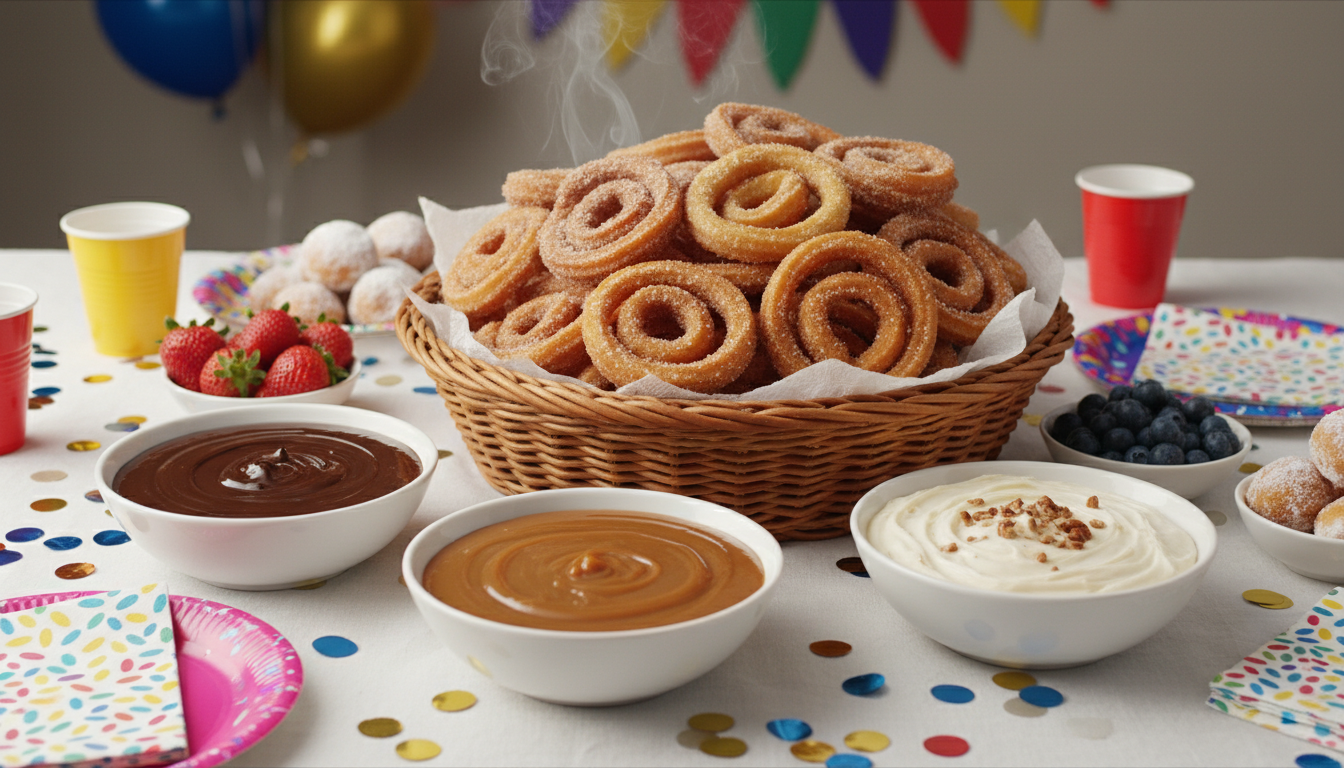
Churro Bar Setup Tips for Events
For a dedicated churro bar at a larger event, here’s how to set it up effectively:
- Labeling: Label each dipping sauce clearly — guests appreciate knowing what’s in each bowl, especially for allergy concerns.
- Basket or cone display: Tall paper cones or a wire basket keeps churros upright and accessible without taking up too much table space.
- Napkins everywhere: Churros are inherently messy — cinnamon sugar gets on everything. Set out napkins every 12 inches along the bar.
- Small portion cups: Pre-fill 2 oz plastic cups with each sauce rather than large shared bowls. It’s more hygienic and each guest gets their own.
- Consider a “toppings” station: Set out small bowls of Nutella, strawberry jam, and caramel sauce so guests can mix and dip as they like.
If you’re serving churros alongside other desserts, they pair extremely well with ice cream. Our mochi ice cream recipe or a simple vanilla soft-serve station next to the churro bar is a combination that never fails at parties.
Troubleshooting Large-Batch Churros
Here are the most common issues that come up when frying churros in large quantities:
Oil temperature keeps dropping
This happens when you add too many churros at once or when the pot is too small relative to the amount of oil. Solution: use a deeper pot with more oil volume (more oil = more thermal mass = more stable temperature), and reduce batch size to 5–6 churros at a time. An electric fryer with a built-in thermostat handles this better than a stovetop pot.
Churros are greasy
Almost always caused by frying at too low a temperature. The oil needs to be at 375°F before the first churro goes in. If the temperature drops to 350°F mid-batch, the churros will absorb oil rather than cook in it. Let the oil fully recover between batches.
Churros are soft, not crispy
Two causes: either the churros weren’t fried long enough (they need a deep golden-brown exterior, not just light tan), or they were stacked while hot and steamed each other soft. Fry to a true golden brown and keep on a wire rack — never pile them until they’ve cooled slightly.
Dough is too stiff to pipe
This usually means the dough was refrigerated and not allowed to come back to room temperature, or the dough absorbed too much flour. If it’s a temperature issue, leave the piping bag out for 30 more minutes. If the dough itself seems too dry, you can work in one extra egg yolk to soften it slightly. See our churros without piping bag guide for a hand-rolling method that works when piping becomes difficult.
Scaling Guide: How Many Churros Per Person?
As a general rule, plan on 3–4 churros per person as part of a dessert spread, or 5–6 churros per person if churros are the primary dessert. Use this table to scale your batch:
| Guests | Churros Needed (dessert spread) | Churros Needed (main dessert) | Dough Batches |
|---|---|---|---|
| 10 | 30–40 | 50–60 | 1–2 |
| 20 | 60–80 | 100–120 | 2–3 |
| 30 | 90–120 | 150–180 | 3–4 |
| 50 | 150–200 | 250–300 | 5–6 |
One batch of this recipe (4 cups flour) produces approximately 60–80 churros depending on length. At a party pace of about 8 churros per frying batch and 4 minutes per batch, one person can produce roughly 50 churros per hour. Plan your timeline accordingly — factor in oil heating time (about 15 minutes) and cinnamon sugar setup.
Frequently Asked Questions
Can you make churros the night before a party?
You can make the dough the night before and refrigerate it in the piping bag. However, fully cooked churros do not reheat well — they lose their crispiness. The best approach is to prep the dough and sauces the night before, then fry fresh the day of the party starting about 30–45 minutes before guests arrive.
What oil is best for frying churros in large batches?
Use a neutral oil with a high smoke point: vegetable oil, canola oil, or sunflower oil all work well. Avoid olive oil (smoke point too low for sustained frying at 375°F) and coconut oil (imparts flavor and is more expensive at large quantities). According to Serious Eats’ deep-frying guide, refined oils with smoke points above 400°F are the most reliable for extended deep frying sessions.
How do you pipe churros without them sticking together in the oil?
The key is to cut the dough rope cleanly with scissors right at the oil surface, and to space churros at least 1 inch apart in the pot. If churros stick together immediately after entering the oil, the temperature dropped too quickly — reduce your batch size or increase oil depth.
Can you freeze churros for a later party?
Yes — fry churros until just barely golden (slightly underdone), then freeze on a sheet pan in a single layer. To serve, bake frozen churros at 400°F for 8–10 minutes until crispy and cooked through, then toss in cinnamon sugar. The texture is slightly less crispy than fresh-fried but entirely acceptable for a large event where convenience matters.
What piping tip is best for churros?
A large open star tip is essential — the ridges created by the star tip are what give churros their characteristic texture and help the cinnamon sugar stick. A 1M tip (Wilton) or any large open star tip with a 3/4-inch to 1-inch opening works perfectly. Using a plain round tip will give you smooth cylinders that don’t hold coating as well.